0
$0.00
0 items


On June 8, 2026, Sam Bankman-Fried, the former FTX CEO currently serving a 25-year federal prison sentence for orchestrating one of the largest financial frauds in history, formally submitted a presidential pardon request to the US Department of Justice. SBF was convicted of fraud and sentenced to 25 years in prison in 2024 for secretly diverting billions in customer funds from FTX to his crypto hedge fund Alameda Research. The status of his pardon request is currently listed as "pending" per the Department of Justice's website, though a White House spokesperson indicated the odds of Trump granting clemency remain slight.
The market's reaction was immediate and instructive. The crypto market reacted sharply to the formal pardon submission. Sentiment was already fragile from the week's other headlines: Strategy's first Bitcoin sale since 2022, 13 straight days of Bitcoin ETF outflows totalling $4.4 billion, and the new Fed chair Kevin Warsh signalling no rate cuts for 2026.
But here is what the SBF pardon story is not: a market catalyst either way. Trump said in January he had no plans to pardon SBF, and even if granted, the pardon would clear civil and professional penalties but would not wipe his criminal record clean.
What the SBF pardon story is, every time it resurfaces, is the clearest available reminder of why self-custody exists. Not as an ideology. Not as a technical preference. As a direct response to a documented, catastrophic, entirely avoidable failure mode of exchange custody that destroyed billions in ordinary people's savings.
This blog is not about whether SBF gets pardoned. It is about what his victims lost, why they lost it, and what every holder reading this today can do so that no equivalent event, however it is perpetrated, by whoever runs the exchange, can happen to them.
FTX did not fail because of market conditions. It did not fail because of a hack. It did not fail because of a regulatory change that no one could have anticipated.
Bankman-Fried orchestrated one of the largest financial frauds in history, secretly diverting billions in customer funds from the crypto exchange FTX to his crypto hedge fund, Alameda Research. The mechanism was simple and brutal: when users deposited funds on FTX, they were credited balances on FTX's internal ledger. But those funds, instead of being held in segregated, accessible accounts, were quietly transferred to Alameda Research, which used them for highly leveraged, highly speculative trading positions. When those positions went wrong and the market turned, the hole in FTX's balance sheet became impossible to hide.
In November 2022, a leaked Alameda balance sheet triggered a run on FTX. FTX cofounder Bankman-Fried became one of the largest donors to Democratic campaigns and causes while simultaneously running what prosecutors would prove was a Ponzi-adjacent structure dependent on continuous inflows to cover ongoing withdrawals. When withdrawals accelerated, the structure collapsed in 72 hours. $1.76 billion in leveraged positions got liquidated across the broader market in the immediate aftermath.
FTX's customers were left as unsecured creditors in a bankruptcy proceeding. The FTX bankruptcy left an $8 billion shortfall in customer funds. Those customers held account balances on FTX's dashboard: numbers on a screen that they believed represented their crypto. The crypto did not exist. The numbers were a fiction maintained by Bankman-Fried's team for years.
The FTX bankruptcy has been one of the more unusual in crypto history, not because victims were made whole, but because the recovery process has been longer, more complex, and more legally contested than almost any comparable proceeding.
In 2023, Bankman-Fried was convicted of fraud and later sentenced to 25 years in prison for orchestrating one of the largest financial crimes in history. In April 2026, a federal judge denied Bankman-Fried's motion for a new trial, leaving the pardon request as one of his last remaining legal recourses.
The bankruptcy estate recovered significant assets through the liquidation of FTX's investment portfolio, Alameda's remaining positions, and the forced sale of affiliated entities. Some creditors have received partial distributions. But the recovery has been denominated in dollars at the value of crypto at the time of the bankruptcy filing, not at current prices.
Consider what that means in practice. A holder who had 1 Bitcoin on FTX when it collapsed in November 2022, when Bitcoin was trading around $16,000-$20,000, received a bankruptcy claim valued at approximately that price. Bitcoin today is trading around $63,000. The holder who lost custody of that Bitcoin during the FTX collapse did not benefit from the subsequent price appreciation. They received a dollar-denominated creditor claim against a bankrupt estate, not their Bitcoin.
This is the true cost of exchange custody that no headline fully captures: it is not just the risk of losing what you deposited. It is the risk of losing the entire future value of what you deposited, because a bankruptcy claim against a defunct exchange does not compound with the asset you were holding.
The pardon story has a meaningful backdrop that the crypto community has been watching closely. The situation drew comparisons to the case of Binance co-founder Changpeng "CZ" Zhao, when the White House announced Trump had pardoned him, with White House Press Secretary Karoline Leavitt remarking that the President was exercising his constitutional authority in pardoning Zhao, who had faced prosecution by the Biden Administration amid regulatory actions against cryptocurrency.
CZ's pardon was controversial but followed a different legal path: he pleaded guilty to a single count of Bank Secrecy Act violations and served a relatively short sentence. The circumstances, a plea, a cooperation posture, a regulatory rather than fraud framing, created a different political calculus.
However, the circumstances surrounding FTX's dramatic collapse suggest that a pardon for the former FTX CEO is unlikely at this time. The FTX cofounder's petition follows reports that his parents were engaging with individuals connected to Trump's inner circle to curry the president's favor, a notable pivot for the onetime crypto billionaire who was briefly one of the largest donors to Democrats. President Donald Trump must arbitrate between his support for crypto and the political risk of such a release. SBF's request is listed as a "pardon after completion of sentence," not immediate release, and is now listed as pending in DOJ records.
The distinction matters: SBF is not asking to be freed today. He is asking for a post-sentence pardon that would clear civil and professional consequences, potentially enabling him to re-enter financial services. For the crypto community, the prospect of SBF returning to the industry is generating a specific kind of visceral response that the CZ pardon did not.
None of this changes the situation of FTX victims. Whether or not SBF is pardoned, the customer funds that were diverted to Alameda Research were spent, lost in trading, or converted. The blockchain does not care about presidential clemency. The assets that were not held in self-custody by their owners are not coming back to their pre-collapse state.
Understanding why FTX happened is more important than tracking SBF's legal proceedings, because the conditions that enabled FTX were not unique to FTX. They are structural features of exchange custody that apply to every centralised exchange regardless of reputation, regulation, or management quality.
Fractional reserve risk. Exchange custody works on the assumption that not all customers will withdraw simultaneously. This creates the operational space for an exchange to deploy customer funds, whether for legitimate yield strategies, as Celsius and BlockFi did, or for fraudulent trading, as FTX did. The distinction between "legitimate" and "fraudulent" deployment of customer funds matters morally and legally. It does not matter to the customer who cannot withdraw.
Proof of reserves is insufficient. After FTX, the industry rallied around proof-of-reserves audits as a solution. They are not sufficient. A proof-of-reserves snapshot shows assets at a point in time. It does not show liabilities, off-balance-sheet positions, or the mechanics by which assets might be deployed between audit dates.
Regulation is accountability, not prevention. FTX operated in regulated jurisdictions. It filed required disclosures. It had audited financial statements, later found to be materially misstated. Regulation creates accountability structures for prosecuting fraud after it occurs. It does not prevent a determined fraudster from committing fraud before discovery.
The dashboard balance is not the asset. The most fundamental lesson of FTX: a number on an exchange dashboard represents a liability of the exchange to the customer, not the customer's ownership of the underlying asset. The customer owns a promise. The asset itself is held by the exchange. If the exchange cannot or will not honour that promise, for any reason, the customer has no recourse beyond the legal system.
When you hold a private key to a blockchain address, you own the asset. Not a promise. Not an IOU. The asset, verifiable by any node on the network, transferable by anyone who controls the key, and beyond the reach of any exchange's internal accounting.
The FTX event is the clearest illustration, but it is one of many. The crypto market cap dropped from $2.53 trillion to $2.25 trillion in recent weeks, with Bitcoin testing $61,500 overnight before rebounding to $63K. Through every market cycle, exchange failures follow a consistent pattern. The names change. The mechanism varies. The outcome for customers without self-custody is the same.
Self-custody, specifically hardware wallet self-custody, protects against the following exchange-specific failure modes that have collectively destroyed tens of billions in customer funds:
Custodial fraud (FTX model). When you hold your private key, there is no custodian who can lend, deploy, or steal the assets at your address. The blockchain settles at the key level, not at the custodian level. A fraudulent exchange cannot access what it does not hold.
Insolvency and bank runs. When customer assets are genuinely segregated and held on-chain at customer-controlled addresses, an exchange's financial distress cannot create a run on customer funds. The assets are not on the exchange's balance sheet to be frozen or clawed back.
Regulatory seizure. An exchange account can be frozen by regulatory order in any jurisdiction where the exchange operates. A self-custody hardware wallet sitting in your home is not an exchange account. Regulatory orders targeting an exchange do not extend to keys held by individual customers.
Withdrawal freezes. Exchanges freeze withdrawals for many reasons: solvency concerns, compliance holds, liquidity crises, regulatory investigations, technical failures. Markets are now pricing a 68.8% probability of zero Fed rate cuts in 2026. In the current macro environment, exchange stress is more plausible than in 2021. A hardware wallet's "withdrawal" function, initiating an on-chain transaction from your own address, cannot be frozen by anyone.
Not all self-custody is equally resilient. The FTX collapse created a wave of first-time hardware wallet buyers who, in their rush to exit exchanges, made setup decisions that introduced new vulnerabilities, primarily around seed phrase management. A seed phrase written on paper and stored at home solves the exchange fraud problem. It does not solve the physical theft problem, the fire-and-flood problem, the inheritance problem, or the "this piece of paper was the single most important object I owned and I've misplaced it" problem.
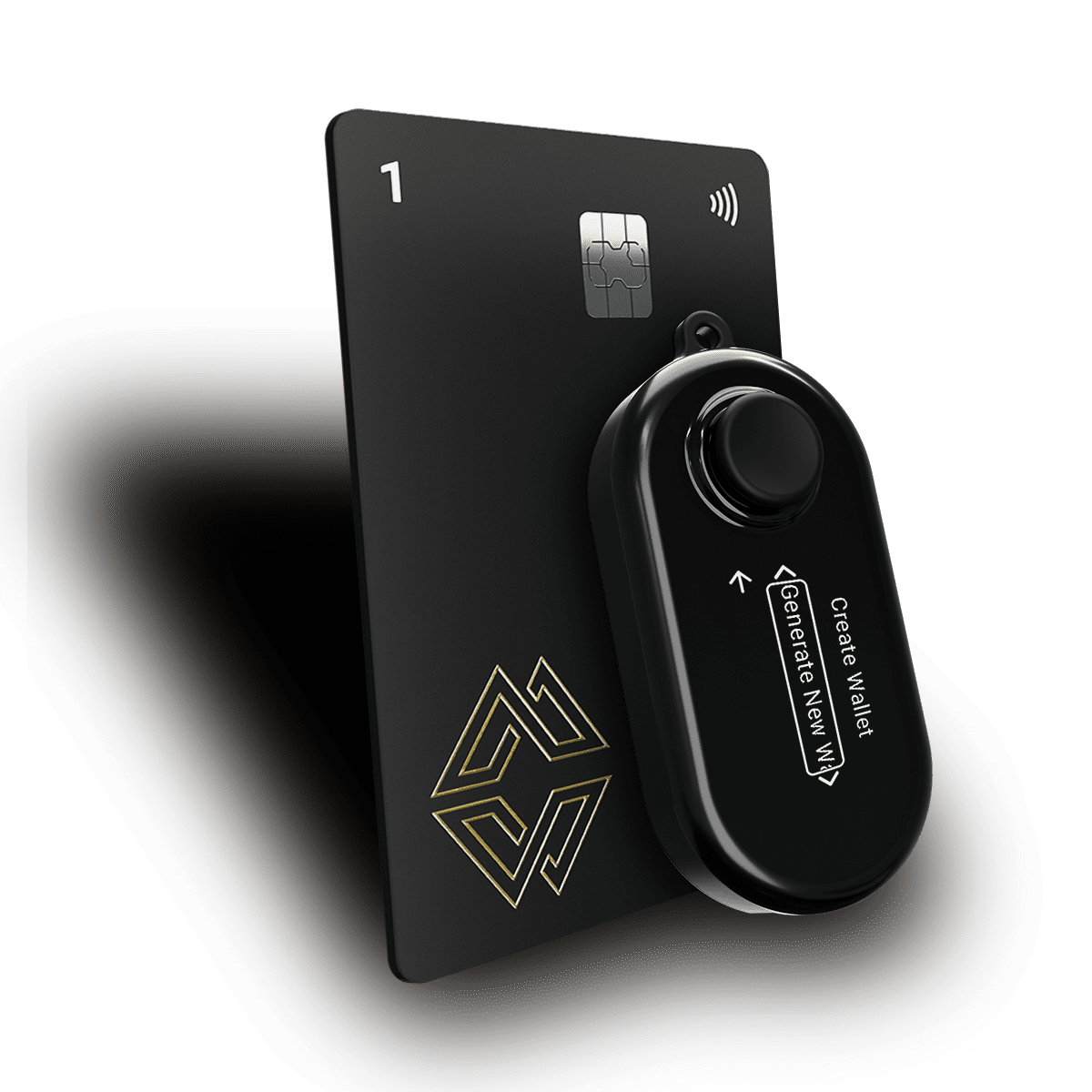
The Cypherock X1 was built to solve all of these simultaneously:
Private key never held by any single party, including Cypherock. The key is split via Shamir's Secret Sharing into 5 shares across 1 X1 Vault and 4 X1 Cards. Cypherock receives no share. There is no Cypherock equivalent of an Alameda Research that could borrow against your holdings. There is no pooled customer fund. There is no dashboard balance that is actually a liability.
The most common post-FTX self-custody failure mode, a hastily created seed phrase stored carelessly, is structurally eliminated as a mandatory requirement. Your seed phrase is never forced into the open; the cryptographic resilience comes from distributed hardware, not a paper document. If you ever choose to view or record your seed phrase, you can do so directly on the X1 Vault.
Any 2 of 5 components reconstruct access. Losing the X1 Vault, or any single component, does not mean losing access. The 2-of-5 threshold means triple redundancy built into the hardware distribution. The geographic separation of X1 Cards across multiple locations provides the resilience that multiple copies of a seed phrase attempt to provide, without the additional attack surface of multiple complete keys in multiple locations.
Inheritance is planned, not accidental. Cypherock Cover provides a non-custodial, non-KYC inheritance and PIN recovery pathway. The FTX collapse destroyed not just individual holders' assets but families' assets, portfolios that were never going to be accessible to heirs even if the exchange had remained solvent, because no inheritance plan existed.
The SBF pardon news is a moment of recurrence: the FTX story cycling back into headlines and reminding holders who have procrastinated on self-custody that the procrastination is ongoing. Crypto news in June 2026 centres on who keeps buying while everyone else runs, but the more important operational question is who is holding their own keys and who is still trusting a custodian.
If significant crypto holdings are still sitting on an exchange today, here is the minimum action plan:
Step 1: Identify what is genuinely at risk. Log into every exchange account you hold. Note the assets and approximate values. Distinguish between active trading positions (which need to be on an exchange) and long-term holdings (which do not and should not be).
Step 2: Purchase a hardware wallet from the manufacturer directly. Order from cypherock.com/store or another manufacturer's official site. Not Amazon. Not a secondary marketplace. The supply chain attack risk is real and documented. See our complete setup guide if you are setting up a hardware wallet for the first time.
Step 3: Set up the wallet before withdrawing. Create your wallet accounts, verify addresses on the device screen, confirm a test transaction for each asset type before moving significant balances. The irreversibility of blockchain transactions means that the order of operations matters: wallet first, withdrawal second.
Step 4: Withdraw long-term holdings immediately. Every day that passes with significant assets on an exchange is a day of exposure to a risk class that is entirely eliminable. The FTX collapse happened in 72 hours. The Bybit hack happened in a single transaction. There is no early-warning system. The only protection is having already moved.
Step 5: Keep only active trading balances on exchanges. The correct long-term operating model: exchanges are execution venues, not custodians. Transfer to the exchange when you want to trade, execute the trade, withdraw proceeds. The exchange holds your assets only during the active trading window.
There is a meta-narrative worth acknowledging. SBF's pardon bid represents an attempt to re-enter a legal and professional landscape from which he was expelled for conduct that harmed hundreds of thousands of customers. The White House indicated the odds of Trump granting clemency remain slight, and even the request itself is classified as a "pardon after completion of sentence," not immediate release.
Whether or not the pardon is granted, the crypto industry's maturation since FTX has been significant. Proof-of-reserve standards are more common. Regulatory frameworks in the US, EU, and major Asian markets have been substantially developed. The industry's relationship with custody has become more sophisticated.
But sophistication at the institutional level does not automatically translate to protection at the individual level. 13 straight days of Bitcoin ETF outflows totalling $4.4 billion represent institutional investors making decisions about institutional assets. The retail holder's protection is, and has always been, the private key, specifically a private key that no exchange, no hedge fund, no counterparty, and no court order can reach.
The SBF pardon story will resolve itself however it resolves. FTX customers will receive whatever the bankruptcy estate ultimately distributes. The regulatory response will continue to develop. None of that is within your control. Your private key is.
No. The pardon process and the bankruptcy recovery process are entirely separate legal proceedings. A pardon would clear civil and professional penalties that typically follow a federal felony conviction, though it would not wipe his criminal record clean, and critically, it would have no effect on the bankruptcy estate's assets or the distribution to creditors.
Partially, and in dollars, not crypto. The FTX bankruptcy estate recovered significant assets and has made distributions to creditors. However, recoveries are generally denominated at the dollar value of crypto at the time of the bankruptcy filing, not at current prices. A Bitcoin creditor's claim was valued at approximately $16,000-$20,000 per Bitcoin. At today's price around $63,000, the purchasing power gap is substantial.
No exchange is categorically safe for long-term storage, only varying degrees of risk. The structural features that enabled FTX's fraud (customer funds held as exchange liabilities, opaque internal accounting, no real-time proof of reserves) exist to varying degrees across every centralised exchange. The risk is not uniform, but it is never zero.
Yes, completely. A hardware wallet user whose assets were on-chain at their own address had zero exposure to FTX's collapse regardless of whether they had ever used FTX. The blockchain is indifferent to exchange insolvencies. Only assets held in exchange custody were at risk.
Exchange insurance coverage is consistently insufficient relative to total assets held. FTX had an insurance fund; it was depleted almost instantly. FDIC insurance applies to dollar deposits at regulated banks, not to crypto assets at exchanges. Crypto-specific insurance products at exchanges are either absent or capped at levels that are immaterial for significant holdings.
Sam Bankman-Fried is asking for a pardon. His victims are asking for their Bitcoin back at the prices it trades at today. Those are two different things.
The pardon is a legal question that will be resolved by people other than FTX's customers. The gap between what customers lost and what they'll recover is an economic reality that no legal proceeding can fully close.
The lesson of FTX is not that all exchanges are fraudulent. Most are not. The lesson is that the structure of exchange custody creates risks that exist independently of any individual exchange's honesty or competence: risks that activate suddenly and completely, without warning, at exactly the moment you need access to your assets.
The hardware wallet is not a luxury. It is not for the technically sophisticated only. It is not something to set up eventually. It is the difference between holding an asset and holding a promise, and FTX is the definitive case study in what happens when the promise breaks.
Sam Bankman-Fried co-founded FTX and was sentenced to 25 years in prison for fraud. That sentence is the legal system working as intended. The ongoing protection of your assets is yours to implement, and the architecture to do it properly has never been more accessible.
If your crypto is still on an exchange, today is the right time to change that. Explore the Cypherock X1, the distributed hardware wallet that eliminates seed phrase vulnerability, ensuring no exchange failure, no custodial fraud, and no pardon request can reach your assets. Check the full supported coin list and read our complete first-time setup guide to get started today.

Related reading: