0
$0.00
0 items

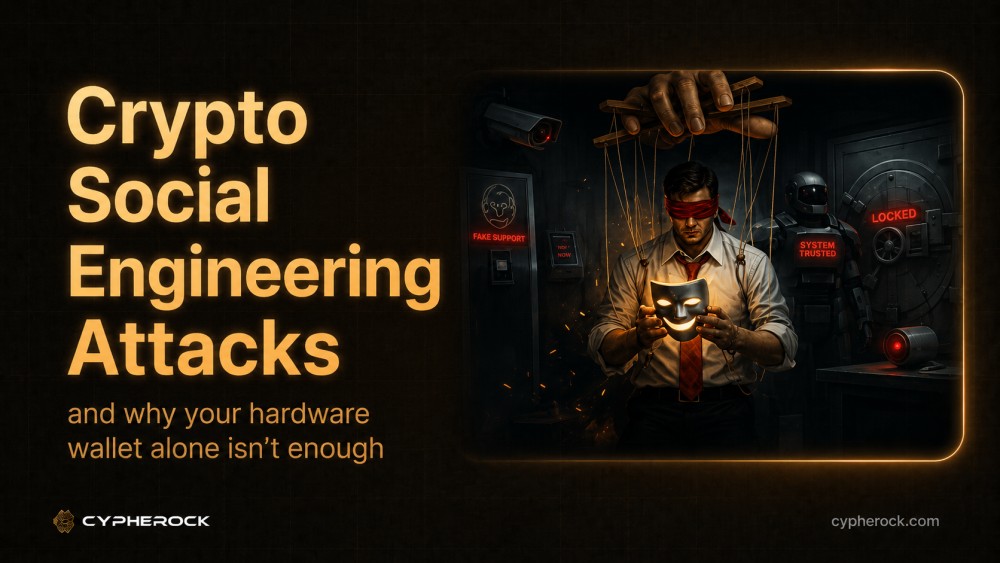
On January 10, 2026, a single private individual lost what became the largest individual phishing loss in cryptocurrency history: $282 million in Bitcoin and Litecoin. The attack didn't involve any novel technical exploit. There was no smart contract vulnerability, no protocol failure, no infrastructure compromise. Instead, the victim, a sophisticated holder who understood the importance of hardware wallets, was methodically manipulated through social engineering. NFT Plazas
Read that again: the victim used a hardware wallet. Cold storage. The industry's gold standard for crypto security. And they still lost $282 million.
January 2026's $300+ million in phishing losses represents more than a bad month. It's a declaration that cryptocurrency's greatest vulnerability isn't in its code; it's in its users. NFT Plazas
This post does not exist to frighten you. It exists to close the knowledge gap that attackers exploit: the belief that a hardware wallet makes you immune. It does not. A hardware wallet protects your keys from remote extraction. It does not protect you from being manipulated into willingly signing your funds away.
Here is exactly how these attacks work, why even experienced holders fall victim, and what structural defences actually reduce the risk, including architectural choices in hardware like Cypherock X1 that raise the bar beyond what a single device can offer.
Social engineering in crypto is not a single technique. It is a category of attacks that share one common principle: manipulating the human into voluntarily authorising the theft of their own funds. The blockchain is used as the final, irreversible settlement layer. By the time a transaction confirms, nothing can be done.
In 2026, these attacks take several distinct forms:
This is the dominant attack vector against DeFi users in 2026. Signature phishing drained approximately $6.3 million from user wallets in January 2026 alone, a 207% month-over-month jump. Bitget
How it works: Ethereum's EIP-712 standard allows wallets to sign structured data messages that grant permissions, including the ability for a third-party contract to move tokens on your behalf. The most common implementation is the Permit function, which allows token approvals via signature rather than on-chain transaction.
An attacker creates a phishing site indistinguishable from a legitimate DeFi protocol. When you connect your wallet and attempt to interact, the site presents a Permit signature request. The interface displays innocuous text. Behind the scenes, the signature grants the attacker's contract unlimited approval to drain your wallet.
When you sign this on your hardware wallet, the device shows a hex string or structured data, not a human-readable "you are giving this address permission to take all your USDC." You approve it. The attacker's contract immediately calls transferFrom and drains your balance.
Why hardware wallets don't prevent this: The hardware wallet signs whatever transaction or message the companion app sends to it. If the companion app is connected to a phishing site that presents a malicious Permit signature, the hardware wallet faithfully signs it. The device has no way to evaluate whether a Permit signature is legitimate; it only knows the user confirmed the signing action.
What actually helps:
Use wallets like Rabby or MetaMask with enabled transaction simulation, as these show you the effect of a signature before you sign, not just the raw data Never sign a Permit request from a site you navigated to from a link, email, or social media post; only sign from bookmark-verified URLs Consider using Cypherock X1's separate wallet accounts: DeFi operations on a warm wallet account, long-term holdings on a cold account that never interacts with DeFi interfaces
In January 2026, a crypto holder lost 4,556 ETH (approximately $12.4 million) after an attacker dusted their wallet for over two months. Sophisticated attackers now monitor the mempool for "test" transactions, the exact security practice users are taught to follow, and plant poisoned addresses in response. CrypticEra
How it works: The attacker generates wallet addresses that share the first 4 to 6 and last 4 to 6 characters with your frequently used destination addresses. They then send a tiny "dust" transaction (0.000001 ETH) from the spoofed address to your wallet. This plants the fake address in your transaction history.
When you next want to send to a legitimate address, you scroll through your history, see the familiar-looking first and last characters, and copy what you believe is the correct address. You paste it into the withdrawal form. You send your funds to the attacker.
Carnegie Mellon CyLab researchers identified 270 million address poisoning attempts targeting 17 million victims between July 2022 and June 2024, with confirmed losses of $83.8 million. CrypticEra
Why hardware wallets partially help, but not fully: A hardware wallet displays the destination address on its physical screen before signing. If you verify the full address character by character on the device screen, address poisoning is defeated. But most users check the first four and last four characters, exactly what the attacker has matched. The middle section, which differs, goes unverified.
What actually helps:
The attack represents the latest in a series of impersonation apps targeting cryptocurrency users through official app stores. Just days earlier, musician Garrett Dutton lost 5.9 BTC to a similar fraudulent application. The stolen funds were laundered through more than 150 KuCoin deposit addresses.
How it works: Attackers publish applications to the Apple App Store and Google Play Store that impersonate legitimate hardware wallet companion apps, including fake versions of Ledger Live, cySync, or Trezor Suite. These apps are indistinguishable from the real thing at the listing level. When a user downloads the fake app, connects their hardware wallet, and initiates a transaction, the app substitutes the destination address or requests the seed phrase for "verification."
The hardware wallet's signing protections are bypassed because the attack happens at the app layer; the hardware wallet signs whatever the fake app sends it, including transactions to attacker-controlled addresses.
What actually helps:
Fake Trezor letters set a deadline of February 15, 2026, coinciding with real security updates from hardware wallet providers. The overlap made the scam feel legitimate. These campaigns likely leverage customer data from past breaches. coincodex
How it works: Attackers obtain customer data from hardware wallet company data breaches (Ledger's 2020 customer database breach, which exposed names and physical addresses of 270,000 customers, is still being weaponised). They send physical mail to real hardware wallet owners, impersonating the manufacturer, instructing them to visit a URL and "verify" their wallet or "apply a critical security patch," which leads to a seed phrase entry page.
The physical mail vector is particularly dangerous because most users have their guard down for mail compared to emails and DMs. The letter appears official. The timing often coincides with legitimate company communications.
What actually helps:
The victim, a sophisticated holder who understood the importance of hardware wallets, was methodically manipulated through social engineering. Despite using cold storage, they were psychologically manipulated into signing malicious transactions that authorized the transfer of their funds. NFT Plazas
The precise mechanics of the January 2026 $282 million attack are instructive. Based on on-chain analysis by ZachXBT and subsequent reporting, the attack involved:
This attack pattern, sometimes called a "long-con" social engineering attack, cannot be prevented by any hardware wallet feature alone. The victim was operating their hardware wallet correctly. The manipulation was at the human layer, not the technical layer.
Understanding that social engineering cannot be fully prevented by hardware wallet features does not mean hardware architecture is irrelevant. Some architectural choices structurally reduce the attack surface available to social engineers.
The single most common social engineering payload is: "Please enter your seed phrase to verify / recover / update your wallet." This attack variant, appearing in email, physical mail, fake app, and fake support chat, accounts for a substantial proportion of hardware wallet-related losses.
Cypherock X1 eliminates this attack vector architecturally. There is no seed phrase vulnerability. An attacker who tricks a Cypherock user into "entering their seed phrase" gets nothing useful, because the seed phrase doesn't exist to be entered.
In a single-device wallet, social engineering one person to sign one transaction is sufficient for total loss. In Cypherock X1's 5-component SSS architecture, a sophisticated attacker targeting the wallet must either:
Physically access 2 or more geographically distributed hardware components, and Know the PIN for each component, and Manipulate the user into authorising the specific transaction they want signed
This raises the complexity and time cost of the attack substantially, particularly for large holdings where attackers might invest significant effort in relationship-building attacks like the January 2026 incident.
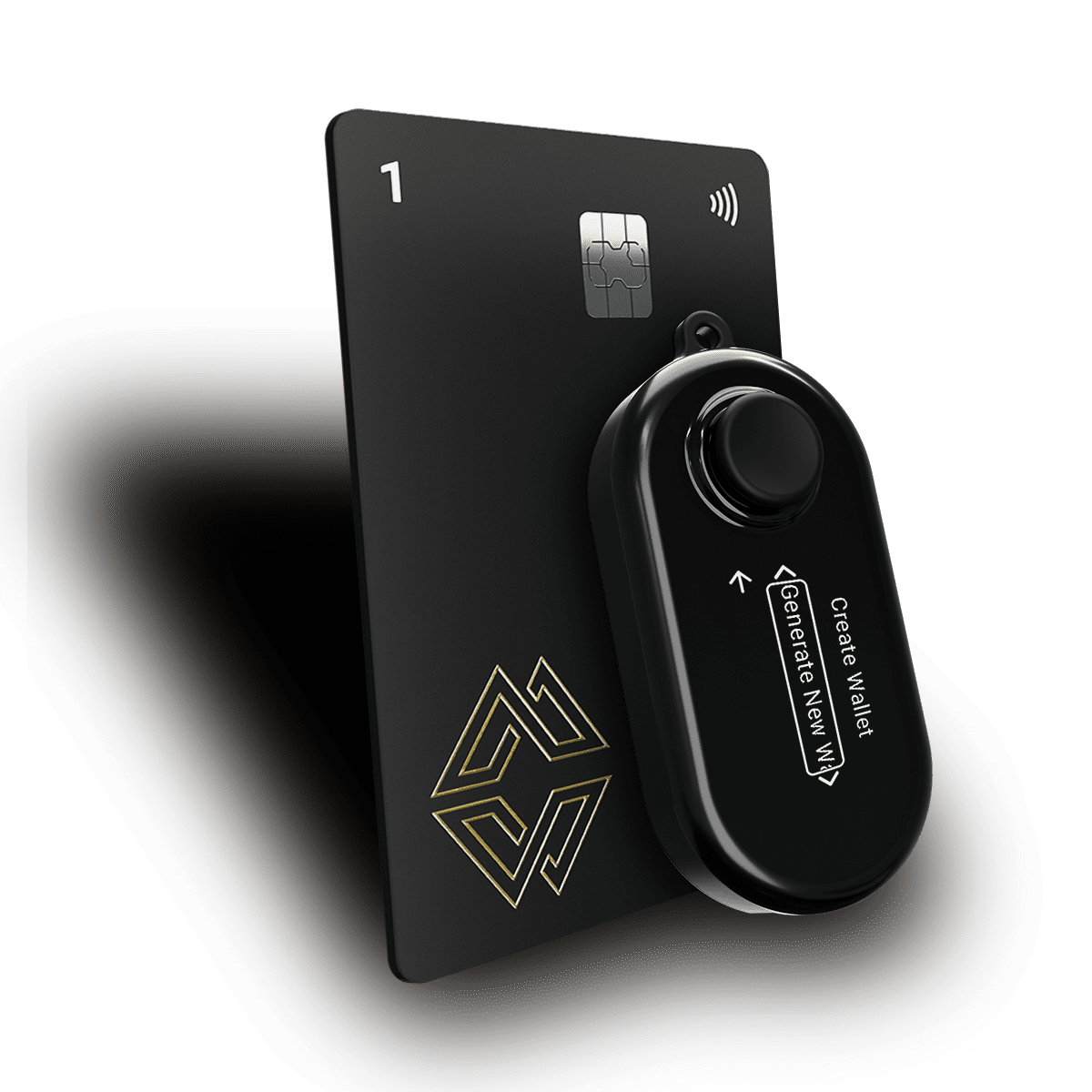
Every transaction on Cypherock X1 requires physical confirmation on the X1 Vault, pressing a button on the device itself, with card authentication. This physical step interrupts the digital flow of a phishing site or social engineering interaction. It introduces a moment of deliberation that purely digital approval flows do not have.
This does not make manipulation impossible. But the physical interruption, picking up the device, looking at the screen, pressing a button, gives a trained user an opportunity to pause, verify, and recognise discrepancies.
Architecture reduces attack surface. It does not eliminate the human layer. These behavioural habits are non-negotiable for any serious self-custody holder:
Adopt a "cooling period" rule for large transactions. Any transaction above a threshold you define (e.g., $10,000) gets a mandatory 24-hour wait before signing. Social engineering attacks depend on urgency. A self-imposed delay destroys urgency.
Never sign a transaction you don't fully understand. If a transaction shows a hex string, structured data, or a contract interaction you cannot parse, do not sign it. Ask someone technical to explain it first. Legitimate counterparties do not require you to sign things you don't understand on a deadline.
Verify through a second, independent channel. If someone contacts you about your crypto, by email, phone, DM, or letter, verify their identity through an entirely different communication channel before taking any action. Call the company's official number. Open the official website directly from a bookmark. Do not use any link or number provided in the suspicious contact.
Treat all unsolicited contact about your crypto as suspicious by default. Legitimate hardware wallet companies, exchanges, and DeFi protocols do not initiate contact to ask you to take action on your wallet. They publish announcements publicly. Unsolicited personalised contact about your wallet is almost always an attack.
Use transaction simulation tools. Browser extensions like Revoke.cash's simulation mode, Rabby Wallet's pre-sign simulation, and Fire (the Ethereum transaction explainer extension) translate raw transaction data into human-readable descriptions: "This transaction will transfer 10,000 USDC from your wallet to address 0x..." Use them before signing anything in a DeFi context.
There is one social engineering attack that targets not the holder, but their heirs. After a holder dies, attackers who monitor obituaries or social media for announcements of death sometimes contact surviving family members claiming to be "crypto recovery specialists" who can help access the deceased's funds, for a fee, and in exchange for any wallet information the family has.
Families who have found a hardware wallet and a partial seed phrase, or who know the general details of a loved one's crypto holdings, are particularly vulnerable to this attack. They are grieving, non-technical, and being offered a plausible-sounding solution by someone claiming expertise.
Cypherock Cover addresses this by giving beneficiaries a legitimate, documented, non-custodial recovery pathway. When a beneficiary knows that a structured recovery mechanism exists and has access to it, they have no reason to engage with "recovery specialists" who are almost universally fraudulent.
A properly manufactured hardware wallet with uncompromised firmware cannot have its private key extracted remotely. The threat is not remote extraction; it is manipulation of the user into signing malicious transactions, which the hardware wallet will do faithfully because it cannot evaluate intent, only instructions.
Cypherock X1's distributed architecture means that even if a user signs a malicious Permit signature from their warm DeFi wallet account, the cold storage account on the same device, with a separate key, is unaffected. The blast radius of a signature phishing attack is limited to the account whose key was used to sign. Keeping significant holdings in a dedicated cold account that never interacts with DeFi contracts is the practical protection.
No legitimate company will ever ask for your recovery phrase. Any request for it is a scam immediately. Internalising this rule, making it automatic and non-negotiable, defeats the largest category of social engineering attacks in crypto.
The picture is mixed. Total crypto phishing losses fell to $83.85 million in 2025, down from nearly $494 million in 2024. However, the per-incident damage grew substantially, meaning fewer attacks are happening but each is more targeted and more damaging. The January 2026 $282 million single-incident loss confirms that high-value holders are being specifically targeted with sophisticated, long-duration attacks.
No. Social engineering attacks the human layer, which no technology can fully protect. Architecture can reduce attack surface; eliminating seed phrases removes the most common attack payload, distributing keys raises the complexity of targeted attacks, and physical transaction confirmation creates deliberation windows. But vigilance and behavioural discipline remain essential regardless of which hardware wallet you use.
The $282 million victim used a hardware wallet. Technical infrastructure remains essential, but it's no longer sufficient. The next frontier of crypto security is behavioural: changing how users interact with the ecosystem, building habits that resist manipulation, and accepting that vigilance is not optional.
A hardware wallet that generates no seed phrase eliminates one of the most common social engineering payloads. A distributed key architecture that requires physical access to multiple components raises the bar for targeted attacks. A structured inheritance mechanism removes the family-targeting variant of post-mortem recovery fraud.
None of these eliminate the human layer. But they reduce what attackers can accomplish even when they succeed in manipulating behaviour, because the architecture does not give a single point of access, even to a user who has been deceived.
Explore the Cypherock X1 security architecture, including why no seed phrase means no seed phrase attack surface, or see Cypherock Cover for inheritance and recovery protection. For a full picture of hardware wallet risks, read our guide on hardware wallet firmware update security.