0
$0.00
0 items

Bitcoin is down. Sharply.
On June 4, 2026, Bitcoin traded around $64,100, with an intraday low briefly touching the $61,500 area, more than 51% below its October 2025 all-time high near $126,200. The crypto market lost roughly $390 billion in value as nearly $7 billion in leveraged positions were liquidated. CryptoSlateCoinLaw
The proximate causes are now well-documented: a string of bearish developments including Strategy's first disclosed Bitcoin sale, heavy spot Bitcoin ETF outflows exceeding $3.2 billion, and a large Mt. Gox wallet transfer. Layered on top: higher-than-expected CPI inflation data at 4.2%, escalating US-Iran tensions, and Strategy's first Bitcoin sale since 2022 created a perfect storm of selling pressure that overwhelmed key support levels and triggered approximately $3 billion in liquidations. CoinLawCrypto Impact Hub
If you are reading this and watching your portfolio drop in real time, this article is not about when Bitcoin will recover. It is about something more immediately important: the security mistakes that crypto holders make specifically during crashes, and that often cost them more than the crash itself.
Market downturns create a predictable sequence of panicked decisions. Attackers know this. They time their most aggressive campaigns to coincide with bear market periods precisely because holders are distracted, emotional, and making faster, less careful decisions than usual. The dip is temporary. A compromised private key is permanent.
Before the security analysis, the factual picture, because understanding the crash's anatomy matters for understanding the specific security risks it creates.
According to Coinglass data, since May 20, spot Bitcoin ETFs have seen net outflows of over 40,000 BTC, totaling approximately $3 billion, for ten consecutive trading days. Whales holding between 10 and 10,000 BTC sold nearly 25,000 BTC in just the past week. Bitget
Strategy (formerly MicroStrategy), the largest corporate holder of Bitcoin, confirmed in a June 1 Form 8-K filing that it sold 32 BTC for roughly $2.5 million during the May 26 to 31 window, at an average price near $77,135. The amount was negligible: 0.0038% of its holdings. Strategy still holds about 843,706 BTC, worth roughly $61 billion and equal to more than 4% of all the Bitcoin that will ever exist. Bitget
But markets don't run on arithmetic. They run on narrative. Strategy, the company formerly known as MicroStrategy, broke the streak that defined its identity, and the corporate policy now allows selective sales. The headlines wrote themselves: "Saylor sells Bitcoin." The panic some traders felt is mostly misplaced, but the signal it sends is what matters to sentiment. Hardware Wallets
Unlike traditional holders who might weather volatility, ETF redemptions force immediate liquidation regardless of price levels. This dynamic creates a reflexive loop where declining prices trigger more redemptions, which in turn generate additional selling pressure. MetaMask
Compared to last year's peak of $4.2 trillion, the crypto market has seen an outflow of approximately $2 trillion, a cumulative decline of 48%. Stingrai
This is not a market in freefall. For investors navigating this turbulence, the critical insight is that structural demand drivers remain intact despite near-term price weakness. But it is a market that is creating exactly the emotional and operational conditions in which security mistakes proliferate.
This is not conjecture. It is a documented pattern. Every major crypto downturn is followed by a measurable spike in phishing campaigns, fake "recovery" services, fraudulent exchange promotions, and social engineering attacks. The attack surface expands for several specific reasons:
Holders log into accounts they haven't touched in months. A long-term holder who has been ignoring markets during the bull run suddenly logs into multiple exchanges, wallets, and DeFi protocols in the same session to check balances and assess damage. Each login is an opportunity for credential capture. Each DeFi protocol connection is an opportunity for a malicious approval.
Panic-driven holders move assets quickly and carelessly. The instinct during a crash is to act: to move assets to "safety," to consolidate positions, to get off platforms that "feel risky." These rapid movements are when address verification gets skipped, when wrong network selections happen, and when destination addresses don't get checked on the hardware wallet screen.
The "recovery service" scam peaks during downturns. Every significant crash produces a wave of fraudulent services claiming to help people "recover lost funds," "rescue assets from a failing exchange," or "protect your wallet from the crash." These services are invariably scams. They collect upfront fees, seed phrases, or private key access, and disappear.
ETF panic creates phishing opportunities. Spot ETFs have accumulated over $50 billion in assets under management, creating a new demand vector and a correspondingly large population of relatively new ETF investors who have never directly held crypto. As ETF outflows accelerate, these investors receive emails, texts, and social media messages from "ETF providers" warning them to take action, most of which are phishing attempts.
The Strategy narrative is being weaponised. Any indication that MicroStrategy may be reducing its holdings is closely scrutinised by investors seeking clues about the future direction of the market. The Strategy Bitcoin sale story has already generated a wave of clickbait and misinformation. Among that content is targeted phishing: fake "Strategy insights" newsletters requiring wallet connection, fake "follow Saylor's strategy" platforms collecting addresses, and fraudulent "insider sale alerts" that direct users to phishing sites. Gate
The most common crash-driven security mistake is moving long-term holdings from a hardware wallet to an exchange or hot wallet in anticipation of selling, and then not selling, leaving significant assets on an exchange for days or weeks while the holder monitors price action.
This is the worst of both worlds: you've accepted exchange counterparty risk without executing the sale that justified accepting it. Meanwhile, the broader sell-off accelerated against the sharpest possible backdrop of global equity strength, meaning exchange platforms are under maximum stress exactly when your assets are sitting on them. CoinLaw
What to do instead: If you want to sell, sell from cold storage by transferring to an exchange, executing the sale, and withdrawing the proceeds immediately. Never leave large amounts on an exchange "in case the price moves." Hardware wallets exist for holding. Exchanges exist for selling.
When the market is moving 10% in an hour and you're trying to move assets quickly, the hardware wallet's address verification step feels like an annoying speed bump. Every experienced holder has felt the temptation to skip it "just this once."
Whale behavior added more fear during this week's sell-off: Strategy disclosed its first Bitcoin sale in years. The signal hurt sentiment because markets treated it as a break from the long-term narrative. Attackers know that this kind of news creates exactly the panicked, rushed transaction environment in which clipboard hijacking succeeds most reliably. CryptoSlate
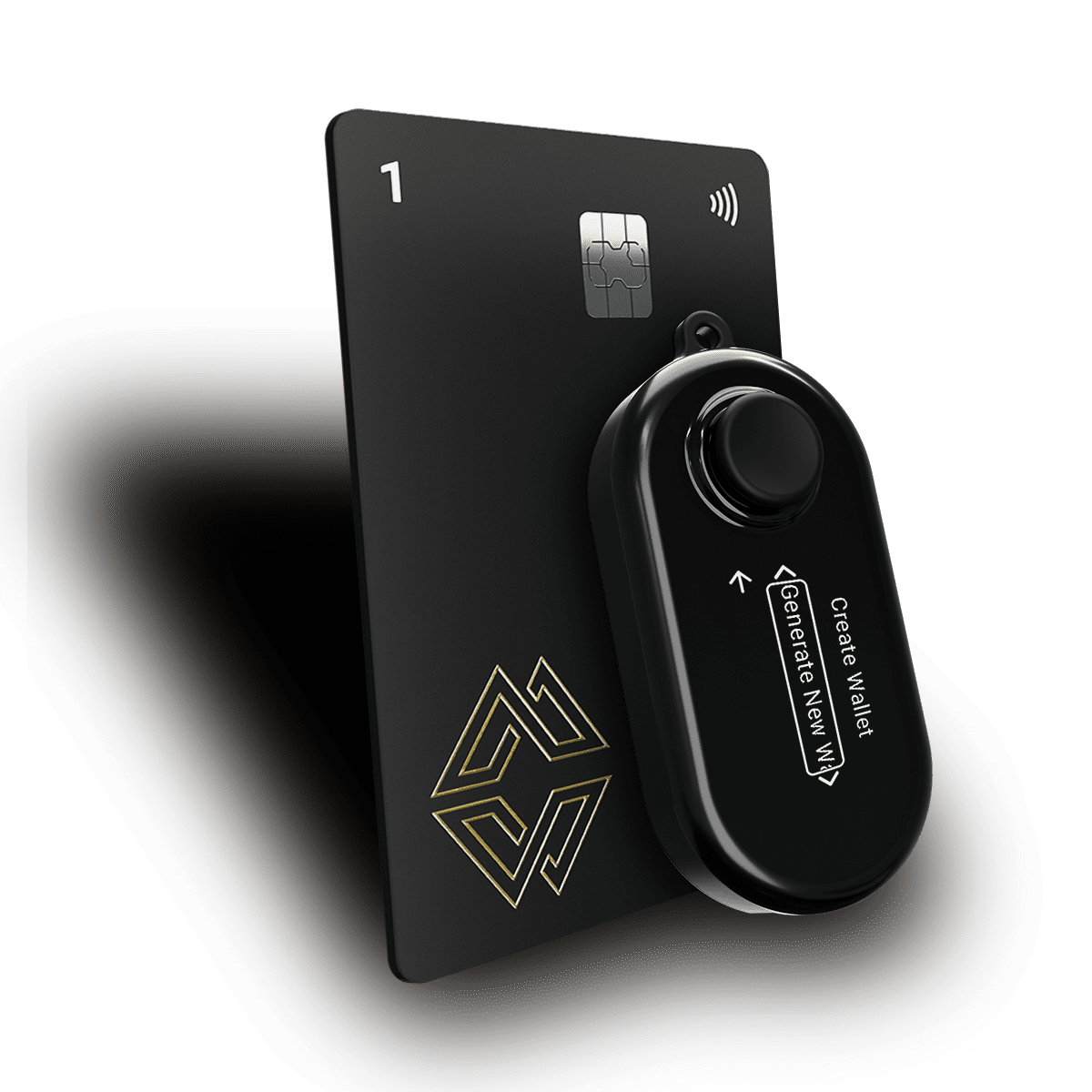
What to do instead: The 10 seconds it takes to verify an address on the X1 Vault screen does not meaningfully change your trade execution. The funds it can save you if your clipboard has been hijacked are potentially your entire balance. Verify. Every time. Especially when you feel rushed.
Every crash generates a surge of DeFi "opportunities": leveraged yield strategies, crash insurance products, discounted presales, and "buy the dip" automated vaults, many of which are either outright scams or unaudited contracts exploiting the crash narrative for deposits.
On-chain data supports that large holders were actively distributing positions rather than retail panic selling, with significant coin movements from long-term holder addresses to exchange wallets preceding the price drop by several days. The same on-chain channels that sophisticated holders use to move out also carry signals that attract malicious contract deployments targeting the holders moving in.
What to do instead: Apply the cold-wallet discipline more strictly during crashes, not less. Your cold vault address does not touch any new DeFi protocol regardless of the opportunity it presents. Any crash-period DeFi interaction happens from a warm wallet with an amount you can afford to lose entirely.
This peaks during downturns. Holders who use software wallets and suddenly can't access them, due to app updates, device failures, or simply forgotten passwords, search urgently for recovery solutions and land on phishing sites that mimic legitimate wallet recovery tools.
The urgency of a market downturn compounds the risk: the holder wants to access their funds now, while the price is doing whatever it's doing. The slowdown imposed by the correct recovery process (restoring from a genuine seed phrase backup to a verified wallet) feels intolerable. The phishing site offers faster "recovery." The seed phrase gets entered. Funds are drained.
What to do instead: If your wallet needs recovery during a crash, the correct response is the same as during any other period: use the genuine recovery process with your actual backup. If you have a Cypherock X1, recovery requires your hardware components and your PIN, not an internet interface. There is no need to enter a seed phrase into any web interface. This attack vector does not exist.
The instinct during a confusing market period is simplification: consolidate everything into one place, one exchange, one wallet, so you can see the full picture and make decisions more easily.
This consolidation instinct is dangerous in direct proportion to the value being consolidated. Moving all assets to a single exchange maximises the blast radius of an exchange failure, which, per the Bybit precedent, can happen to the most reputable platforms during exactly the high-stress market conditions that create these consolidation instincts.
What to do instead: During market stress, your multi-wallet architecture should become more deliberate, not less. Keep long-term holdings in cold storage. Move only what you need to an exchange for active trading. Review your wallet tier structure but don't collapse it under emotional pressure.
The sale comes at a particularly sensitive time: Bitcoin has experienced heightened volatility throughout 2026, driven by shifting macroeconomic conditions, changing monetary policy expectations, and fluctuating demand from spot Bitcoin ETFs. This volatility creates demand for analysis, predictions, and "insider" information, and attackers supply fake versions of all three.
"Portfolio stress tests," "wallet vulnerability scanners," and "crash protection tools" that require you to connect your wallet to a web interface are overwhelmingly phishing mechanisms during market downturns. A legitimate portfolio analytics tool (Zapper, DeBank, Zerion) shows read-only balance information from your public address; it never requires wallet connection or transaction signing.
What to do instead: Never connect your hardware wallet to any interface introduced to you via social media, search ad, email, or messaging app during a crash. Legitimate analytics tools require only your public address, not a wallet connection.
This is the most psychologically interesting mistake: holders who, during a bear market, decide their crypto is "not worth planning for anymore" because the portfolio value has dropped. Cypherock Cover, inheritance documentation, and recovery process testing all get deprioritised.
The portfolio value will recover. The permanent loss that occurs if you die without a working inheritance plan will not. Structural demand drivers remain intact despite near-term price weakness, which means the assets you're holding through this crash will likely be worth planning for on the other side of it.
What to do instead: A market correction is actually the ideal time to review and improve your inheritance setup: there is less emotional noise around the nominal value, and the structural importance of having a proper plan is clear. Set up Cypherock Coverif you haven't already, update your portfolio map with current wallet addresses, and confirm your designated beneficiary information is current.
The Strategy Bitcoin sale deserves its own analysis, not for price implications, but for the custody lesson embedded in the mechanics.
Traders and on-chain analysts spotted MicroStrategy wallets moving BTC to Coinbase Prime days earlier, sparking intense speculation. Arkham Intelligence and community trackers highlighted the unusual activity, which fueled a Polymarket bet on whether any sale would occur by May 31. CryptoSlate
This is the transparency of on-chain activity working exactly as designed: public blockchain data allowed independent analysts to detect wallet movement before the official filing. For retail holders, this is a reminder that your wallet activity is equally visible, and every address you own has a fully public transaction history.
What it is not: a reason to panic about institutional conviction. The amount is negligible, 0.0038% of its holdings, sold at an average price of $77,135, above its cost basis. The sale was to pay a preferred stock dividend, not a reflection of changed conviction on Bitcoin. The company sold at a premium rather than dumping into weakness, a disciplined capital-allocation move tied to supporting preferred dividends. CEO Phong Le described it as disciplined treasury management.
The market's overreaction to a 32 BTC sale from an 843,706 BTC holder is a behavioural finance phenomenon, not a fundamental signal. Recognising the difference between signal and noise during high-volatility periods is one of the most valuable skills a crypto holder can develop, and it applies as much to security decisions as to trading decisions.
There is a structural reason why Cypherock X1 holders are less vulnerable to crash-period security mistakes than holders using traditional hardware wallets or software wallets.
Eliminating seed phrase vulnerability removes an entire attack surface, at any time, including crashes. The most common crash-period security attack targets seed phrase exposure. Cypherock X1's architecture, which eliminates seed phrase vulnerability, means that an entire category of crash-period attacks is structurally unavailable. There is nothing to enter into a phishing interface, nothing to photograph, nothing to find, and nothing for a "recovery service" to claim to restore.
Distributed keys mean there is no single action that compromises everything. The panic-driven mistake of "moving everything to one place" is significantly less catastrophic when what you're moving is one of 5 key shares rather than a complete private key. The 2-of-5 SSS architecture means that no single rushed decision, plugging in the Vault or tapping a single card, exposes your complete key.
Physical authentication creates a deliberation moment at the worst possible time. Every transaction on Cypherock X1 requires picking up the Vault, connecting it, tapping a Card, and verifying on screen. This physical sequence is unchanged whether the market is up 10% or down 10%. The friction that feels unnecessary during calm periods becomes a meaningful protective mechanism during the rushed, distracted state of a crash.
If you are holding crypto through the current correction and want to act constructively on security rather than on price, here is a practical checklist:
Immediate (today):
This week:
This month:
Bitcoin's price has dropped significantly. The market is volatile. Institutional narratives have shifted. Year-to-date outflows from Bitcoin ETFs have exceeded $3.1 billion, and investors are increasingly directing funds into sectors like artificial intelligence and semiconductor stocks.
None of this has changed what is true about crypto self-custody. Your private key is still the only thing that matters for access to your assets. The blockchain is still indifferent to market conditions. A compromised key during a crash is exactly as catastrophic as a compromised key during a bull market. And the security architecture that protects you in either environment is the same: distributed, hardware-attested, and geographically resilient.
The price chart will do whatever it does. Your security setup is entirely under your control. Focus on what you can actually determine.
If you want to review your current custody architecture, explore the Cypherock X1 or read our complete guide on how to manage multiple crypto wallets securely. For inheritance and recovery planning, Cypherock Cover is available regardless of what the price is doing.

Related Reading: