0
$0.00
0 items


This morning, June 16, 2026, BlackRock listed the iShares Bitcoin Premium Income ETF on Nasdaq under the ticker $BITA. Bloomberg ETF analyst Eric Balchunas confirmed the launch, describing it as targeting 15-25% annual yield while attempting to capture at least 70% of Bitcoin's upside in the process.
The iShares Bitcoin Premium Income ETF (BITA) is BlackRock's second Bitcoin exchange-traded product. Its flagship, the iShares Bitcoin Trust (IBIT), launched in January 2024 and became the fastest-growing ETF in history by assets under management. BITA is not a plain spot Bitcoin ETF. It is an actively managed covered-call income fund. The distinction matters enormously for anyone trying to decide whether to buy BITA, hold IBIT, or simply own Bitcoin directly in self-custody.
The pitch is seductive: 15-25% annual income from Bitcoin, generated automatically, available in a familiar brokerage account wrapper. For income-oriented investors, retirees, RIAs managing yield-hungry portfolios, anyone who has watched Bitcoin sit in cold storage generating nothing, BITA appears to solve a real problem. It does. But it solves that problem by trading away the property of Bitcoin that has generated every major return its long-term holders have ever captured.
This blog explains exactly how BITA works, what the covered-call structure gives and takes, how it compares to IBIT and direct self-custody, and who should and should not be considering it today.
BITA holds Bitcoin exposure, primarily through a combination of direct Bitcoin custodied at Coinbase and shares of IBIT itself. From there, it writes (sells) call options on those IBIT shares and collects the premiums. In plain terms, here is the mechanism:
This structure, income now, capped upside later, is the foundational trade-off of all covered-call income strategies. The fund targets 15-25% income from covered calls on IBIT. The income is real. The cap on upside is equally real.
BlackRock did not stumble into being first. The firm filed its Form 8-A registration on June 11, the SEC signed off the evening of June 15, and BITA opened on Nasdaq June 16, beating a comparable Goldman Sachs Bitcoin income product expected in early July.
In ETF land, first mover advantage is real because liquidity and assets tend to concentrate in whichever fund lists first and builds the deepest order book. The competitive dynamics explain BlackRock's speed. Goldman Sachs has an equivalent product in preparation. Once BITA establishes itself as the reference product in the Bitcoin income ETF category, dislodging it becomes significantly harder, the same dynamic that let IBIT dominate the spot Bitcoin ETF category despite competing products from Fidelity, Ark, and others.
In a crypto market today dominated by fear, this announcement drops like a thunderbolt. Bitcoin is trading at approximately $66,323 this morning, recovering from the $59,130 low hit during last week's crash. The timing, a fear-dominant market, income investors rattled by volatility, an ETF offering structured yield, is not accidental.
On the custody side, Coinbase Custody Trust Company serves as the primary Bitcoin custodian for the fund, with Anchorage Digital Bank available as an alternative custodian. The Bank of New York Mellon handles cash and securities custody, as well as trust administration for the fund.
This is the custody architecture of every institutional Bitcoin ETF, and it is important to understand clearly. When you buy BITA shares:
It is also not the same thing as holding spot Bitcoin or self-custody. BITA is a fund share, not a coin. This distinction becomes concrete in specific scenarios:
In a protocol or network upgrade: Bitcoin holders vote with their keys. BITA shareholders have no say in any Bitcoin protocol decision. The custodian's operational decisions, which fork to follow, how to handle airdrops, whether to participate in any yield protocol built on Bitcoin, are made entirely by BlackRock and Coinbase.
In a regulatory event targeting ETFs: A government regulatory action targeting Bitcoin ETFs, confiscation orders, forced liquidation, NAV restrictions, affects BITA shareholders directly. Bitcoin held in self-custody at a private key outside any ETF structure is not reachable by the same regulatory mechanism.
In a custodian failure: The risk is remote but not zero. If Coinbase Custody Trust Company faced a solvency event, BITA shareholders would be creditors of the trust. Bitcoin held in a hardware wallet by its owner is not subject to any custodian's solvency.
In a network fork creating a new asset: When Bitcoin Cash forked from Bitcoin in 2017, holders of actual Bitcoin received an equivalent amount of Bitcoin Cash. Holders of Bitcoin ETFs at the time received nothing: the fund's custodian chose which chain to follow, and the airdropped asset was handled at the fund's discretion, not distributed to shareholders.
The 15-25% yield sounds compelling in isolation. Understanding what it costs requires working through the covered-call math at different Bitcoin price scenarios.
Scenario A: Bitcoin rises sharply (50%+ in a year)
This is the scenario in which BITA materially underperforms holding Bitcoin. BITA sells call options at strikes typically near current price. If Bitcoin rises 50%, as it has in multiple calendar years, the calls get exercised. BITA captures appreciation up to the strike, then sells at that level. Shareholders receive their 15-25% yield plus capped upside. Holders of actual Bitcoin capture the full 50%. The gap between "15-25% income + capped upside" and "50% price appreciation" is the cost of the covered-call structure in a strong bull market. It is not a small gap.
Scenario B: Bitcoin is flat (±10% in a year)
BITA performs best here. The calls expire worthless, BITA keeps the premium, shareholders receive 15-25% income, and the slight price movement barely affects NAV. A flat Bitcoin year is BITA's ideal environment: income-generating where spot Bitcoin generates nothing.
Scenario C: Bitcoin falls 30%
BITA's downside protection is limited. Call premiums provide modest cushion: if Bitcoin falls 30% and BITA collected 20% in premiums, the net loss is approximately 10%. Self-custody holders take the full 30% drawdown. BITA marginally outperforms in a significant bear market, but the income does not come close to offsetting a major correction.
The pattern is consistent across covered-call ETF history in equities: you would be paying 0.65% a year for the privilege of underperforming your own conviction. In flat or modestly declining markets, covered-call strategies look brilliant. In the strongly trending bull markets that Bitcoin has historically delivered over multi-year periods, they look like a mistake.
These three products serve genuinely different investor needs. Here is the honest comparison:
| BITA (Bitcoin Yield ETF) | IBIT (Spot Bitcoin ETF) | Self-Custody (Hardware Wallet) | |
|---|---|---|---|
| What you own | ETF shares (claim on trust NAV) | ETF shares (claim on trust NAV) | Private key to blockchain address |
| Yield | 15-25% annual (covered-call premium) | None | None (unless staking-compatible asset) |
| Bitcoin upside capture | ~70% (capped by covered calls) | 100% | 100% |
| Downside protection | Partial (premium cushion ~15-25%) | None | None |
| Custodian risk | Coinbase Custody + BlackRock | Coinbase Custody + BlackRock | None, you are the custodian |
| Regulatory seizure risk | Yes, ETF is reachable by regulators | Yes, ETF is reachable by regulators | No, private keys not subject to ETF regulation |
| Fork / airdrop access | No, fund decides | No, fund decides | Yes, you control the key |
| Account required | Yes, brokerage account | Yes, brokerage account | No |
| Annual cost | 0.65% expense ratio | 0.25% expense ratio | Hardware wallet purchase ($99-$179 one-time) |
| Best for | Income-oriented investors, retirees, RIAs | Institutional and retail Bitcoin price exposure in brokerage | Long-term holders, self-sovereignty, full upside |
BITA is designed for a different buyer than IBIT, retirees, registered investment advisors managing income-oriented portfolios, and anyone who has watched Bitcoin sit in cold storage generating nothing. This is accurate and not dismissive. There is a legitimate investor profile for whom BITA makes sense:
The income-mandated institutional allocator. Pension funds, endowments, and insurance companies have allocation mandates that require yield from their holdings. A product that delivers 15-25% annual income from Bitcoin exposure, even with capped upside, fits allocation frameworks that pure price-appreciation vehicles do not. BITA opens Bitcoin allocation to a category of institutional capital that could not hold IBIT.
The retiree or near-retiree. An investor in the distribution phase of their financial life, drawing income from their portfolio, values predictable cash flows over capital gains. BITA's covered-call premium, distributed as income, serves this need in a way that holding Bitcoin directly does not.
The RIA managing income-oriented client portfolios. Financial advisors managing clients who need quarterly income have historically had no way to include Bitcoin in income portfolios. BITA creates a pathway.
For all three of these profiles, BITA is a genuine product-market fit. The trade-off, capped upside in exchange for structured income, is an acceptable one for investors whose primary need is income rather than maximum capital appreciation.
For every investor who isn't in the income-mandate category, BITA's trade-off is unfavorable.
The long-term Bitcoin conviction holder. If you believe Bitcoin's structural upside over 5-10 years is 3x-10x from current levels, selling covered calls at near-current strikes is a systematically poor strategy. You capture 15-25% annually in a straight line while potentially forgoing multiples of your starting capital in return. Bitcoin has delivered 10x returns over several distinct 4-year cycles. A covered-call structure would have capped most of those returns while delivering a fraction of them as income.
The self-sovereignty-oriented holder. The entire reason self-custody exists is to hold Bitcoin without a custodian standing between you and your asset. BITA introduces not one but two custodians, Coinbase Custody and BlackRock as fund manager, plus a regulatory exposure that individual key-holders don't have. The 15-25% yield does not compensate for the elimination of Bitcoin's core property of being censor-resistant money.
The holder who wants to participate in Bitcoin's evolving utility layer. Bitcoin's ecosystem is expanding: the Lightning Network, sidechains, and protocol-level developments create options for key-holders that ETF shareholders do not have. A BITA shareholder is a passive recipient of covered-call premium. A Bitcoin holder in self-custody can participate in every protocol development the network offers.
For these holders, the right product is not BITA. It is a hardware wallet that holds actual Bitcoin under their own key, with the full upside, the full sovereignty, and the full utility access that ETF wrappers structurally prevent.
Strategy added 1,587 BTC for $100 million, ETF inflows turned positive with $85.8 million on June 13, and whales pulled over 11,000 BTC off exchanges. The recovery from last week's lows has real institutional buying behind it.
BITA's launch today adds a new demand vector, a product designed to attract capital from income-mandate institutional allocators who couldn't previously hold Bitcoin-linked yield products. That capital, when it enters via BITA, purchases Bitcoin custodied at Coinbase, driving real demand for actual Bitcoin.
The irony is structural: BITA's existence as a custodial, capped-upside product potentially increases demand for actual Bitcoin while simultaneously reducing the proportion of that Bitcoin held by its purchasers themselves. The Bitcoin goes to Coinbase Custody. The BITA shareholder receives an ETF share and a quarterly income distribution.
This dynamic, institutional products driving Bitcoin demand while removing it from self-custody, is one of the defining tensions of Bitcoin's current phase. More institutional adoption means more demand and potentially higher prices. It also means an increasing proportion of supply held by custodians rather than individuals.
For individual holders, the response is straightforward: participate in the price appreciation of Bitcoin by holding your own keys, not by purchasing a covered-call wrapper that caps your upside while routing your Bitcoin to Coinbase Custody.
BITA's 15-25% yield raises a natural question for self-custody holders: is there any way to generate yield from Bitcoin in self-custody that doesn't involve a custodian or upside cap?
The honest answer: for native Bitcoin (BTC on the base layer), no. Bitcoin's proof-of-work consensus does not offer native staking yield. The Lightning Network generates routing fees but requires active node management and technical sophistication that is far from passive income.
For other assets that Cypherock X1 supports, native staking yield is available from cold storage: Solana's ~7% staking APY, Polkadot's nomination pool rewards, and Avalanche's validation rewards are all achievable with the full asset in self-custody, no upside cap, and no custodian.
But for Bitcoin specifically, the asset BITA is built on, the choice is binary: hold your own keys with full upside and no yield, or enter a custodial product that caps your upside in exchange for income. BITA is BlackRock's optimised version of that second option. It is the best available custodial Bitcoin yield product for income-mandate investors. It is not the right product for conviction holders who want maximum exposure to Bitcoin's long-term appreciation.
BITA is a Bitcoin ETF launched by BlackRock on Nasdaq on June 16, 2026, designed to generate up to 25% annual yield. It achieves this yield by selling call options against its Bitcoin holdings, collecting premium income but capping the upside it can pass through to shareholders. It is not the same as holding Bitcoin directly.
IBIT is BlackRock's spot Bitcoin ETF: it holds Bitcoin and tracks BTC price movement directly with no yield and full upside capture. BITA is an actively managed covered-call fund that holds Bitcoin and IBIT shares, sells call options to generate 15-25% annual income, and caps upside at approximately 70% of Bitcoin's appreciation. IBIT is for price exposure. BITA is for income.
No. BITA is a fund share, not a coin. You own shares of an ETF trust. Bitcoin is held by Coinbase Custody on behalf of the trust. You have no private key, no blockchain address, and no direct claim on specific Bitcoin units.
BITA carries the standard risks of ETF products: counterparty risk (Coinbase Custody, BlackRock operational risk), regulatory risk, and the structural risk of capped upside in a strongly trending market. It is not "safe" in the sense of eliminating Bitcoin's volatility: the downside is largely preserved. It is "safer" than holding Bitcoin in the sense that the income provides partial cushion in flat or declining markets.
No, unless you have a specific income mandate that requires yield from your Bitcoin allocation. For long-term conviction holders, BITA's 70% upside capture versus 100% in self-custody represents a permanent structural drag over full cycles. The income is real; the cost is the upside you systematically forgo in Bitcoin's strongest appreciation periods.
The expense ratio for $BITA has been set at 0.65%. This is in addition to the implicit cost of the covered-call strategy, the forgone upside above the strike prices.
BlackRock's BITA launch today is a genuinely significant product development: the first Bitcoin yield ETF in history, from the world's largest asset manager, opening Bitcoin income exposure to a category of institutional capital that previously had no suitable product. It will attract substantial assets. It will drive real Bitcoin demand through Coinbase Custody. It is a well-constructed product for its target audience.
That target audience is income-mandate institutional allocators, income-oriented retirees, and RIAs managing yield-hungry portfolios. For these investors, BITA's trade-off, structured income in exchange for capped upside, is an acceptable one.
For everyone else, the BITA launch is a useful reminder of what ETF wrappers actually are: custodial, capped, and structurally disconnected from the core properties that make Bitcoin worth holding. The race to bring Bitcoin to institutions is real and consequential. But it is also not the same thing as holding spot Bitcoin or self-custody. BITA is a fund share, not a coin.
The product that captures 100% of Bitcoin's upside, carries no custodian risk, has no regulatory seizure exposure, and costs a one-time $99-$179 rather than 0.65% per year indefinitely is a hardware wallet. It does not generate 15-25% yield. It does generate full ownership of the asset whose long-term appreciation has made every covered-call yield look modest by comparison over every complete Bitcoin cycle on record.
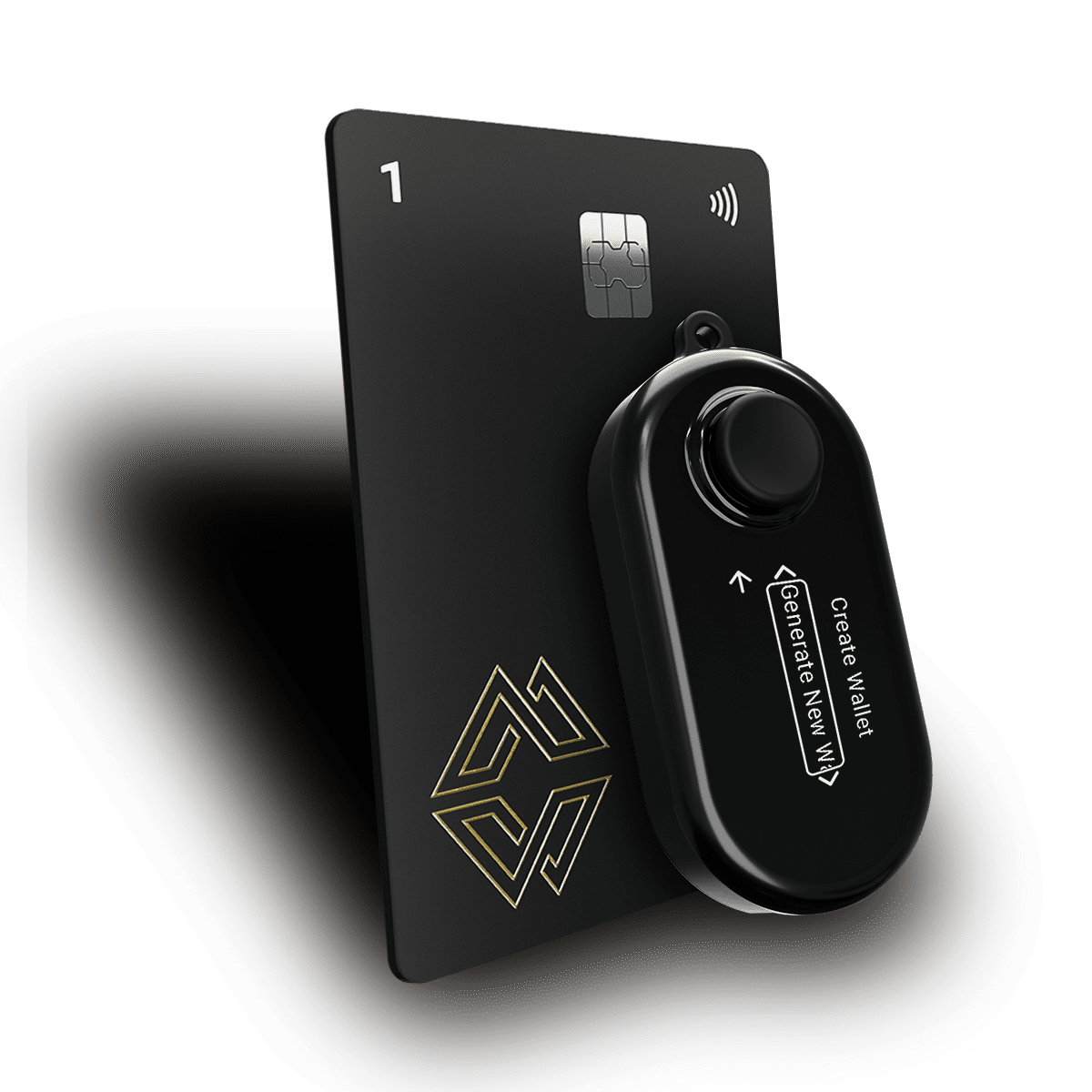
Explore Cypherock X1 for genuine Bitcoin self-custody: the hardware that holds your private key across 5 distributed components, eliminating seed phrase vulnerability and any single point of failure. Check the full supported asset list and read our Bitcoin storage and setup guide to get started.
Related Reading: