0
$0.00
0 items

There's a statistic that circulates in the Bitcoin community with grim regularity: an estimated 3 to 4 million Bitcoin, worth hundreds of billions of dollars at current prices, may be permanently lost. A significant portion of that wasn't hacked. It wasn't stolen. It simply belonged to someone who died, and no one knew how to access it.
If you hold crypto and you haven't thought seriously about what happens to it when you die, you are not planning for self-custody. You are planning for permanent loss.
This guide explains the inheritance problem in plain terms, reviews every solution currently available, and explains why most of them fall short, and what actually works.
In traditional finance, estate planning is difficult but solved. Banks have legal processes. Brokerage accounts have beneficiary designations. Even if someone dies without a will, courts can freeze and distribute assets.
Crypto is different for three fundamental reasons:
This three-way tension, irreversibility, cryptographic access requirements, lifetime security, is why the crypto inheritance problem has remained unsolved for so long.
The Seed Phrase in a Will Writing your 24-word seed phrase in a legal will is the most common approach. It is also, arguably, the most dangerous.
Your will becomes a legal document that may be reviewed by lawyers, court clerks, and probate judges before it reaches your heir. Most jurisdictions make wills part of the public record after probate. The seed phrase is exposed to anyone with access to the document, including actors you'd never intend.
The Seed Phrase in a Safe Storing a seed phrase in a home safe and leaving access instructions for family members addresses some of the above, but creates new problems. The safe can be stolen. The instructions can be found. The physical location becomes a target.
Giving Seed Phrase Access to a Trusted Person The logic is understandable: give a family member or attorney a copy of your seed phrase so they can access funds if something happens to you. In practice, this increases the attack surface significantly. That person's home can be targeted. Their own security practices may not match yours.
Custodial Recovery Services (e.g., Ledger Recover) Services like Ledger Recover custody fragments of your seed phrase on their infrastructure, verified by KYC. For users who chose self-custody specifically to avoid KYC and third-party custody, this is philosophically contradictory, and it reintroduces the centralized custodian risk that crypto was designed to eliminate.
Multisig-Based Services (Casa, Nunchuk) Casa and Nunchuk offer excellent Bitcoin multisig inheritance solutions. The limitation: they are Bitcoin-centric. For users holding ETH, ERC-20 tokens, Solana assets, or a diverse portfolio, these solutions are incomplete.
Cypherock Cover is a non-custodial, non-KYC, hardware-based inheritance and PIN recovery service launched in Q4 2024. It was designed specifically to address the inheritance problem without creating new vulnerabilities.
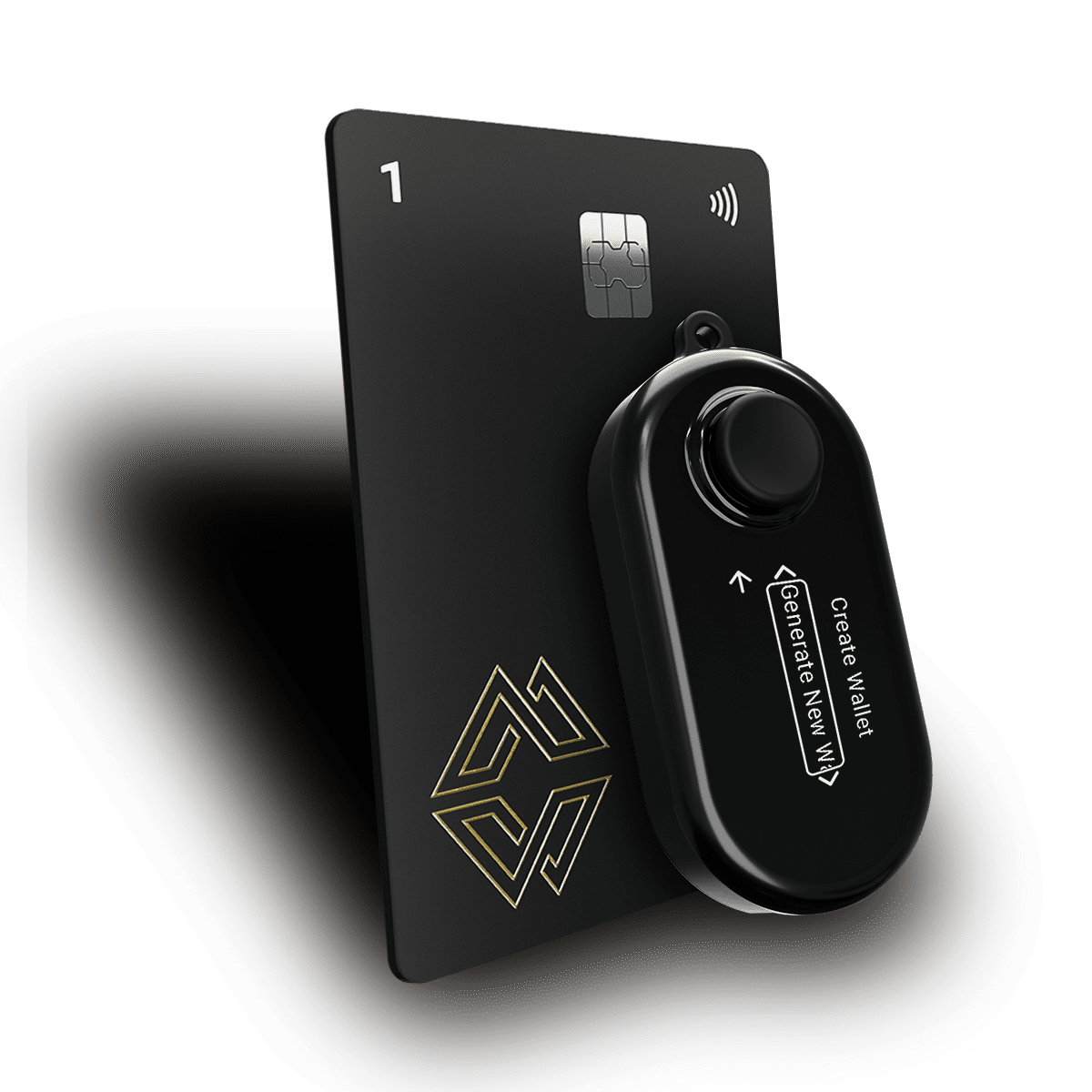
The Problem it Solves: Cypherock X1 splits your private key into 5 shares using Shamir's Secret Sharing: 1 on the X1 Vault, 4 on X1 Cards. Any 2 of 5 reconstruct access. During your lifetime, you hold the Vault and distribute the Cards. The system is secure because no individual component is sufficient.
But what happens when you die? Your beneficiary needs 2 components and your PIN to access funds. Getting them access without revealing that information during your lifetime, and without involving a custodian, is the problem Cypherock Cover is designed to solve.
The Cover Mechanism: Cypherock Cover acts as a time-locked escrow layer for inheritance. Using cryptographic techniques and hardware-attested verification, Cover can release the access information to a designated beneficiary after a confirmed death event, without Cypherock ever holding the complete key at any point.
For PIN Recovery: Cover also addresses one of the most common self-custody disasters: forgetting your PIN. Unlike a seed phrase that can be physically written down, a PIN is memorized. Cypherock Cover provides a recovery pathway that does not require exposing the underlying key material.
Regardless of which tools you use, effective crypto inheritance planning requires addressing four layers:
Layer 1: Access (Can they get in?) Your beneficiary must have a path to the private key. This requires either: physical access to sufficient hardware components + PIN, OR a structured recovery mechanism like Cypherock Cover that releases access under defined conditions.
Layer 2: Knowledge (Do they know what they have?) Many heirs receive hardware wallets without any idea what's inside. Maintain a private, secure inventory of your wallets, approximate holdings, and the networks your assets live on. This document should reference the recovery mechanism; it should never contain seed phrases or PINs.
Layer 3: Instructions (Do they know what to do?) Your beneficiary may not be a crypto-native user. Prepare simple, step-by-step instructions for accessing and moving assets, including which exchange or OTC desk to use to convert to fiat if desired, and how to avoid common transaction errors (wrong network, gas fee issues).
Layer 4: Continuity (Will the tools still work?) Hardware wallets fail. Software is deprecated. Build your plan around standards (BIP-39, BIP-44, standard derivation paths) rather than proprietary tools that may not exist in 20 years. Cypherock X1's open-source architecture and standard derivation paths are designed with this in mind.
Crypto inheritance is a tax event in most jurisdictions. Your heirs inherit your assets at a stepped-up cost basis in the US, meaning they're taxed on gains from the value at the date of death, not your original purchase price. In other jurisdictions, inheritance or estate taxes may apply differently.
This is not a reason to avoid crypto inheritance planning; it's a reason to make sure your estate planning includes someone who understands both crypto and tax law. Consult a tax professional familiar with digital assets. The IRS, HMRC, and equivalent agencies in most major countries have increasingly detailed guidance on inherited crypto.
You can. But this approach requires your heir to: find the safe, know what a Ledger is, know what a seed phrase is, not accidentally enter the wrong PIN three times (which wipes some devices), and successfully navigate the recovery process. Many fail at one or more of these steps. Structured solutions like Cypherock Cover are more reliable precisely because they're designed to work for non-technical beneficiaries.
No. Cypherock Cover is non-KYC and non-custodial. It does not require you to submit identity documents or surrender custody of your keys to a third party.
Cross-border crypto inheritance is legally complex. In most cases, the blockchain is indifferent to jurisdiction; whoever has cryptographic access can move the funds. Legal questions around whether funds are taxable in two jurisdictions, however, require professional advice specific to both countries.
Giving a family member a card gives them 1-of-5 shares, which is insufficient to access funds and does not tell them what to do with it. Cover provides a structured, time-triggered access pathway with instructions and verification, not just a hardware component with no context.
No. Even a few hundred dollars of crypto can be worth recovering, and the habits established for small holdings scale cleanly to large ones. The time to plan is before you need to, not during a crisis.
The crypto community has spent years building technology to ensure you can always access your funds. The inheritance problem is the inverse: ensuring someone else can access your funds only when appropriate, and not a moment before.
That requires more than a note in a drawer. It requires a structured, hardware-attested, cryptographically sound plan that works for non-technical heirs without exposing your keys during your lifetime.
Cypherock X1 and Cypherock Cover were built together to solve exactly this problem, the hardware for seedless cold storage, and the service layer for inheritance and recovery.
Your crypto is only truly self-custodied if someone can access it after you're gone.
Related reading: