0
$0.00
0 items


Three days from now, July 1, 2026, the largest crypto exchange in the world will go dark for millions of European users. Binance has told customers in several EU countries that it will restrict services because it will not have the required Markets in Crypto-Assets (MiCA) license by the July 1 deadline. Customers in France, Italy, Spain, and Poland have already received notification emails outlining withdrawal procedures and account access limitations after June 30.
The exchange has confirmed the cessation of services for users residing in the European Union as of July 1, 2026. The specific services being suspended vary by country and will be clarified as the deadline approaches, but the core message is unambiguous: if you are an EU resident with assets on Binance, you need to act before June 30.
ESMA has explicitly urged users to transfer their crypto assets to an authorised CASP or a self-custody wallet if their platform is not listed as authorised. This is not a drill. It is not a rumour. The world's largest exchange by volume is suspending services for the European Union in 72 hours.
This blog is your action guide: what is actually happening, what your options are, and exactly how to move your assets safely before the deadline.
Understanding why Binance is suspending services is important, not because it changes what you should do, but because it determines the specific nature of the risk and what "suspended services" actually means.
MiCA, Markets in Crypto-Assets, is the European Union regulation that establishes a unified legal framework for all cryptocurrency service providers in the 27 member states. Its aim is to replace the patchwork of national registries that allowed many platforms to operate in regulatory grey areas with a single authorisation system using a European passport. MiCA requires all virtual asset service providers operating in the EU to obtain a single licence from July 1. Firms without a licence cannot offer services in the bloc.
Binance had applied in Greece for a MiCA licence that would have allowed it to operate across the EU, but the application was not approved. The Greek HCMC never issued a formal decision. Binance withdrew its Greek filing and began exploring alternative jurisdictions, with France reportedly considered as a potential licensing base. However, even under an accelerated timeline, approval would likely not arrive before the EU enforcement deadline, forcing a temporary service suspension.
A MiCA licence from one EU regulator would passport Binance across all 27 member states, making the approval decision bloc-wide. Without it, operating on an unauthorised platform after July 1 will result in the loss of the legal protections that MiCA guarantees: asset segregation, custody obligations, regulated communication, and active AML supervision.
Binance has stated that it expects to secure a MiCA licence within the coming months and is pursuing authorisation through France. The exchange assured users that their assets remain safe and accessible as it winds down unlicensed EU activities.
Two things can be simultaneously true: Binance's assets are genuinely likely to remain accessible during the suspension, and leaving your crypto on a suspended platform is an unnecessary risk that is entirely avoidable by moving it before the deadline. The opportunity to eliminate that risk expires in 72 hours.
This is the question most EU Binance users are searching for answers to right now. Here is what the available information indicates:
Trading: ESMA has directed unauthorised crypto-asset service providers to stop onboarding new EU clients and restrict existing services to exit and withdrawal activity. New trades and positions may not be available after July 1.
Withdrawals: Clients were reassured that their funds would not be at risk: "Your assets remain safe and secure, and will remain accessible at all times," the firm said. Withdrawals should remain available during the suspension period.
Deposits: Likely suspended, you would not be able to add new funds to your account.
Staking and yield products: Likely suspended or wound down, these are active financial services requiring ongoing operation.
Account access: Binance is obligated to implement an orderly exit plan that guarantees users' access to their assets. In practice, this means you should be able to withdraw your crypto assets, either by transferring them to another platform or to a self-custody wallet.
The critical uncertainty: the exact timeline and mechanics of service restoration after Binance secures a MiCA licence, which it has not yet done and which is not guaranteed on any specific timeline. Treating your assets as accessible for the foreseeable future is optimistic. Acting as though withdrawal access could change is prudent.
The MiCA regulation was, in part, designed to create exactly this dynamic: a regulatory framework that forces EU crypto holders to confront the reality of exchange custody and make deliberate decisions about where their assets actually live.
The practical recommendation is to act as soon as possible, without waiting until the final days of the orderly exit process. Mass withdrawals create congestion and can take longer than expected. This is practical advice from a regulatory compliance perspective. From a self-custody perspective, it is also the most important piece of actionable guidance that flows from Binance's suspension, not just "move before July 1," but "understand why you should have already moved, and ensure you never need to scramble like this again.
Every exchange, however large and however reputable, operates within a regulatory and operational environment that can create withdrawal restrictions, service suspensions, and access limitations at any time. Binance's MiCA situation is a regulatory constraint, not a financial failure. But the effect on EU users is structurally identical to a withdrawal freeze triggered by any other cause: your ability to access your assets depends on the exchange's operational status, not on your private key.
The solution is unchanged regardless of the cause: hold your own keys. Not on Binance. Not on any exchange. In a hardware wallet you control, accessible 24 hours a day, 365 days a year, without dependence on any company's licence status, regulatory standing, or server infrastructure.
EU Binance users have three primary options. Here is an honest assessment of each.
These are the five criteria that MiCA establishes as guarantees for the user on an authorised platform: asset segregation, custody obligations, regulated communication, active AML supervision, and investor protection requirements. Exchanges that have secured MiCA licences and can accept EU users include Coinbase Europe (licenced through Ireland), Kraken (licenced through Ireland), Bitstamp (licenced through Luxembourg), and several others. These platforms meet the regulatory requirements that Binance failed to satisfy before the deadline.
What this gives you: Continued exchange access, trading functionality, and MiCA's legal protections.
What this does not give you: Self-custody. You are moving from one exchange to another. The custody risk changes in nature, you're now on a MiCA-compliant exchange with better regulatory protections, but you still do not hold your private keys. If the licensed exchange you choose faces its own operational, regulatory, or security event, you are again a creditor to their custody system.
Who this is right for: Traders who actively buy and sell frequently and need exchange functionality. Holders who have not yet set up a hardware wallet and want to secure their assets immediately before the deadline while preparing for proper self-custody setup.
This is the option that ESMA itself recommended. ESMA has explicitly urged users to transfer their crypto assets to an authorised CASP or a self-custody wallet if their platform is not listed as authorised. Self-custody means moving your crypto to a hardware wallet where you, and only you, hold the private key. No exchange. No regulatory licence required for your access. No company between you and your assets.
What this gives you:
What this requires:
Who this is right for: Anyone holding assets on Binance that represent meaningful value and that are intended for medium-to-long-term holding rather than active daily trading. This is the right destination for the overwhelming majority of EU Binance users' assets.
Some holders may use this moment to reduce their crypto exposure entirely, withdrawing to a bank account in euros or local currency.
What this gives you: Immediate, simple resolution with no new systems to learn.
What this requires: Understanding the tax implications in your jurisdiction, a crypto-to-fiat conversion is a taxable event in most EU countries.
Who this is right for: Holders who were planning to sell anyway, or who have small balances where the cost of hardware wallet setup is disproportionate.
For holders choosing Option B, the right long-term choice for most, here is the complete process. The deadline is tight but achievable.
What you need:
Order from cypherock.com/store with expedited shipping if available. If you cannot receive hardware before July 1, proceed to Option A (MiCA-licenced exchange) as a temporary measure while your hardware wallet is in transit. Do not leave assets on a suspended Binance account as a fallback.
Download cySync from docs.cypherock.com, the official site only. Install on your desktop computer. Connect the X1 Vault via USB-C. Follow the wallet creation flow.
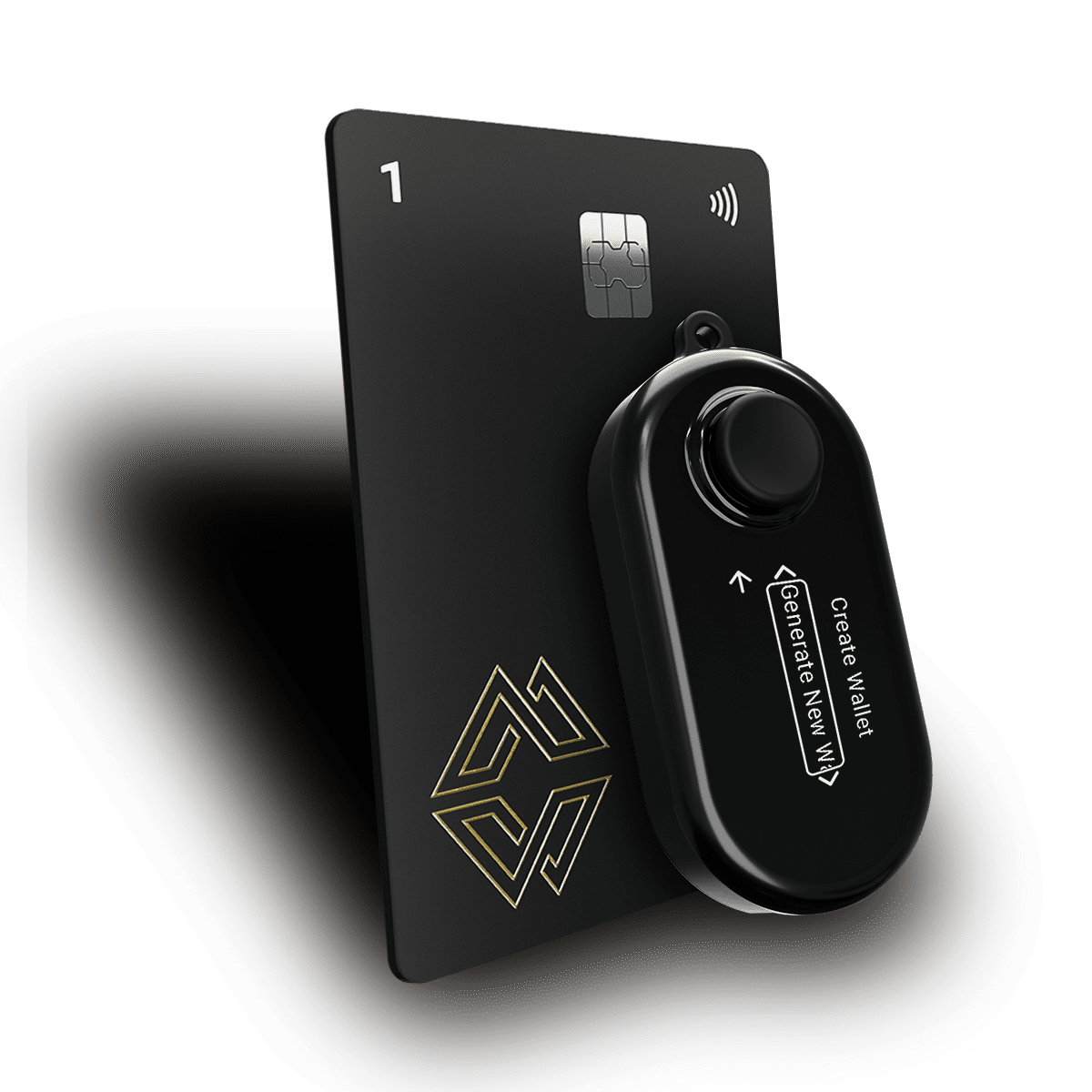
Critically: you should be able to withdraw your crypto assets to a self-custody wallet. Your private key, generated on the Vault, is split cryptographically into 5 hardware components via Shamir's Secret Sharing the moment it's created, 1 Vault and 4 Cards. You never need to write down a seed phrase, though you can view it on the Vault screen at any time if you choose. No paper backup required. No single point of failure.
In cySync, add accounts for each blockchain where you hold assets on Binance:
For each address: use cySync's "Verify Address" function to display it on the X1 Vault's physical screen. Confirm the address shown on the device matches what cySync shows on your computer. Do this before sending any assets.
Do not wait until June 30. Mass withdrawals create congestion and can take longer than expected. Network fees spike and withdrawal queues lengthen as deadlines approach. Start withdrawing now.
For each asset:
Store your 4 X1 Cards in at least 2 geographically separate locations. You need the Vault plus any 1 Card to sign future transactions. The remaining 3 Cards are insurance. Geographic separation means no single event compromises your complete setup.
Cypherock Cover provides non-custodial PIN recovery and inheritance planning. Set this up this week, it takes less than 30 minutes and ensures that even if you forget your PIN or something happens to you, your assets remain accessible to the right people.
The Binance MiCA suspension is unusual in one sense: it is regulatory, not financial. Binance is not insolvent. Its assets are not missing. The suspension is a consequence of failing to satisfy a licensing requirement, not a solvency event.
But for EU users experiencing withdrawal scrambles and service suspensions, the practical effect is indistinguishable from the early stages of any exchange-access restriction event. The assets may well be safe. The access to them is temporarily at someone else's discretion. This is the fundamental structural problem with exchange custody that MiCA itself cannot fully solve.
Operating on an unauthorised platform after July 1 will result in the loss of the legal protections that MiCA guarantees: asset segregation, custody obligations, regulated communication, and active AML supervision. MiCA's protections are meaningful and worth having. But they are legal protections, frameworks for what happens after something goes wrong, not guarantees that nothing will go wrong.
Asset segregation requirements ensure that an exchange's customer assets are not co-mingled with operating funds, an important protection, and one FTX violated catastrophically. But segregated assets on a suspended platform are still on a suspended platform.
The only protection that is fully independent of any exchange's regulatory status, financial health, or operational decisions is holding your own private key. Self-custody via a hardware wallet is not a rejection of regulation, it is the complement to regulation. You benefit from MiCA's protections when you need exchange services, and you are entirely unaffected by any exchange's MiCA status when your assets are in your own custody.
The Binance MiCA situation is the most urgent, but it is not unique. Exchanges were given until 30 June 2026 to obtain authorisation from a national regulator within the bloc, a deadline the vast majority have failed to meet. Binance is the largest and most visible, but EU holders with assets on smaller exchanges that also lack MiCA licences face the same deadline with less media attention and potentially less organised exit procedures.
Now is the time to audit every exchange account you hold:
The answer to the third question should always be: my significant holdings are already in self-custody on my hardware wallet, so any exchange restriction affects only my active trading float. If that is not currently your answer, the Binance MiCA deadline is the most concrete possible reminder that it should be.
Binance confirmed it will restrict services for EU users because it will not have the required MiCA licence by the July 1 deadline. The specific services suspended vary by country. Withdrawals are expected to remain available during the suspension period, but trading and other services will likely be restricted. Do not wait to find out the precise scope, move your assets before the deadline.
Binance assured clients that "Your assets remain safe and secure, and will remain accessible at all times." The suspension is regulatory, not financial, Binance is not insolvent and has not lost customer funds. However, "accessible at all times" is a statement made under current conditions. Regulatory situations evolve. Moving your assets before the deadline eliminates any dependence on that assurance.
Yes. ESMA explicitly urged users to transfer their crypto assets to an authorised CASP or a self-custody wallet. Moving to a MiCA-licenced exchange like Coinbase Europe, Kraken, or Bitstamp is a valid short-term step, especially if you need continued trading access. For long-term holdings, self-custody in a hardware wallet eliminates ongoing exchange custody risk.
Move to a MiCA-licenced exchange immediately as a temporary measure. Order your hardware wallet in parallel. Once it arrives and is set up, move your long-term holdings from the exchange to self-custody. The priority right now is getting off Binance before July 1. The priority over the following week is achieving genuine self-custody.
Cypherock X1 supports 19,000+ tokens across 10+ blockchains including Bitcoin, Ethereum and all ERC-20 tokens, BNB Smart Chain and BEP-20 tokens, Solana, Avalanche, Polkadot, XRP, TON, and more. Check the complete supported token list at cypherock.com/coin-support.
Binance said it expects to secure a MiCA licence within the next few months. It is pursuing authorisation through France as its next attempt. Whether and when this succeeds is uncertain. Your long-term holdings should not depend on that outcome.
Always select the native network for each asset: Bitcoin on Bitcoin network; ETH and ERC-20 tokens on Ethereum (ERC-20) network; BNB and BEP-20 tokens on BNB Smart Chain (BEP-20); SOL on Solana; XRP on XRP Ledger. Never mix networks, assets sent on the wrong network land at the right address on the wrong chain and require technical recovery. When in doubt, do a small test transaction first and confirm receipt before sending the full balance.
July 1, 2026, is not just another date on the European crypto calendar. It marks the definitive end of the MiCA transition period, and any exchange still operating in the European Union without a CASP licence is violating European law. For millions of EU Binance users, this week is a forced reckoning with a question that should have been answered long ago: where do your crypto assets actually live, and who controls access to them?
Binance's assets are likely safe. Its commitment to providing withdrawal access during the suspension appears genuine. The regulatory situation may resolve in a matter of months. But the purpose of self-custody has never been to protect against scenarios that are merely unlikely. It is to protect against every scenario that could happen: regulatory suspensions, exchange failures, withdrawal restrictions, network outages, geopolitical events, and anything else that can stand between you and assets that are nominally yours.
Move your assets before June 30. Use this moment to do what you should have done before any exchange's status became a source of stress: hold your own keys, in your own hardware, at your own address, permanently accessible, permanently yours.
Get started today at cypherock.com/store. Download cySync to set up your wallet, check Binance-compatible token support, and configure Cypherock Cover for inheritance and PIN recovery once your assets are safely in self-custody.
Related Reading:-