0
$0.00
0 items

Over one in three US crypto holders have lost access to a wallet or account. Of those, nearly one in three have never recovered their assets. Over one in ten of those who lost access lost more than $5,000 in a single incident.
These are not edge cases. They are the normal outcomes of a custody model that places the entire burden of perfect behaviour on the individual, over an indefinitely long time horizon, with irreversible consequences for any mistake.
High-profile cases include James Howells, who accidentally buried a hard drive containing the keys to 8,000 bitcoins, worth over $1 billion as of May 2026, in a landfill, and Stefan Thomas, who locked himself out of 7,002 bitcoins on an IronKey device after forgetting the password. These two names have become shorthand for crypto loss: cautionary tales repeated so often that they have started to feel like exceptions, freak accidents, the kind of thing that happens to other people. They are not. They are the most visible instances of failure modes that have already affected more than a third of all US crypto holders.
This blog takes a different approach to crypto security education. Instead of listing best practices in the abstract, it works backwards from real losses: seven documented scenarios in which people lost access to significant crypto holdings, and identifies the specific architectural fix that would have prevented each one. Every scenario is either directly documented or a composite of the most common patterns in current wallet loss data.
By the end, the pattern is unmistakable: every loss in this list flows from one of three root causes, and one architectural approach addresses all three simultaneously.
What happened: James Howells accidentally buried a hard drive containing the keys to 8,000 bitcoins, worth over $1 billion as of May 2026, in a landfill. Howells, a Welsh IT worker, mined the Bitcoin in 2009 and stored the private key on a hard drive. When he cleaned out his home office in 2013, the drive was accidentally thrown away. He has spent years petitioning Newport City Council to allow excavation of the landfill. The council has consistently refused. The Bitcoin sits in wallets whose keys are buried under tonnes of waste, inaccessible to anyone on earth.
Root cause: Single physical location for critical key material. One accident, one lapse of attention, permanent loss.
What Howells would have needed: Geographic distribution of key material across multiple physical locations. If the private key had been distributed as 5 shares across 5 hardware components stored in different locations, as Cypherock X1's SSS architecture provides, the destruction of any single component at any single location would not have been catastrophic. The drive could have been buried, burnt, or stolen; the remaining components in other locations would have preserved full access.
The lesson is not "be more careful with hard drives." It is "design your custody architecture so that no single physical accident destroys everything."
What happened: Stefan Thomas locked himself out of 7,002 bitcoins on an IronKey device after forgetting the password. The IronKey is a hardware-encrypted USB drive that permanently wipes itself after 10 incorrect password attempts. Thomas has 2 attempts remaining. The Bitcoin, worth approximately $440 million at current prices, sits behind a password he cannot remember and a device that will self-destruct on the third wrong guess.
Root cause: PIN/password as a single point of access with no recovery pathway. This failure mode is not limited to IronKey devices. Any hardware wallet where the PIN is the sole authenticating factor, and where there is no secondary recovery mechanism beyond the seed phrase, faces the same structural vulnerability. The PIN that seemed memorable in 2011 is not the same PIN as the one you need to remember in 2026. Only 15% of crypto holders have ever tested their recovery process. The remaining 85% are operating on the assumption that they will remember their PIN when they need it, that their seed phrase backup is accurate, and that both will remain accessible and usable indefinitely. Stefan Thomas made the same assumption.
What Thomas would have needed: A PIN recovery pathway that does not require either remembering the original PIN or using a seed phrase backup. Cypherock Cover provides exactly this: a non-custodial, hardware-attested PIN recovery mechanism that allows access restoration through a structured process without exposing key material to any third party. The PIN is a single point of access; an architecture that includes a formal recovery pathway for PIN loss is fundamentally more resilient than one that does not.
What happened: A composite drawn from the most common single cause of wallet access loss. A holder, call him David, moved house in late 2024. His crypto holdings, accumulated over four years of DCA into Bitcoin and Ethereum, were on a Ledger Nano X. His 24-word seed phrase backup was on a piece of paper in a home office drawer. During the move, boxes were packed hastily. The seed phrase paper was not identified as critical and ended up in a box that was partially donated to a charity shop during the downsizing. Months later, David's Ledger Nano X failed due to a hardware fault. He looked for his seed phrase. It was gone. His crypto, approximately $45,000 at the time, was permanently inaccessible. The charity shop had long since processed the donated items.
Root cause: Single physical backup of master key material. Life disruptions, moves, cleanups, renovations, relationships ending, are not edge cases over a decade-long holding period. They are statistical certainties. Only 25% of holders stored their seed phrase on paper and 23% in a secure physical place. Just 6% used a metal backup. The majority of holders have either no backup at all, or a backup stored in a way that is vulnerable to exactly the kind of casual disruption a house move represents.
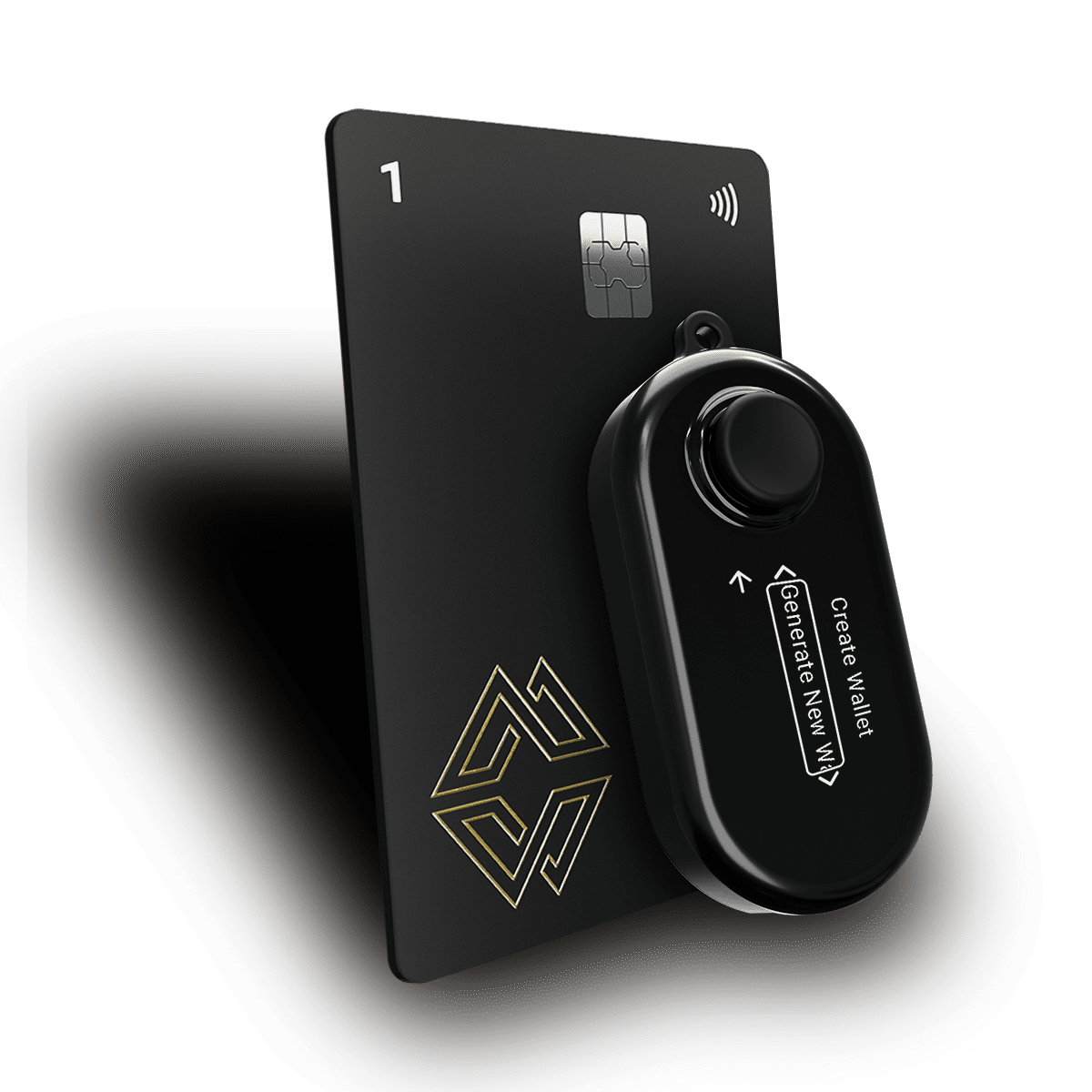
What David would have needed: An architecture where there is no single physical backup document to lose. Cypherock X1's native wallet distributes the private key across 5 hardware components: losing any one, or even any three, does not mean losing access. The key material is distributed, not concentrated. A house move that misplaces one X1 Card is survivable because four others remain. The architectural resilience is built into the hardware distribution, not dependent on a piece of paper surviving intact across every life event for decades.
What happened: In late 2022, LastPass disclosed that encrypted customer vault data had been exfiltrated in a breach. Security researchers subsequently confirmed that the stolen vaults were being systematically decrypted by attackers using offline brute-force methods. Multiple verified crypto losses have been traced to seed phrases stored in LastPass vaults, including documented cases of wallets drained years after the breach, as attackers worked through progressively weaker vault encryption.
LastPass storage feels like responsible digital security. It is not, for seed phrases. A password manager is an appropriate tool for passwords, which are low-entropy secrets designed to authenticate access to accounts that have reset mechanisms. A seed phrase is a high-entropy cryptographic master key with no reset mechanism and permanent access consequences. Storing them in the same system is a category error with catastrophic consequences.
Root cause: Treating a seed phrase like a password. Any digital storage, however encrypted, however reputable, is a centralised target. When (not if) it is breached, the encrypted data becomes a long-term decryption project for patient adversaries.
What LastPass vault crypto holders would have needed: Key material that never exists as a copyable digital object. Cypherock X1's native wallet generates a private key that is immediately split into hardware shares and never assembled as a complete key in software. There is no discrete digital representation of the seed phrase to copy into a password manager, no clipboard event to capture, no digital file to exfiltrate. An attacker who breaches a password manager that contains a Cypherock X1 user's data finds no seed phrase, because the seed phrase is never assembled in software or stored as a copyable digital object.
What happened: In November 2022, FTX collapsed over 72 hours. Customers who had held crypto on the exchange found their account balances, numbers on a dashboard that appeared to represent their assets, were entries in a fraudulent ledger. A mid-2025 security industry report found that more than $1.7 billion was stolen through wallet-related incidents in just the first half of the year, making wallet compromises the largest single category of crypto theft. The FTX bankruptcy left an $8 billion shortfall in customer funds. Customers who had Bitcoin on FTX at the time of the collapse did not hold Bitcoin. They held a contractual claim against an insolvent exchange, a claim valued at the price of Bitcoin at the time of filing, not at current prices. Whatever Bitcoin has done in the three years since is irrelevant to their recovery.
Root cause: Conflating an exchange balance with asset ownership. On the Bitcoin Project's own website, it explicitly states that in non-custodial/self-custody wallets, users alone control their privacy, and there is no central authority to help recover access. In other words, while self-custody gives users complete control over their assets, it also means there may be no one to help recover funds if login credentials or backup phrases are lost. The inverse is also true: custodial wallets give exchanges complete control over assets, with all the consequences that entails.
What FTX users would have needed: A private key to a blockchain address where their crypto actually lived, not a dashboard balance. Any hardware wallet providing genuine self-custody would have protected FTX users, because their assets would never have been on FTX in the first place. The specific architecture matters less in this scenario than the fundamental principle: assets in self-custody are on-chain at your address, unaffected by any exchange's solvency, regulatory status, or management decisions.
What happened: This story has a rare happy ending. In 2026, one Bitcoin owner reportedly recovered almost $400,000 after AI tools found an old wallet backup hidden inside archived computer files. The owner had created a Bitcoin wallet years earlier, stored the wallet file on a computer, and forgotten about it during a period when Bitcoin prices were low. Years later, with prices at record levels, they hired a specialist who used AI-assisted file recovery tools to search archived data across multiple old hard drives and cloud backups. The recovery succeeded, but only because the original wallet file happened to exist in a recoverable form in archived data. Most people in equivalent situations are not this lucky.
Experts believe that between 2.3 million and 3.7 million Bitcoins can no longer be used. Some studies even say the number may be close to 4 million Bitcoin. This equals almost 20% of all Bitcoin that exists today.
Root cause: Unplanned custody: crypto acquired, key material generated, no deliberate backup architecture established. The recovery succeeded by luck, not design.
What would have been better: A deliberate, tested, distributed backup architecture established at the time of wallet creation, not relied upon retrospectively. Only 15% of crypto holders have ever tested their recovery process. The 85% who have not are in the same position as this holder: hoping that if recovery is ever needed, the original material is still findable and usable. That is a hope, not a plan. The architecture that prevents this failure mode is one where recovery is structured by design: Cypherock X1's 2-of-5 SSS distribution across physically separate, explicitly documented locations. The holder knows exactly which 5 hardware components exist, where each one is stored, and what to do if any are lost or damaged. Recovery is not a forensic process; it is a documented procedure.
What happened: A composite drawn from the most common inheritance failure pattern. A holder accumulated approximately 2 Bitcoin between 2018 and 2023, a long-term position, never discussed in detail with his family, stored on a hardware wallet whose seed phrase was in a home safe. He died suddenly in early 2025. His wife knew he had "some crypto." She found the hardware wallet. She found the safe. She found a piece of paper with what appeared to be random words. She did not know what a seed phrase was. She contacted the hardware wallet company's support line, which correctly informed her that without the PIN, they could not help. She contacted a local crypto consultant who quoted her several thousand dollars to assist. She eventually hired a "crypto recovery service" she found online, which took a $2,000 upfront fee and disappeared. The Bitcoin remained inaccessible. At the prices prevailing when he died, 2 BTC represented approximately $160,000. At current prices, it represents over $125,000. It will likely never be accessed.
About 31% of those who lost crypto access have never recovered their assets, and those losses are not small: 12% of those locked out of their account lost $5,000 or more in a single incident. The inheritance scenario is the one where the person who suffers the loss is the one least equipped to manage the recovery: a grieving family member with no crypto knowledge, no documentation, and no established process to follow.
Root cause: No inheritance plan. The most secure wallet in the world provides no protection against the scenario where the rightful beneficiary cannot access it.
What would have been different: Cypherock Cover, Cypherock's non-custodial, non-KYC inheritance and PIN recovery service, provides a structured, hardware-attested pathway for beneficiaries to access funds after the holder's death. Combined with a plain-language portfolio map and clear documentation of what the hardware components are and where they are stored, the inheritance scenario becomes one where a non-technical beneficiary can follow a documented process rather than searching blindly or being targeted by recovery scammers.
Looking across all seven scenarios, every single loss traces to one or more of three root causes:
Root Cause 1: A single physical location for critical key material. James Howells' buried hard drive. David's misplaced seed phrase paper. The AI-recovered forgotten wallet. Each was a single point of physical failure. Move the key material; lose access. Burn the paper; lose access. Throw away the drive; lose access.
Root Cause 2: A single authenticating factor with no recovery pathway. Stefan Thomas' IronKey. Any holder who knows their hardware wallet PIN is the only thing standing between them and access, and who has no formal recovery mechanism for PIN loss.
Root Cause 3: No inheritance plan. The widow's Bitcoin. Any holder who has not structured access for a beneficiary who is not crypto-native and who does not know where the relevant hardware and documentation are.
The architecture that addresses all three simultaneously:
No single architectural choice eliminates all risk. But the combination of distributed hardware, distributed key generation that eliminates seed phrase vulnerability, and formal inheritance planning addresses the three failure modes that have collectively caused billions of dollars in permanent, irreversible crypto loss.
For holders who have already experienced one of these failures, the picture is difficult but not uniformly hopeless. Here's the hard truth: many victims never recover anything. Prevention remains the only guaranteed protection. Hardware wallets. Address verification. Scepticism toward unsolicited investment offers. Nothing replaces those.
Lost seed phrase with device still accessible: If you still have the device and know the PIN, you can display the seed phrase from within the wallet software on most hardware wallets. Do this immediately if your backup is at risk, and create a new backup from the device before the hardware fails.
Lost PIN with seed phrase intact: Most hardware wallets allow factory reset and restoration from seed phrase. Your funds are accessible as long as the seed phrase is valid and complete.
Lost both PIN and seed phrase: If your crypto is missing because you've simply misplaced your private keys, and this will be a bitter pill to swallow, your recovery options are limited. Specialised password recovery services exist for specific wallet types with known partial information. For most scenarios, recovery is not possible.
Assets stolen through compromise: Blockchain transactions settle permanently within minutes. But the stolen funds don't always move immediately; they often sit in intermediate wallets before hitting laundering services. Speed matters more than anything in these situations. Contact exchanges immediately, document everything, and engage law enforcement. Recovery scams specifically target vulnerable victims. Fake testimonials. Impersonated websites. Urgent demands for processing fees. Verify every contact through official channels independently.
Exchange collapse/insolvency: Your assets are in the hands of the bankruptcy estate. Document your claims, file creditor proofs of claim, and engage the recovery process. Outcomes vary by case.
The consistent thread: recovery after the fact is uncertain, expensive, slow, and often impossible. Prevention is the only guaranteed protection, and prevention means designing an architecture that does not create the failure modes in the first place.
If you no longer have access to the device (PIN forgotten, device broken, device lost) and no longer have the seed phrase, recovery is effectively impossible for most wallet types. There is no central authority, no password reset, no customer support that can override the cryptographic lock. This is the design of non-custodial wallets, and it means the architecture that prevents this scenario must be established before the loss, not after.
Some are. There are services that can help you recover lost wallet passwords and access corrupted wallet files, such as backup files containing your wallet's private keys. Just like with password recovery tools, be sure to thoroughly vet any crypto recovery service to ensure that it's legitimate. However, the crypto recovery space is heavily infiltrated by scammers who charge upfront fees and disappear. Verify any service through independent channels before engaging. Do not use services found through unsolicited messages or search ads during a moment of distress.
No architecture eliminates all possibility of loss. Cypherock X1's 2-of-5 SSS distribution means losing any 3 of your 5 components results in permanent inaccessibility, the same as any other custody approach after sufficient physical loss. The difference is that the threshold is 3 components across geographically distributed locations, rather than 1 paper document in 1 location. The probability of losing 3 geographically distributed hardware components simultaneously is orders of magnitude lower than losing 1 piece of paper in the course of normal life.
The Newport City Council has declined every request to date. Some dormant wallets suddenly became active again in late 2025 after more than 13 years of silence, which shocked the crypto community because many people believed the owners had lost access forever. If Howells recovered the drive and it remained readable after years in a landfill, the private key would still function on the blockchain. The Bitcoin has not moved in 15 years; it is waiting at that address.
The irreversibility that makes recovery so difficult is the same property that makes crypto secure and censorship-resistant. No government, no exchange, no court can reverse a transaction you have authorised, which means no government, no exchange, and no court can reverse a transaction you have not authorised either. The design is correct for its purpose. The custody practices that surround it need to match the architecture's requirements.
Among those who permanently lost crypto, 30% did not know beforehand that the loss could be permanent. That statistic is the most important one in this entire blog. Nearly a third of people who permanently lost access to their crypto did not know, when they set up their wallet, that what they were doing could result in permanent, irreversible, total loss.
The crypto industry's failure to communicate this clearly, and its failure to build custody architecture that makes permanent loss structurally unlikely rather than structurally inevitable, is documented in these seven stories and in the broader data they represent.
The stories in this blog are real. The losses are permanent. The architecture that prevents each failure mode exists today and is accessible at retail prices. James Howells' 8,000 Bitcoin could have been protected by a Cypherock X1 starting at $99, with the discipline to store its components in separate locations. Stefan Thomas' 7,002 Bitcoin could have been protected by a formal PIN recovery pathway that cost far less than the value it would have preserved.
The goal of security is not to make crypto custody impossible. It is to make the specific failure modes that have already destroyed billions in value, physical loss, PIN forgetting, and inheritance failure, structurally unlikely rather than structurally certain.
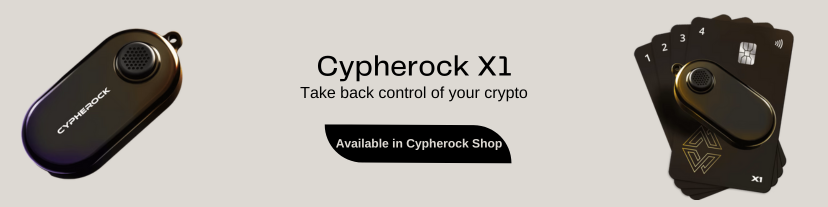
Explore Cypherock X1; the hardware wallet that distributes your private key across 5 components, eliminating seed phrase vulnerability, and provides formal inheritance and PIN recovery through Cypherock Cover. Learn how the architecture works and start with our complete setup guide.
Related Reading:-