0
$0.00
0 items

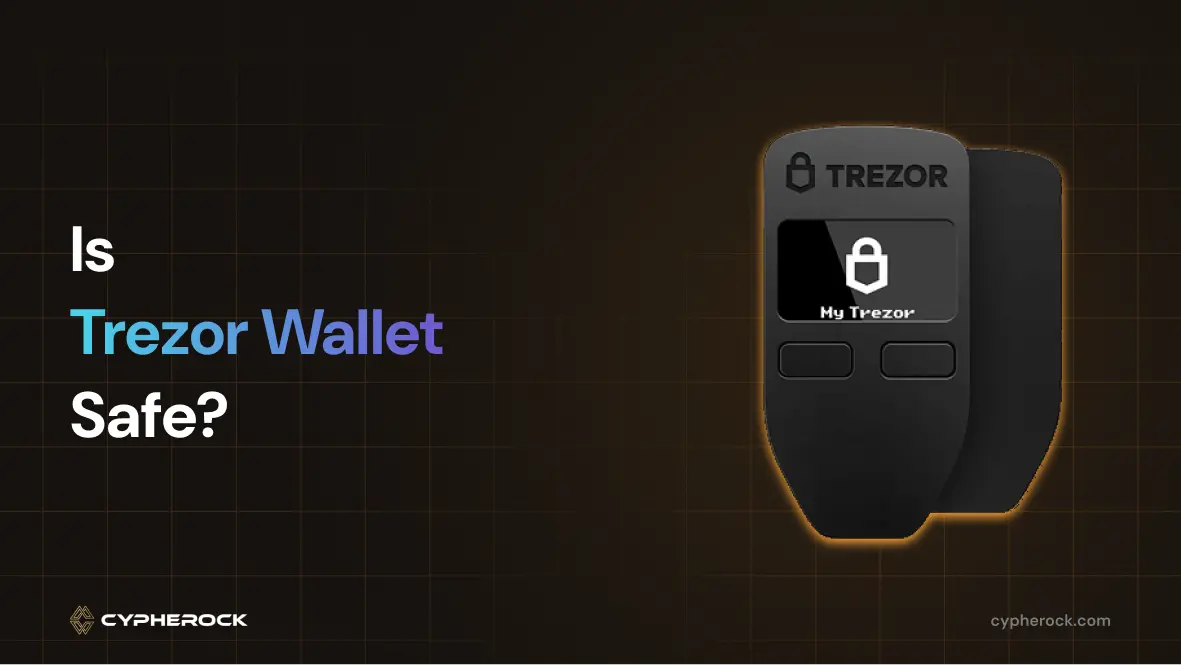
In 2026, crypto theft has become more sophisticated than ever. The $1.5B Bybit hack in February 2025 and the $270M Drift Protocol exploit in April 2026 both involving compromised key custody are reminders that how you store your private keys matters as much as what you hold. Hardware wallets remain the gold standard for self-custody, and Trezor remains one of the most trusted names in the space.
But "trusted" and "safe" aren't the same thing. This review takes an honest look at where Trezor's security model holds up in 2026, where it doesn't, and what alternatives are worth considering if you want stronger protection.
SatoshiLabs launched Trezor in 2014 — the world's first hardware wallet. Today, Trezor offers three active models:
Trezor Safe 3 ($79) — Entry-level, monochrome display, two navigation buttons, EAL6+ secure element. Best for Bitcoin and Ethereum holders on a budget.
Trezor Safe 5 ($129) — Mid-range, 1.54-inch color touchscreen with haptic feedback, Shamir Backup support. Eliminates physical buttons entirely.
Trezor Safe 7 ($249) — The 2026 flagship. Features a 2.5-inch high-resolution color touchscreen (Gorilla Glass 3), Qi2 wireless charging, IP67 water and dust resistance, and most significantly post-quantum cryptography, making it the first hardware wallet in the world to implement this. It also supports iOS, which the lower-tier models do not.
All three models run fully open-source firmware, support 8,000+ crypto assets via Trezor Suite, and store private keys entirely offline.
Setup requires connecting the device via USB-C to your computer, creating a PIN, and recording your recovery phrase -12 or 24 words displayed on-device during initialization. This phrase is the backbone of your wallet recovery and must be stored securely offline.
Trezor Suite (desktop and browser app) handles day-to-day management: sending, receiving, buying, swapping, and staking via integrated third-party providers. For NFTs, DeFi, and dApp access beyond Suite's native features, you'll connect to MetaMask, Electrum, or other compatible software wallets.
The Safe 3 and Safe 5 support Android via mobile browser. iOS support requires the Safe 7.
Trezor is all about transparency and security. Its code is completely open source, which means experts and the public can check for bugs or sneaky code. This is a big reason why security-minded users like Trezor more than some closed-source competitors.
Shamir Backup is one of Trezor’s most powerful safety tools. Most wallets give you a single backup phrase, but Shamir lets you split your recovery into multiple shares. This makes it much harder for a thief or hacker to steal your entire backup, and easier for you to protect yourself against loss or damage.
Trezor uses Hierarchical Deterministic (HD) wallet structure. Each time you send crypto, your wallet creates a new address. This keeps your privacy strong and makes it harder for others to track your payments.
The newest Trezor wallets have a touchscreen (Safe 5 and Model T), so you can enter your PIN and passphrase directly on the device. This means you never need to type sensitive info into your computer, which can be infected by malware.
You can also set an extra passphrase (like a “25th word”) for even more security. Trezor supports two-factor authentication (U2F, FIDO2, etc.), so you can use your wallet to keep your online accounts safe, too.
Fully open-source hardware and firmware. From the TROPIC01 chip to the firmware to the companion app, every component of Trezor's stack is publicly auditable. This is Trezor's most important security differentiator — and the reason it's consistently trusted by security researchers who want to verify rather than assume.
Post-quantum cryptography (Safe 7). Quantum computing poses a long-term threat to current cryptographic standards. The Safe 7 is the first hardware wallet to address this proactively, making it the most future-proof consumer wallet available today.
Shamir Backup (Safe 5 and Safe 7). Rather than a single recovery phrase, Shamir splits your backup into up to 16 shares — you only need a defined subset (e.g., 3 of 5) to recover your wallet. This makes losing one share non-fatal and reduces the single-point-of-failure risk inherent in traditional seed phrase backups.
On-device PIN and passphrase entry. Sensitive input never touches your computer, protecting against keyloggers and screen-capture malware.
BIP-39 passphrase support. The optional "25th word" creates hidden wallets derived from your seed, adding a layer of protection even if your seed phrase is exposed.
IP67 rating (Safe 7). The first hardware wallet rated for full dust and water immersion — relevant for users in demanding physical environments.
These features make Trezor popular with people who want to see and trust every step in the process.
Physical attack vulnerability. This is the most documented risk. Kraken's security division demonstrated that physical access to a Trezor device, combined with sufficient technical skill, can expose the seed phrase via voltage glitching on older models. Security firm Unciphered demonstrated a similar attack on the Model T. The Safe 3's EAL6+ secure element was specifically added to address this — but the risk is not fully eliminated. If someone physically obtains your device, treat your current wallet as potentially compromised and move funds immediately.
Single point of failure in key storage. Despite Shamir Backup, the private key itself still lives entirely within a single device. If that device's security is breached — physically or through a firmware vulnerability — the full key is exposed. Shamir protects your backup, not your device.
No native multi-sig. Trezor can participate in multi-signature setups, but requires third-party software (Electrum, Specter, Casa) to configure. There is no native multi-sig within Trezor Suite itself.
Seed phrase backup remains a manual responsibility. If you lose both your device and your recovery phrase (or Shamir shares), access to your funds is permanently gone. The security of your assets is only as strong as the physical security of that backup.
You might be wondering if there’s a way to protect your coins that’s even safer than traditional wallets like Trezor. That’s exactly where Cypherock X1 comes in.
Instead of relying on just one device or one backup, Cypherock splits your private key across multiple pieces. So, losing a single part doesn’t mean losing everything.
You also get true flexibility, with both mobile and desktop support, and extra protection built in for your backups. It directly tackles the worries that keep many Trezor users up at night. Let’s explore the key features of Cypherock X1.
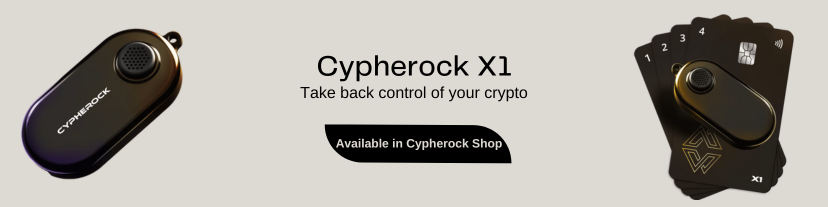
The Cypherock X1 (Basic $99 / Standard $179 / Pro $249, rated 4.9/5 across 1,640+ reviews) takes a different architectural position on this problem.
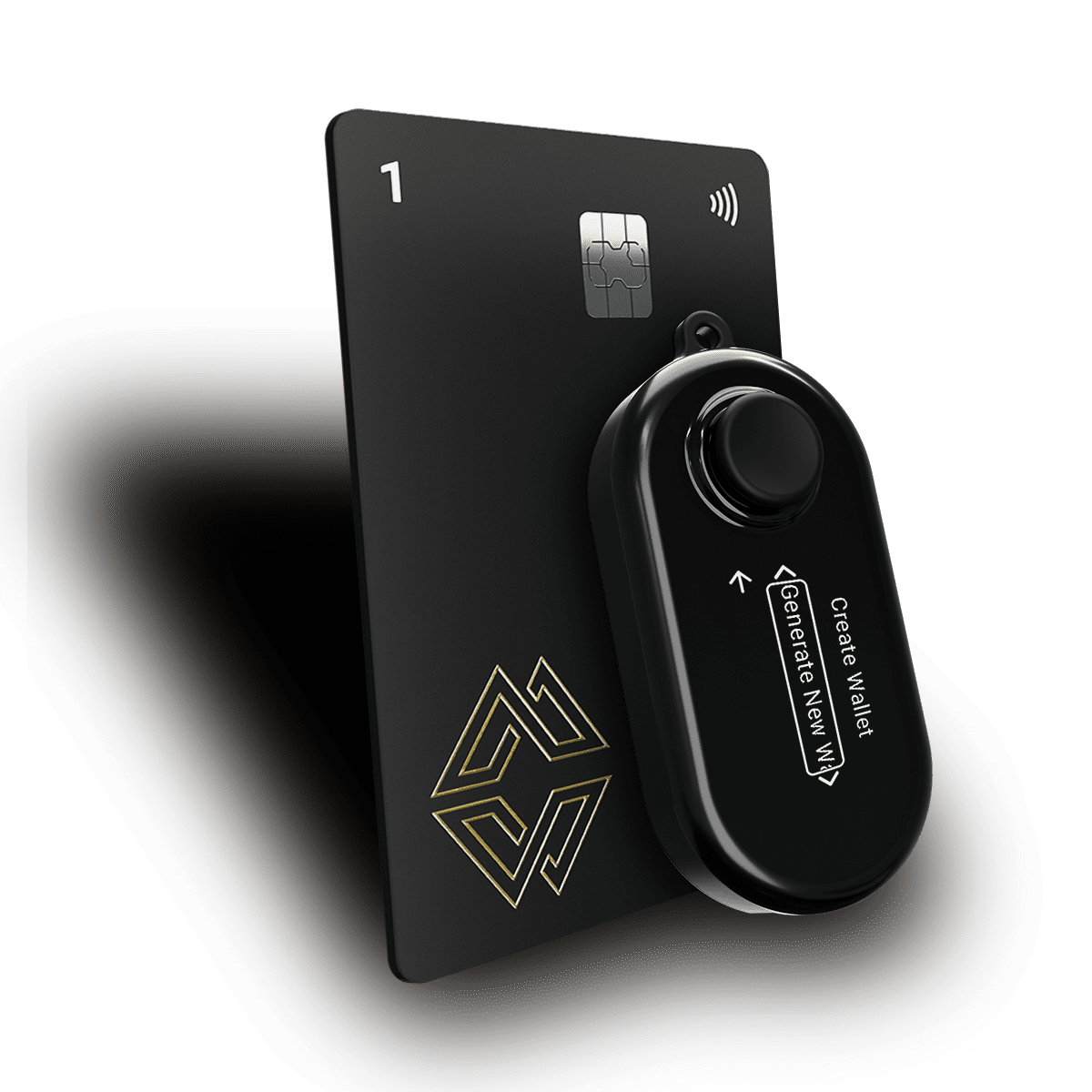
Rather than storing your complete private key in a single device, Cypherock splits it into five cryptographic shards using Shamir Secret Sharing — stored across the X1 vault and four NFC-enabled X1 cards. Any two of the five reconstruct the key. No single component holds enough information to compromise your assets alone.
This directly addresses the physical attack vulnerability that affects Trezor and every traditional hardware wallet. When Kraken extracted a seed from a Trezor, it worked because the complete key resided in one location. With Cypherock, compromising one component yields nothing — an attacker would need simultaneous physical access to at least two separate components.
Beyond the architecture:
No seed phrase backup required. The shard distribution is your backup. Lose up to three of five components and your assets remain fully recoverable with the remaining two. Replace the lost components, sync them, and continue — no paper backup to steal or lose.
View your seed phrase anytime. For users who want BIP-39 compatibility or prefer a traditional backup as well, Cypherock lets you access your seed phrase on demand using the vault, one card, and your PIN.
Four wallets in one device. Import existing Ledger, Trezor, or MetaMask wallets and manage them from a single device — useful for portfolio aggregation or separating personal and business assets.
Open-source and independently audited. Like Trezor, Cypherock's firmware is fully open source, audited by KeyLabs (the same firm that found vulnerabilities in Trezor and Ledger), and certified as reproducible by WalletScrutiny.
Crypto inheritance planning. Distribute shards among trusted people as part of an estate plan — no seed phrase to hand over, no single person with full access.
The tradeoff: Cypherock's ecosystem is smaller than Trezor's. MetaMask integration and a mobile app are in development but not yet live. For active DeFi users who need broad app compatibility today, Trezor's ecosystem depth remains an advantage.
Unlike Shamir Backup, which still creates a single recovery phrase split into shares, Cypherock’s split-key approach removes any single point where someone could compromise your entire backup. Even if someone finds a shard, it’s useless without another piece.
Want more details? Check out how Cypherock works.
Trezor is a smart pick if you want a wallet that’s trusted, open source, and easy to use. It’s perfect for people who want:
But if you worry about losing your backup, want a wallet built for inheritance, or like the idea of never having a single vulnerable backup, Cypherock X1 is worth your attention. It serves people who want to avoid losing everything due to fire, theft, or accidents, and those who want a simple way to manage multiple wallets, plan for inheritance, and keep everything secure in one place.
No matter which you pick, both Trezor and Cypherock X1 are much safer than leaving your coins on an exchange or a phone app.
If you have your recovery phrase or enough Shamir shares, you can restore your coins on a new device. If you lose both your device and all backups, you lose access to your funds completely.
Shamir Backup splits your recovery phrase into multiple shares. You only need a set number to recover your wallet. This makes backups more flexible and secure than just a single seed phrase.
No one has ever hacked Trezor devices remotely. However, past research showed that attackers with physical access and advanced technical skills could compromise older Trezor devices using voltage attacks. Always keep your device safe.
No. Your private keys never leave the device. Everything is handled offline.
Cypherock X1 strengthens your backup protection because it never stores your key in a single place. You can lose up to three shards and still recover your coins. Its open-source design and all-in-one management give extra peace of mind.
With Trezor, you must share your backup or Shamir shares with trusted people. Cypherock X1 lets you plan inheritance more safely, giving each heir a shard, with recovery possible if any two shards are combined.
Trezor wallets are a solid choice for anyone who wants simple, transparent, and secure crypto storage. Their open-source code, wide coin support, and Shamir Backup feature make them stand out, if you’re careful with your backups.
But for users who want even more backup safety, easier inheritance, and all-in-one wallet management, Cypherock X1 sets a new standard. Its multi-shard key storage and advanced features take crypto protection to the next level.
Start securing your crypto journey today—visit Cypherock X1 to learn more.
Connect with us:
Twitter: @CypherockWallet
Telegram: Join the Community