0
$0.00
0 items

XRP has had one of the most turbulent regulatory journeys in crypto history, and emerged from it with stronger institutional adoption, a clearer legal status in multiple jurisdictions, and a retail holder base that has grown substantially in the past two years.
In early 2025 alone, more than 638,000 new XRP wallets were created, pushing total active wallets to a record 6.5 million. Whale wallets, those holding at least 1 million XRP, hit an all-time high, showing growing interest from big investors. Rhinobitcoin
That growth makes XRP storage security more important than ever. Exchange-held XRP has been subject to withdrawal restrictions, regulatory freezes, and platform insolvencies. The XRP Ledger is fast, cheap, and reliable, but it has its own distinct technical requirements that catch new holders off guard: minimum reserve balances, destination tags, and an address model that differs from both Bitcoin and Ethereum.
This guide covers everything an XRP holder needs to know to store their tokens safely in 2026: the technical landscape, every storage option available, and a complete step-by-step process for moving to hardware wallet cold storage.
XRP runs on the XRP Ledger (XRPL), a completely independent blockchain with its own consensus mechanism, address format, and account model. These distinctions matter directly for how you store and transfer XRP.
ED25519 or SECP256K1 signing: XRPL supports both signing algorithms. The default for most wallets is SECP256K1 (the same curve Bitcoin uses), though ED25519 is supported and increasingly recommended for new accounts due to performance advantages. A hardware wallet supporting XRP must implement at least one of these correctly against the XRPL protocol.
Classic vs X-addresses: XRPL has two address formats: Classic addresses (starting with r, 25 to 34 characters) and the newer X-address standard (starting with X), which encodes both the address and destination tag in a single string. Most exchanges and wallets still use Classic addresses with separate destination tags. Hardware wallets typically generate Classic addresses.
Destination Tags, the most misunderstood XRP requirement: Destination tags are numerical identifiers that exchanges use to route incoming XRP to the correct account. When withdrawing XRP from an exchange to your personal wallet, the destination tag is usually not required, as your personal wallet has only one owner. When depositing XRP into an exchange, the destination tag is required; omitting it means your XRP is received by the exchange but cannot be attributed to your account. This is a documented, recurring cause of XRP loss that trips up new holders.
Minimum Reserve Balance: Every XRP account must maintain a minimum reserve of XRP to remain active on the ledger. As of 2026, this is 10 XRP as the base reserve, plus 2 XRP per trust line or object owned. This XRP is not spendable while the account is active; it is locked as the network reserve. When moving XRP to a new cold wallet address, ensure you send enough to meet the reserve plus your intended holdings.
No Memo does not equal No Destination Tag: Some wallets have a "memo" field that looks similar to a destination tag but is not the same. When depositing to exchanges, confirm whether they want a destination tag or a memo, as they are different fields in XRPL transactions.
Exchange custody risk: XRP's history is littered with exchange-related losses. Beyond general exchange insolvency risk, XRP specifically was subject to delistings, withdrawal suspensions, and trading halts by major US exchanges during the Ripple/SEC litigation period. Holders who kept XRP on US exchanges during that period faced restricted access regardless of the legal outcome. Exchange custody means the exchange's regulatory situation determines your access.
Phishing targeting XRP Ledger wallets: XRPL's growing ecosystem, including DEXs, AMMs, NFT functionality, and DeFi protocols, has attracted phishing campaigns mimicking official XRPL tools. Fake versions of Xumm (now Xaman), XRPL.org interfaces, and airdrop claim sites have been documented in active use.
Destination tag fraud: A sophisticated but documented attack involves malicious actors intercepting withdrawal instructions and substituting their own wallet address (or a valid address with a missing destination tag that they control). Always verify destination addresses and tag requirements through official channels before initiating any large XRP transfer.
Regulatory seizure risk: XRP's cross-border payment utility makes it particularly interesting to financial regulators. Exchange-held XRP in certain jurisdictions has been frozen during investigations. Self-custody eliminates this risk entirely; no exchange account means no freezable account.
Tier 1: Exchange Custody (Highest Risk) Binance, Coinbase, Kraken, Bitstamp. Convenient, liquid, but fully custodial. Your XRP is the exchange's liability. As documented during the Ripple/SEC period, regulatory events can restrict access to exchange-held XRP with no user recourse.
Tier 2: Xaman (formerly Xumm) / Trust Wallet (Moderate Risk) These are self-custody software wallets with native XRPL support. You hold your keys, but on an internet-connected mobile device. Legitimate apps with strong security teams. Appropriate for active XRP users with amounts they are comfortable holding on a mobile device. Not appropriate for significant long-term holdings.
Tier 3: Hardware Wallet with Seed Phrase (Good) Ledger remains a popular choice due to its proprietary BOLOS operating system, while Trezor is favored by users who prefer open-source transparency. Both support XRP cold storage with offline key management. The persistent vulnerability: a seed phrase backup, a single physical document representing the complete master key, must exist somewhere.
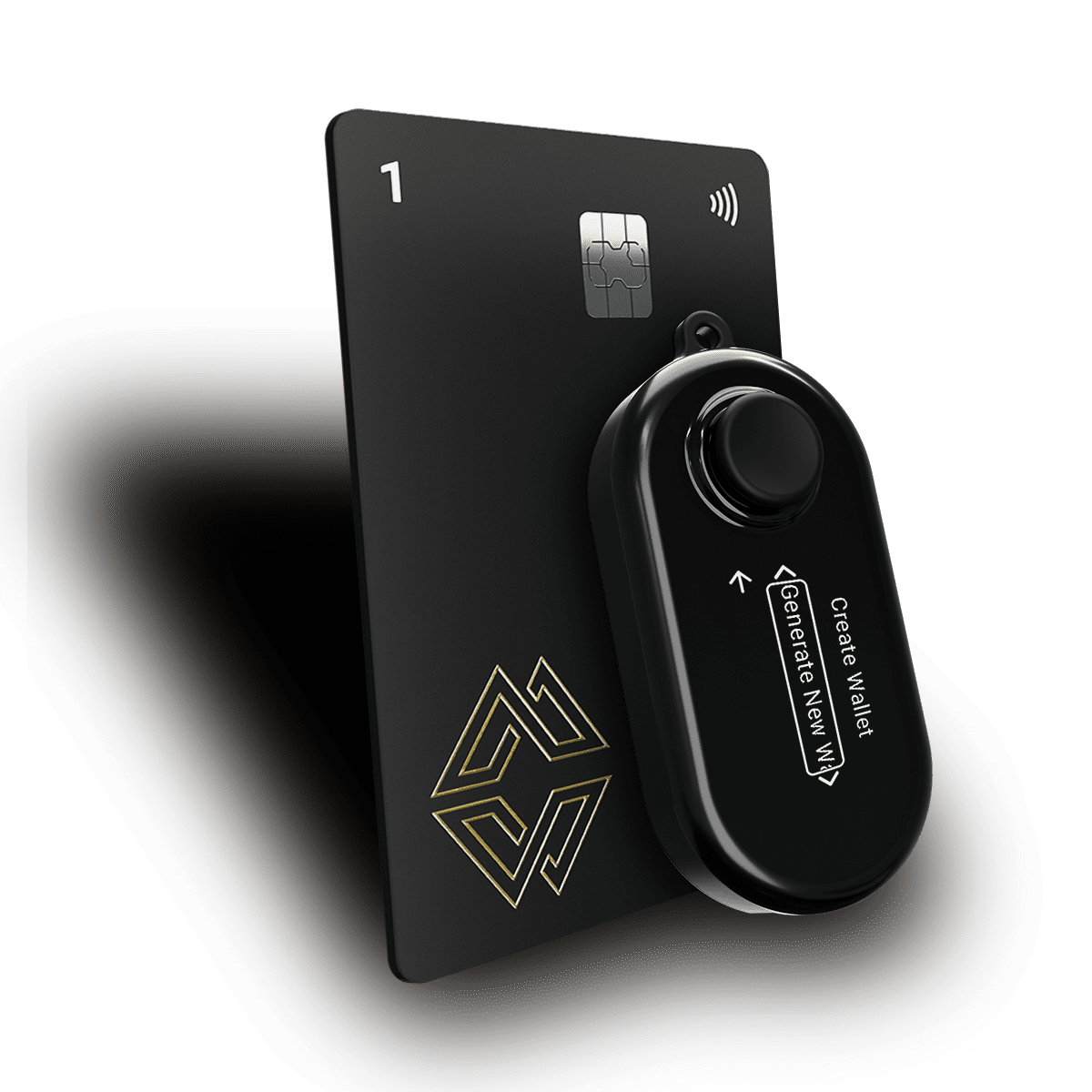
Tier 4: Hardware Wallet With Shamir's Secret Sharing (Best) Cypherock X1 supports XRP natively with the private key distributed across 5 hardware components via Shamir's Secret Sharing This is the highest available security tier for XRP cold storage.
Yes. Cypherock X1 supports XRP on the XRP Ledger natively, with Classic address generation and full transaction signing for XRP transfers.
This means your XRP is stored at a native XRPL address, not a wrapped or compatibility-layer address, generated with proper XRPL cryptographic signing on the Cypherock hardware. Your XRP private key is distributed across your 5 hardware components via SSS at the moment of wallet creation. No seed phrase is displayed or required at any point.
Check the full supported asset list at cypherock.com/coin-support.
Step 1: Set Up Your Cypherock X1 Unbox your X1 Vault and 4 X1 Cards. Connect the Vault to the cySync desktop app and follow the wallet creation flow. Your private key shares are generated on the hardware and distributed across your 5 components. No seed phrase is shown or required.
Step 2: Add an XRP Account in cySync In cySync, select "Add Account" and choose XRP. This generates your Classic XRP address (starting with r, approximately 34 characters). This is your cold storage address.
Step 3: Activate Your XRP Account New XRP accounts require the minimum reserve (10 XRP as of 2026) to be activated on the ledger. Your account does not exist on-chain until it receives at least this amount. You will need to send the reserve plus your intended holdings in your first transaction.
Step 4: Verify Your Address on the X1 Vault Screen Before sending any XRP, initiate an address verification in cySync. The X1 Vault will display your XRP address on its physical screen. Compare this to what cySync shows on your computer. If they match, your address is confirmed as hardware-generated and unmanipulated.
Step 5: Withdraw from Exchange, with Destination Tag Awareness When withdrawing XRP from an exchange to your Cypherock address:
Step 6: Confirm Account Activation and Receive Full Balance Once your test transaction confirms (XRP Ledger finalizes in 3 to 5 seconds), your account is active and visible in cySync. Transfer your full XRP balance.
Step 7: Distribute Your X1 Cards Store your 4 X1 Cards across at least 2 to 3 separate physical locations. Given XRP's regulatory history and the long-term hold profile of most XRP investors, geographic distribution is particularly important; a single disaster event should not jeopardize your entire cold storage setup.
The golden rule: Any time you send XRP to an exchange, look up and include the destination tag. Any time you send XRP from an exchange to your own wallet, leave the destination tag blank.
The minimum reserve mechanic is unique to XRPL and catches many new holders off guard. Here is the current structure as of 2026:
| Reserve Type | XRP Required |
| Base Account Reserve | 10 XRP |
| Per Trust Line (holding other XRPL Tokens) | +2 XRP each |
| Per Order on XRPL DEX | +2 XRP each |
| Per NFT Page (upto 32 NFTs) | +2 XRP Each |
If you want to hold 1,000 XRP in cold storage and nothing else, you need to send 1,010 XRP; 10 XRP is locked as the base reserve and cannot be transferred out while the account is active. The reserve can be recovered by deleting the account (which requires sending a minimum of 2 XRP to another account as a fee), but this also deletes all account history.
For most cold storage holders, the right approach is to simply factor the 10 XRP reserve into your transfer calculations and leave it locked. At any price level where XRP storage on hardware is relevant, 10 XRP is a small and acceptable holding cost.
The XRP Ledger has grown beyond a simple payment network. In 2026, the XRPL hosts:
Holding XRPL-issued tokens (including RLUSD) requires creating a trust line to each issuer, a relationship your account establishes with the token's issuer address. Each trust line locks an additional 2 XRP in reserve.
For most cold storage holders, the practical recommendation is: hold XRP in cold storage on Cypherock X1, and use a warm wallet (Xaman or a second Cypherock account) for XRPL ecosystem participation that involves trust lines, DEX orders, or NFTs.
No. Your Cypherock X1 XRP address is a personal wallet with a single owner. Destination tags are not required, and have no functional effect, when receiving XRP at a personal wallet address. You only need to provide destination tags when depositing XRP into exchange accounts.
RLUSD is an XRPL-issued token that requires a trust line to the RLUSD issuer. Check cypherock.com/coin-support for current RLUSD and XRPL issued token support details in cySync.
Your XRP arrives at the exchange's pooled address and cannot be automatically credited to your account. Contact the exchange's support immediately with your transaction hash (TXID), sending address, and account details. Recovery is usually possible but may take days to weeks and is subject to the exchange's internal policies.
Yes. Cypherock X1 manages multiple blockchain accounts. Your XRP account and your Ethereum account are entirely separate keys, both distributed across your 5 hardware components via SSS. Both are managed through cySync's unified dashboard.
No. Cypherock X1 is fully non-custodial. Cypherock holds no portion of your private key. The open-source cySync software would remain functional, and the hardware components you hold would continue to work as they do today. Recovery of your XRP would be possible through any XRPL-compatible wallet software using the account's derivation path.
The XRP Ledger finalizes transactions in approximately 3 to 5 seconds under normal network conditions. Your Cypherock XRP address will show the received balance in cySync almost immediately after the transaction is broadcast. Account activation (first-ever receipt to a new address) requires waiting for the transaction that meets or exceeds the reserve threshold.
XRP in 2026 is a mature, institutionally adopted asset with a growing retail holder base, and a set of technically unique storage requirements that trip up even experienced crypto holders: destination tags, minimum reserves, and an independent ledger architecture that is not compatible with generic EVM wallet tooling.
Cold storage on a hardware wallet that supports XRPL natively, with no seed phrase liability, distributed key architecture, and proper address verification, is the correct security foundation for any XRP holder with meaningful holdings.
Cypherock X1 provides exactly this: native XRP support, 5-component SSS key distribution, no seed phrase required, and a cySync portfolio view that manages your XRP alongside every other asset in your portfolio.
Move your XRP off exchanges. Verify every destination tag. Store your keys on hardware, not paper. Explore Cypherock X1 or check XRP support and full coin list. For estate planning and inheritance of your XRP holdings, see Cypherock Cover.
Related reading: