0
$0.00
0 items

Most crypto holders start with one wallet. Then they discover DeFi and open a MetaMask. Then they buy SOL and download Phantom. Then they get into an NFT project and create a burner wallet. Then they want to cold-store their long-term holdings and buy a hardware wallet.
Before long, they're managing six different wallets across three chains, each with its own seed phrase, each stored in a slightly different way, some backed up properly and some definitely not.
This is not a fringe situation. It is the default state of a moderately active crypto user in 2026, and it is a security disaster waiting to happen.
This guide covers the right way to think about multi-wallet architecture, how to structure it without creating compounding vulnerabilities, and how to actually manage it without losing track of what lives where.
The problem isn't having multiple wallets. The problem is that most people accumulate wallets reactively: each new ecosystem forces a new wallet, each new seed phrase gets written on whatever's nearby, each new hot wallet is "temporary" until it isn't.
The result is a portfolio with:
Before thinking about tooling, the right starting point is a deliberate wallet architecture.
A well-designed multi-wallet setup is not about having as few wallets as possible. It is about having the right wallets, with clear boundaries between them, each secured at a level appropriate to the assets and activity within.
Here is a practical three-tier architecture:
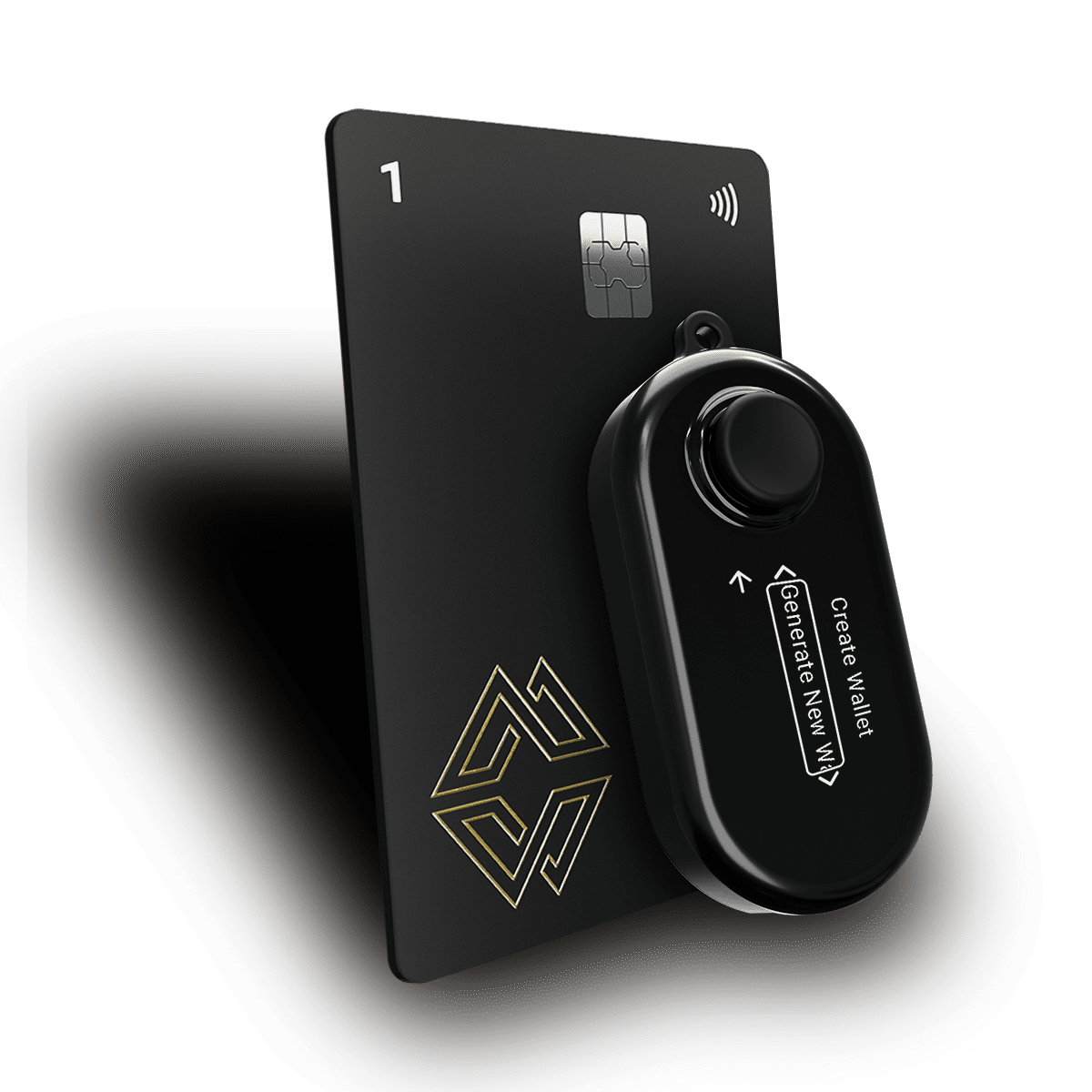
Tier 1: Cold Storage Vault (Hardware Wallet) Purpose: Long-term holdings. Assets you don't touch for months or years. Risk tolerance: Minimal. No DeFi interactions, no NFT minting, no bridge usage. What lives here: Your significant BTC, ETH, AVAX, DOT, SOL positions. Core savings. Device: Cypherock X1, with key shares distributed across 5 hardware components. No single point of failure. No seed phrase.
Tier 2: Warm Wallet (Hardware Wallet, Actively Connected) Purpose: DeFi, governance votes, liquidity providing, staking interactions requiring regular signing. Risk tolerance: Moderate. You interact with verified contracts, but accept that some contract risk exists. What lives here: Working capital for DeFi, not your savings, but not pocket change either. Device: A second wallet account on the same Cypherock X1, or a second hardware wallet device (Ledger, Trezor).
Cypherock X1 supports up to 4 separate wallet accounts per device, meaning your cold vault and your warm DeFi wallet can live on the same hardware with completely separate keys, managed through cySync's portfolio management interface. No second device required.
Tier 3: Hot Burner Wallet (Software Wallet) Purpose: High-risk interactions. NFT minting from unknown contracts, testing new protocols, airdrop farming, small speculative positions. Risk tolerance: High. Assume this wallet could be drained at any time. What lives here: Only what you can afford to lose completely. Think of it as your casino stack. Device: MetaMask, Phantom, Rabby, a fresh browser extension wallet with a minimal balance, regenerated periodically.
The burner wallet's seed phrase should be stored, but you should accept that this wallet is disposable. If it gets compromised, you drain it and spin up a new one. The critical discipline: assets from your cold storage vault never pass through a burner wallet.
Here is the compounding math that most people ignore: every new wallet is a new seed phrase. Every seed phrase is a new single point of catastrophic failure. Three wallets means three paper backups to manage, store, and eventually communicate to heirs.
This is why the traditional multi-wallet setup becomes exponentially more dangerous as it grows.
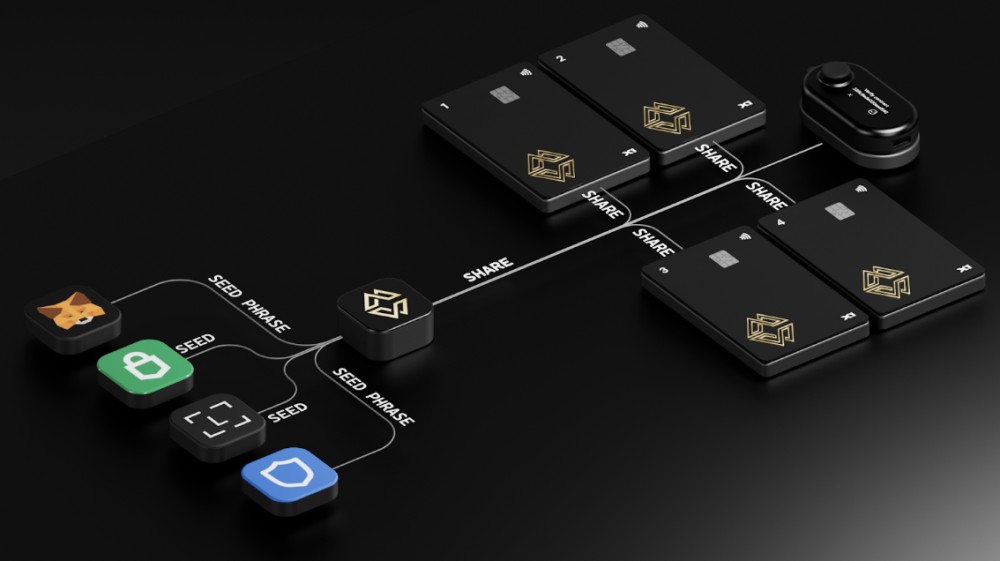
The Cypherock X1 approach cuts this problem at the root for hardware wallet tiers. Because the key is split via Shamir's Secret Sharing across 5 physical components, with no seed phrase generated or required, adding more wallet accounts to your X1 does not add more seed phrases. All accounts share the same SSS infrastructure.
For your hot wallet tier, seed phrases still exist, but the assets there should be minimal enough that their loss is manageable, not catastrophic.
If you already have seed phrases from existing wallets that you want to secure without recreating them, Cypherock X1 functions as a secure seed phrase vault, storing other wallets' mnemonics in the distributed card architecture instead of on paper.
One of the most underappreciated features of Cypherock X1 is its native support for multiple wallet accounts, not multiple copies of the same wallet, but completely separate key hierarchies managed from the same hardware.
Here's what this means in practice:
Wallet Account 1: Cold Storage
Wallet Account 2: DeFi / Warm
Wallet Account 3: Designated Inheritance Wallet
Wallet Account 4: Experimentation / Altcoin
All four accounts are managed through cySync's portfolio management interface, a single dashboard showing balances across all accounts, all chains. No juggling four separate apps or managing four seed phrases.
Regardless of how you structure your wallets, you need a master portfolio map, a document that records:
This document should never contain seed phrases or PINs. It should contain addresses (public, harmless to disclose) and references to where recovery mechanisms are stored.
Store this document in at least two locations: one digital (encrypted, offline) and one physical (in a sealed envelope with your estate planning documents). Update it every 6 months or after any significant portfolio change.
This document is what allows a non-technical heir, executor, or emergency contact to understand what you held, even if they still need the cryptographic access separately.
The most common way multi-wallet setups fail is not from a dramatic hack; it's from cross-contamination between tiers. Specifically:
Signing cold wallet transactions from a compromised machine. If your computer has malware and you plug in your hardware wallet to sign a cold storage transfer, the malware can silently substitute the destination address. Your hardware wallet signs the transaction you think you approved, to an address you never intended. Always verify destination addresses on the device screen, not just the computer.
Reusing a hot wallet address as a cold wallet receiving address. If you've used an address in your hot wallet tier for any on-chain activity, don't move it to cold storage without creating a completely fresh address. Address history is public; a compromised address should not become a high-value target.
Connecting your cold storage account to a DeFi interface "just once." Once your cold wallet address has interacted with a smart contract, it has granted approvals that may remain active. Use your warm wallet tier for all protocol interactions, every time, without exception.
Importing a seed phrase across wallets. If you import your hardware wallet's seed phrase into MetaMask for "convenience," you have just moved your cold storage into a hot wallet. The hardware wallet's security is completely defeated. Never do this.
A multi-wallet setup is only as good as its recovery story. Ask yourself:
For hardware-wallet-held assets, the recovery story on Cypherock X1 is: retain 2 of your 5 components (Vault + any Card, or any 2 Cards), remember your PIN, and recovery is complete through cySync. No seed phrase required.
For hot wallet assets, the recovery story is: seed phrase exists somewhere. Make sure you know where, it's current, and it's as physically secure as the value in the wallet warrants.
If your current setup is a chaos of 6 wallets and half-remembered seed phrases, here is a consolidation path:
Step 1: Audit. List every wallet you hold (MetaMask, hardware devices, exchange accounts). Record the blockchain, approximate balance, and whether you have a reliable backup.
Step 2: Classify. Sort each wallet into Cold (long-term holdings), Warm (active DeFi), or Hot (burner/speculative). Anything in the wrong tier, such as high-value holdings in a hot wallet, needs to move.
Step 3: Migrate high-value assets to cold storage. Transfer significant holdings from exchanges and hot wallets to your Cypherock X1 cold account. This is the highest-ROI security action available to most crypto holders.
Step 4: Consolidate warm wallets. If you have multiple DeFi wallets across ecosystems, evaluate whether a single warm wallet account on Cypherock X1 can serve all of them through cySync's multi-chain support. Reducing the number of active seed phrases is a direct security improvement.
Step 5: Document. Create your portfolio map. Store it appropriately. Review it quarterly.
There is no universal answer, but the principle is: as few as your activity requires, with clear tier separation. Most active crypto users can operate comfortably with 1 hardware wallet device with 2 to 3 accounts (cold, warm, inheritance), plus 1 burner hot wallet for high-risk interactions.
Yes. The cySync portfolio management interface shows balances across all supported chains, including Bitcoin, Ethereum, Solana, Avalanche, Polkadot, and more, in a single dashboard. No chain-switching or separate apps required.
If they are separate wallet accounts (separate key hierarchies) on the same device, yes; each account has its own key, so activity on the warm account does not expose the cold account. The risk is behavioral, not cryptographic: don't let your cold account interact with DeFi protocols.
Without deliberate planning, it is very likely that some or all of your wallets will be permanently inaccessible to heirs. Cypherock Cover provides a structured inheritance pathway for Cypherock X1 wallets. Hot wallets require separate seed phrase disclosure planning.
cySync provides a native portfolio view for all Cypherock X1 wallet accounts. For hot wallet balances, tools like Zerion, DeBank, or Zapper aggregate balances across addresses and chains using read-only address access (no key required for viewing).
Managing multiple crypto wallets is not inherently dangerous; managing them carelessly is. The difference between a security disaster and a resilient setup is architecture: deliberate tier separation, consistent security practices at each tier, a written portfolio map, and a recovery plan that works for technical and non-technical situations alike.
Cypherock X1's native support for multiple wallet accounts, combined with its seedless architecture and cySync's multi-chain portfolio view, means most serious holders can reduce their wallet sprawl to a single hardware device while actually improving their security posture.
Explore the Cypherock X1 and its multiple account features, check the full coin support list, or learn how Cypherock Cover handles inheritance across multiple wallet accounts.
Related reading: