0
$0.00
0 items

According to Ledger analysts, as of early 2025, between 2.3 million and 3.7 million Bitcoin is permanently lost. The overwhelming cause: lost passwords and seed phrases. Bitget
Not hacks. Not exchange failures. Not smart contract exploits.
Lost backups.
Most wallet loss doesn't come from bad behaviour. Lost crypto comes from normal life disruptions; a phone breaks, an app is deleted, a laptop is replaced, a wallet is reinstalled. Without the right recovery method, assets don't disappear. They become permanently stranded. CrypticEra
The crypto industry's response to this crisis has been a thriving cottage industry of backup products: metal plates, titanium capsules, steel cassettes, laser-engraved slabs, and punch-in character tiles. Walk into any crypto conference in 2026 and you'll find a dozen vendors selling the ultimate seed phrase backup solution.
They are all solving the right problem with the wrong premise.
The premise, that you must have a seed phrase and therefore must have a backup strategy for it, is no longer universally true. The most important development in wallet security in the last three years is that the seed phrase can be eliminated entirely from the custody equation.
But before making that argument in full, this guide does something most backup guides don't: it evaluates every backup method honestly, with its actual failure modes, and matches each to the user profile it actually suits. If you have a seed phrase today, you need a backup strategy. This is that guide. And at the end, it explains the architecture that makes the backup problem structurally irrelevant.
A seed phrase backup strategy depends entirely on what threat model you're protecting against. Most backup guides treat this as a single problem: how do I make my seed phrase durable? But durability is only one of three distinct failure modes a backup must address:
Over-optimizing for fire resistance while ignoring theft and coercion risk, or skipping the restore test and assuming "it's probably fine," are among the most common mistakes in backup strategy. Stripe
The best backup method is the one that best addresses all three failure modes for your specific situation, not the one with the most impressive titanium certification.
What it is: Writing the 24 seed words on paper during wallet setup. The default, lowest-effort backup.
Protection against physical destruction: Poor. Paper burns, floods, and degrades. A typical house fire reaches temperatures far above paper's ignition point.
Protection against discovery: None. Anyone who finds the paper and understands what it is has full access to your wallet.
Protection against loss/inaccessibility: Moderate. Paper is readable by anyone, requires no decryption, and a non-technical heir can use it, if they find it and know what to do with it.
Honest assessment: Adequate for small portfolios ($0 to $1,000) where replacement is annoying but not catastrophic. Completely unacceptable for significant holdings. The fact that millions in Bitcoin has been permanently lost to degraded, burnt, or found paper backups is the core data point here.
Who it's for: Absolute beginners with minimal holdings who have not yet upgraded to a better solution. Not a long-term strategy for any serious holder.
What they are: Stainless steel, titanium, or aluminium plates/capsules where seed words are stamped, engraved, or encoded using tile characters. The most popular products include Cryptosteel Capsule, Billfodl, and Cryptotag Zeus.
Protection against physical destruction: Excellent. Metal seed phrase storage is fully analog and offline. Thanks to the physical durability of steel, it forms a reliable line of defense against fire, water, corrosion, and the passage of time. The Cryptotag Zeus, a 6mm thick titanium plate, can endure extreme temperatures up to 1,667°C, well above any residential fire scenario.
Protection against discovery: None beyond physical security of the storage location. A metal plate found by a burglar, family member, or anyone else who understands crypto gives complete wallet access. The durability that makes metal superior to paper for fire resistance makes it more dangerous if discovered; a paper backup might be mistaken for meaningless notes, while a gleaming steel plate with 24 stamped words is instantly recognisable. RhinobitcoinFibo
Protection against loss/inaccessibility: Good, assuming it's stored somewhere findable and the storage location is documented.
Honest assessment: A genuine improvement over paper for fire and water resistance. Tile-based designs like Cryptosteel and Billfodl favour speed and verification, while plate approaches like Cryptotag Zeus maximise resilience when executed carefully. But every metal backup product on the market has the same fundamental limitation: it is a single physical object that, if found, provides complete access to your entire wallet. Physical durability solves one of three backup failure modes, not all three. Stripe
Price range: $30 (budget steel plates) to $120+ (premium titanium)
Who it's for: Hardware wallet users who need to upgrade from paper to fire/flood resistant backup. An appropriate interim solution for portfolios up to ~$50,000 when paired with a secure storage location.
What it is: Making 2 to 3 copies of your seed phrase on metal plates and storing them in geographically separate locations, such as a home safe, bank safety deposit box, or a trusted family member in another city.
Protection against physical destruction: Excellent. Geographic separation means no single natural disaster event (fire, flood, earthquake) can destroy all copies simultaneously.
Protection against discovery: Decreasing with each additional copy. One metal plate is one theft risk. Three metal plates in three locations are three theft risks. Keeping your seed phrase offline in several safe places increases security and guarantees you may recover your cryptocurrency even if one backup is destroyed. But the security advice assumes trusted storage locations and trusted individuals, assumptions that introduce human factors into what feels like a purely technical problem. Hardware Wallets
Protection against loss/inaccessibility: Best of any physical method. Even if two copies are lost or destroyed, the third preserves access.
Honest assessment: This is the current gold standard for seed phrase backup strategy, and it still has serious problems. Multiple copies mean multiple attack surfaces. A safety deposit box is not permanent; banks close branches, merge, and require estate proceedings to access after death. A trusted family member is a human with their own security practices, living situation, and social engineering vulnerability. This is the best available approach within the seed phrase paradigm, which is itself the problem.
Who it's for: Serious holders managing significant portfolios who are committed to the seed phrase model and have the discipline to maintain multiple secure locations over decades.
What it is: Encrypting the seed phrase using strong encryption (AES-256) and storing the encrypted file in digital storage, such as a hardware-encrypted USB, an encrypted container on a local hard drive, or air-gapped storage.
Protection against physical destruction: Depends on storage medium redundancy. An encrypted file on a single USB drive is vulnerable to hardware failure. Encrypted files on multiple storage media in multiple locations provide physical redundancy.
Protection against discovery: Good, proportional to encryption strength. A well-implemented AES-256 encrypted container is computationally infeasible to brute-force with current technology. The vulnerability is the decryption password; if that's weak, forgotten, or stored insecurely, the encryption is meaningless.
Protection against loss/inaccessibility: Moderate risk. Encrypted files can become inaccessible if the encryption software is no longer available, the file format is no longer readable, the decryption password is forgotten, or the storage medium fails.
Honest assessment: Data stored in the cloud becomes a target for cybercriminals, and even local encrypted backups introduce software dependency and password management complexity. The 2022 LastPass breach demonstrated that even sophisticated encrypted storage can be compromised at scale when the platform holding encrypted data is breached. For most retail users, encrypted digital backup adds complexity without proportional security improvement over well-implemented metal backups. Rhinobitcoin
Who it's for: Technically sophisticated users with strong operational security practices, comfortable managing encryption keys separately from the encrypted data. Not recommended as a primary strategy for most retail holders.
What it is: Using SLIP39 (Shamir's Secret Sharing applied to BIP-39 mnemonics) to split a seed phrase into multiple shares, where a threshold (e.g., 2-of-3) must be combined to reconstruct the original seed. Supported natively by Trezor Model T.
Protection against physical destruction: Excellent when shares are stored separately. Losing one share is non-catastrophic if the threshold is met by remaining shares.
Protection against discovery: Excellent for individual shares. A single SLIP39 share provides zero information about the underlying seed phrase; an attacker who finds one share cannot derive anything useful without the threshold number of shares.
Protection against loss/inaccessibility: Good, with the same physical storage challenges as metal plates for each individual share.
Honest assessment: SLIP39 is a genuine cryptographic improvement over standard BIP-39 backup. It addresses the discovery problem meaningfully; finding one share gets an attacker nothing. The limitations: it requires a SLIP39-compatible wallet to recover, adds setup complexity, and the seed phrase still exists as a reconstructible object (just distributed). Reconstruction at recovery time momentarily recreates the full seed phrase in software.
Who it's for: Advanced users with Trezor or other SLIP39-compatible hardware who understand the scheme and have the discipline to manage multiple shares across separate, secure locations.
What it is: Using Cypherock X1's wallet backup feature to import and store existing seed phrases from other wallets, securing them in the distributed X1 Card architecture rather than on a metal plate or paper.
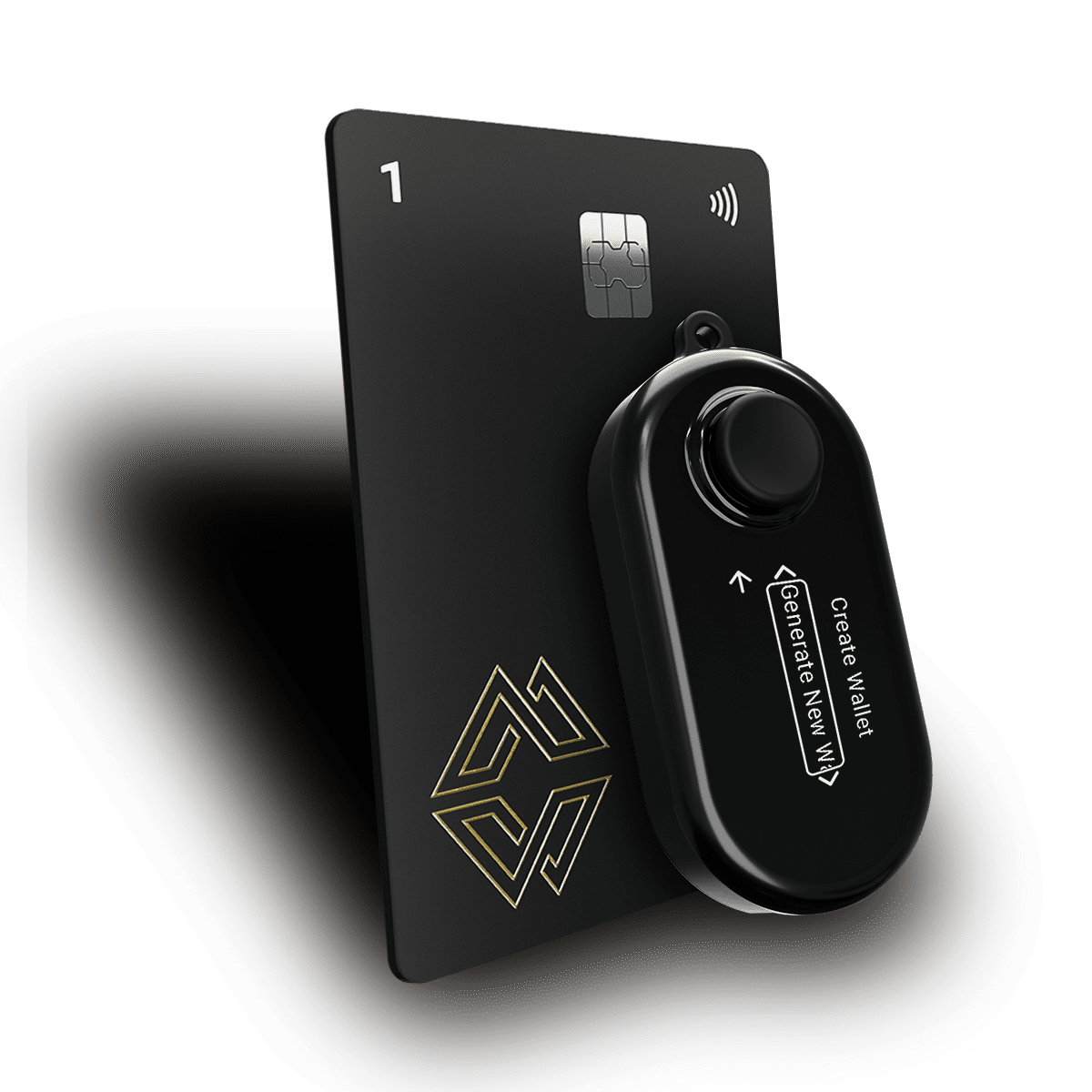
How it works: You import an existing BIP-39 seed phrase (from a Ledger, Trezor, or any BIP-39 wallet) into the Cypherock X1 setup. The seed phrase is then split via Shamir's Secret Sharing across your 5 hardware components, 1 Vault and 4 Cards. The original seed phrase ceases to need a physical backup, because the distributed hardware architecture provides equivalent resilience with no single point of failure.
Protection against physical destruction: Excellent. Individual components can be stored in separate locations. Losing up to 3 of 5 components still allows full recovery.
Protection against discovery: Excellent. Any individual X1 component holds only 1-of-5 shares, which means zero information about the original seed phrase. An attacker needs 2 components AND the PIN to extract anything useful.
Protection against loss/inaccessibility: Best available. The 2-of-5 threshold means 3 component losses are survivable. PIN recovery is available via Cypherock Cover.
Honest assessment: This is the most secure currently available method for protecting an existing seed phrase, superior to any metal plate solution on all three failure mode dimensions. It converts a single-point-of-failure seed phrase backup into a distributed, PIN-gated, threshold-protected hardware architecture. The tradeoff: it requires a Cypherock X1 device and adds hardware to your setup.
Who it's for: Ledger, Trezor, or other seed-phrase-based hardware wallet users who want to upgrade their backup security without changing wallet addresses or migrating assets.
What it is: The only approach on this list that eliminates the backup problem rather than solving it. Cypherock X1's native wallet generates a private key that is immediately split via Shamir's Secret Sharing across 5 hardware components. The seed phrase never exists as a discrete, storable object in the first place. CrypticEra
How it works: During wallet creation, the cySync application generates your private key on the X1 Vault hardware, immediately distributes it as 5 cryptographic shares, 1 to the Vault and 1 to each of the 4 X1 Cards, and never assembles the full key in a single location again. There is no "write these 24 words down" step. There are no 24 words.
Protection against physical destruction: Excellent. Components are designed to be stored in geographically separate locations. Losing any 3 of 5 components still allows full access recovery.
Protection against discovery: Best available. Each individual component holds 1-of-5 shares. A found X1 Card is PIN-gated and contains zero information about your private key on its own. An attacker needs 2 components AND both PINs to make any progress.
Protection against loss/inaccessibility: Best available. The 2-of-5 threshold provides triple redundancy. PIN recovery via Cypherock Cover addresses the PIN-forgetting scenario without seed phrase exposure.
Honest assessment: In 2026, closing the gap between crypto's security model and normal user expectations will be essential, because the next wave of crypto users will not tolerate systems that punish ordinary mistakes with permanent loss. Cypherock X1's native wallet is the first retail hardware wallet architecture that meets this standard: it builds resilience into the hardware distribution rather than requiring perfect user behaviour with a paper or metal backup over decades. CrypticEra
Who it's for: New hardware wallet users setting up self-custody for the first time, and existing holders migrating to an architecture with no seed phrase vulnerability. The correct choice for any holder who wants to eliminate backup strategy as an ongoing operational concern.
| Method | Durability | Discovery Protection | Loss/Inaccessibility Protection | Single Point of Failure? | Cost |
| Paper backup | Poor | None | Moderate | Yes | Free |
| Metal plate (single | Excellent | None | Good | Yes | $30 to $120 |
| Metal plate (multiple locations) | Excellent | Low | Excellent | Partially | $60 to $360 |
| Encrypted digital backup | Variable | Good (if implemented correctly) | Moderate | Depends | $20 to $100 |
| SLIP39 (e.g., Trezor) | Good | Excellent (per-share) | Good | No (threshold) | Device cost |
| Cypherock X1 as seed vault | Excellent | Excellent | Best | No (2-of-5) | $99+ |
| Cypherock X1 native (no seed phrase vulnerability) | Excellent | Excellent | Best | No (2-of-5) | $99+ |
Search for "best seed phrase backup 2026" and you'll find dozens of roundups. Every one of them compares metal plate products against each other, including Cryptosteel vs Billfodl vs Cryptotag Zeus. None of them question the assumption that a seed phrase must exist.
Self-custody's fundamental property, private key ownership, also makes it unforgiving. If users lose their private key or recovery phrase, the system doesn't fail; it continues operating perfectly while the user becomes permanently locked out. By 2025 year's end, total losses had surpassed $3.5 billion, making that year one of the most damaging in crypto history. CrypticEra
The metal plate industry is not solving this problem. It is providing better storage for an object that should not need to exist. A more durable container for a document whose existence is itself the liability.
The seed phrase was designed in 2013 for a single-chain, single-wallet world where the primary concern was key derivation portability, meaning you could recover your wallet on any BIP-39-compatible software. It accomplished that goal. It also created a 12-year crisis of lost, stolen, and compromised backups that has permanently destroyed billions in value.
As of 2025, the loss of seed phrases and passwords continues to be a major issue, with significant financial and personal consequences. The solution is not a better metal plate. The solution is an architecture where the seed phrase, as a discrete, stealable, loseable, burnable object, never needs to exist. Cryptnox
You already have a Ledger, Trezor, or other BIP-39 hardware wallet: Your current backup is a seed phrase, stored somewhere. Upgrade your backup security immediately, either to multiple metal plates in separate locations (minimum acceptable for significant holdings) or to Cypherock X1 as a seed vault (best available protection for existing seed phrases).
You're setting up self-custody for the first time: Do not generate a seed phrase at all. Set up a Cypherock X1 native wallet. Distribute your 4 X1 Cards across separate locations. Configure Cypherock Cover for PIN recovery and inheritance. You have implemented the most resilient retail self-custody backup architecture currently available without ever writing down a single word.
You have both old seed-phrase wallets and want to migrate: Use Cypherock X1 to import and vault your existing seed phrases (removing the paper/metal backup dependency), while simultaneously using it as the hardware for new native wallet accounts. One device handles both the upgrade of your legacy security and the creation of your new architecture with no seed phrase vulnerability.
You have significant holdings and want maximum resilience: Multiple metal plates in geographically separate, professionally secured locations (safety deposit boxes in different banks, possibly different cities) for any seed phrase wallets. Cypherock X1 with Cover for new positions and inheritance planning. Test all recovery mechanisms annually.
Regardless of which backup method you use, one practice is mandatory: test the recovery process before you need it.
Skipping the restore test and assuming "it is probably fine" is one of the most common and costly backup mistakes. Stripe
For seed phrase backups: on a separate device or in a sandboxed environment, use your backup to restore the wallet and verify the derived addresses match your originals. Do this within the first week of setup. Repeat annually.
For Cypherock X1: periodically confirm that each X1 Card authenticates correctly with your Vault using your PIN. cySync provides a component verification flow that confirms each Card is functioning without exposing key material.
A backup that has never been tested is a hypothesis. Only a tested backup is a recovery strategy.
A single metal plate is a single point of failure. If found, stolen, or lost, your $100,000 portfolio is gone. For holdings at this level, the minimum acceptable approach is multiple metal plates in geographically separate, professionally secured locations, or Cypherock X1 as a seed vault, which provides distributed protection without additional physical backup management.
Yes, and some users do. However, if you're using Cypherock X1's native wallet (no seed phrase generated), there is no seed phrase to put on a metal plate; the distributed hardware architecture replaces that function. If you've imported an existing seed phrase into Cypherock X1 as a vault, you can retire the metal plate once you've confirmed the import worked correctly and your X1 Cards are stored securely.
With only the Vault (1-of-5 shares), access is impossible without the cards. This is why geographic distribution of cards is essential; in a scenario catastrophic enough to destroy all 4 cards plus your home, you would also typically have access to alternative backup resources. For maximum resilience, at least one card should be stored in a professional facility (bank safety deposit box) that survives most personal disasters.
Yes, for users who have existing seed phrases from wallets they intend to keep. Metal is genuinely better than paper for fire and water resistance. The key insight is that metal backup products solve the durability failure mode while leaving the discovery failure mode completely unaddressed. For the best possible protection of an existing seed phrase, Cypherock X1 as a seed vault is superior on all dimensions.
Cypherock Cover is a PIN recovery and inheritance service, not a primary backup mechanism. It complements the X1 Card distribution; if you forget your PIN, Cover provides a recovery pathway without exposing key shares. It does not replace the function of your X1 Cards as the physical key share holders.
Yes. Cypherock X1 uses open standards (BIP-39 derivation paths, open-source firmware). The cySync application is open-source. If Cypherock ceased operations, existing X1 hardware would continue functioning, and the open-source community could maintain recovery tooling. Your key shares are on hardware you physically hold, not on Cypherock's infrastructure.
Wallet recovery will define crypto adoption in 2026. People will only store meaningful value in digital assets if they believe they can regain access securely, predictably, and without compromising self-custody. CrypticEra
The backup landscape in 2026 is more sophisticated than ever, with better metal products, more durable materials, and more secure storage designs. But the industry is optimising within a constraint that no longer needs to exist.
The seed phrase is not a law of cryptography. It is an engineering choice made in 2013 that has had enormous, well-documented costs. The hardware architecture exists today to eliminate it, not to hide it better, stamp it on titanium, or store it in a bank vault, but to ensure that no single physical object anywhere in the world holds your master key.
If you have seed phrases today: upgrade to the best backup strategy available for your situation, test it, and document it for inheritance. If you're setting up self-custody for the first time: start with the architecture that makes the backup problem structurally irrelevant.
Explore Cypherock X1's no-seed-phrase-vulnerability wallet architecture, learn how to use it as a secure vault for existing seed phrases, or see how Cypherock Cover handles PIN recovery and inheritance without seed phrase exposure.
Related reading: