0
$0.00
0 items


The crypto industry has spent years building a compelling narrative around self-custody: not your keys, not your coins. And the argument is sound — exchange collapses, withdrawal freezes, and custodial hacks have collectively destroyed billions in user funds. Moving to self-custody removes all of that counterparty risk.
What the narrative undersells is the counterparty you introduce when you take custody: yourself.
As of early 2025, between 2.3 and 3.7 million Bitcoin are permanently inaccessible, most due to forgotten passwords, lost seed phrases, or incorrect seed phrase matches. That is not a hack statistic. That is a self-custody failure statistic.
In the first half of 2025 alone, crypto users lost $410.75 million to phishing attacks, the majority of which targeted self-custody wallet holders, not exchange accounts.
The uncomfortable truth is that moving to self-custody without understanding how to do it correctly can leave you more exposed than staying on a reputable exchange. This guide covers the 10 most costly self-custody mistakes in exhaustive, actionable detail, and for each one, exactly what to do instead.
This is the single most common and most catastrophic self-custody error. It takes many forms:
Never store your seed phrase digitally. Photos, documents, and cloud storage are vulnerable to hackers. Once your seed phrase exists in a cloud-synced location, it is no longer a secret you control; it is a secret controlled by that platform's security posture, which is not your security posture.
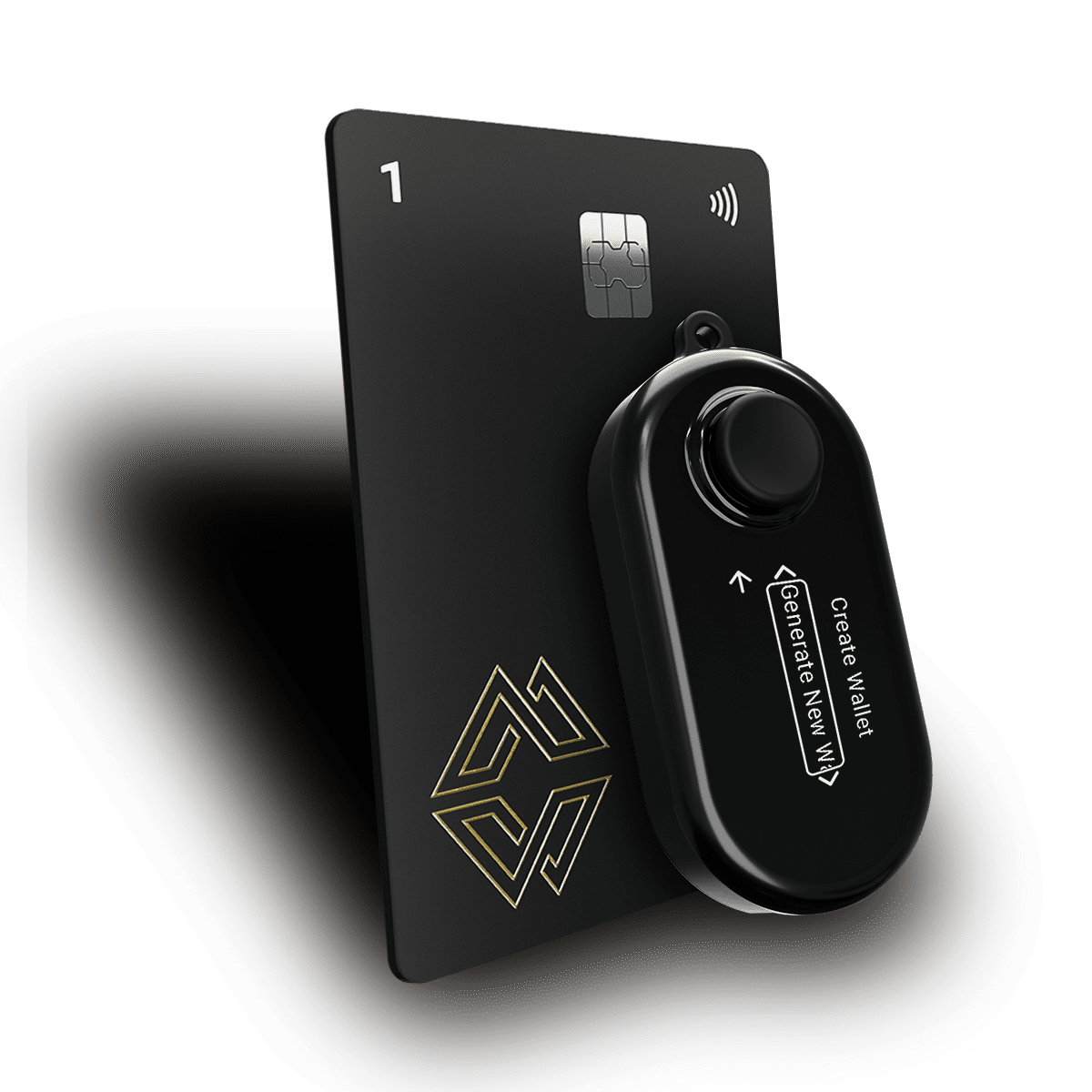
What to do instead: Write your seed phrase on paper immediately during setup, offline, away from any camera or connected device. Then transfer it to a metal backup plate as soon as possible. Better still, use a hardware wallet that eliminates the seed phrase entirely: Cypherock X1 distributes your private key across 5 hardware components using Shamir's Secret Sharing, and no seed phrase is ever generated or displayed.
Many users who correctly avoid digital storage still make the next mistake: storing their single physical seed phrase backup in one location.
A single backup in a single location isn't a backup strategy; it's a delay. Lose that piece of paper, and you're in the same position as someone who never backed up at all.
House fires, floods, burglaries, and unexpected relocations are not rare events over a 10 to 20 year holding horizon. A seed phrase backup that was in your desk drawer when your house burned down is, functionally, no backup at all.
What to do instead: Maintain at least two physical copies of any seed phrase in separate geographic locations; home safe plus bank safety deposit box is the classic approach. Or eliminate the seed phrase entirely via Cypherock X1's SSS architecture, where resilience comes from distributing 5 hardware components across locations rather than duplicating a master key document.
Most crypto holders use one wallet for everything: exchange withdrawals land there, DeFi happens there, NFT mints happen there, airdrops are claimed there. The same address that holds years of accumulated savings interacts with every speculative smart contract on the market.
Separate daily-use wallets from long-term storage when balances grow. A single compromised smart contract approval, a single malicious dApp interaction, a single phishing site connection is enough to drain every token that wallet has ever received if the approvals are broad enough.
What to do instead: Implement a tiered wallet architecture: a cold vault for long-term holdings (hardware wallet, minimal contract interactions), a warm wallet for active DeFi (hardware wallet, verified protocols only), and a hot burner for high-risk interactions (software wallet, minimal balance). Cypherock X1 supports up to 4 separate wallet accounts on a single device, with cold and warm tiers on the same hardware, without sharing keys.
Hardware wallets exist specifically to prevent transaction manipulation by malware. But they only provide that protection if you use the one feature that makes them meaningful: address verification on the device's physical screen.
Clipboard hijacking malware specifically targets crypto users. It monitors your clipboard for address-shaped strings (42-character 0x strings for EVM chains, 44-character Base58 for Solana, etc.) and silently substitutes the attacker's address. You paste what you believe is your destination address, but the pasted text has already been swapped.
If you verify the address only on your computer screen, the malware's substitution goes undetected. The hardware wallet signs the fraudulent transaction obediently.
What to do instead: Every time you initiate a send transaction on a hardware wallet, verify the destination address on the device's physical screen, character by character, not just the first and last few. The hardware wallet's screen renders independently of your computer. Malware cannot manipulate what the device displays. This habit alone prevents the vast majority of hardware wallet transaction fraud.
Supply chain attacks on hardware wallets are documented and ongoing. The attack model is simple: a malicious actor purchases hardware wallets in bulk, modifies the firmware or inserts a pre-seeded wallet (providing a seed phrase to the buyer while already knowing it), repackages them convincingly, and sells them at or near retail price on Amazon, eBay, or local marketplaces.
The buyer receives what appears to be a legitimate, sealed hardware wallet. They set it up following the "instructions" provided, which are actually instructions to import a seed phrase the attacker already knows. Their funds are then drained at the attacker's chosen time.
What to do instead: Buy hardware wallets only directly from the manufacturer's official website or from authorized retailers listed on the manufacturer's site. For Cypherock X1, purchase at cypherock.com/store. Inspect the packaging for any signs of tampering. Verify that the device's firmware hash matches the published value on first boot. Never use a device that arrives pre-configured or "helpfully" pre-seeded.
A seed phrase that has never been tested is a hypothesis, not a backup. The words may be transcribed with a handwriting error. The order may be off by one position. The word list may have a single word substituted for a similar-sounding one (BIP-39 contains words like "angry" and "angle," "man" and "many" that are trivially confused when written by hand).
Most users discover these errors only when they attempt recovery, typically after losing the device, after a move, or after a lengthy period of inactivity when they no longer remember which hardware wallet holds which keys.
What to do instead: Within the first week of setting up any new wallet, test the full recovery process on a separate device or in a sandboxed environment. Confirm your backup actually restores the correct wallet addresses. Do this annually thereafter. With Cypherock X1, the "recovery" test involves confirming your X1 Cards work correctly with your Vault using your PIN, with no seed phrase transcription errors to worry about.
Cold wallet discipline breaks down gradually, usually one exception at a time. The reasoning sounds logical in the moment: the protocol is well-audited, I'll just connect my cold wallet this once to claim the airdrop / provide liquidity / cast this governance vote.
Once your cold wallet address has interacted with a smart contract, it has potentially granted token approvals that persist indefinitely. A protocol that was secure when you connected to it may later have a governance attack, a malicious upgrade, or a vulnerability exploit that drains all connected wallets with outstanding approvals.
Many people use a hardware wallet for long-term storage and keep only small amounts in a software wallet for daily use. This adds distance between attackers and your assets.
What to do instead: Maintain absolute separation between your cold storage address and any DeFi activity. For DeFi, use a dedicated warm wallet account, a separate key on the same Cypherock X1 hardware if you prefer to avoid managing multiple devices. Transfer only what you need for the DeFi operation, complete the operation from the warm wallet, and transfer back if needed. Your cold wallet address should have a transaction history of: received from exchange, and sent to warm wallet. Nothing else.
Most self-custody users focus entirely on protecting their funds from external threats, such as hackers, phishing, and exchange collapses. Very few think seriously about the internal threat: the possibility that they become the single point of failure.
Accidents, sudden illness, and death are not hypothetical. Analysts estimate that around 20% of all Bitcoin supply is permanently inaccessible because early holders lost the keys controlling those funds. A significant portion of that inaccessible Bitcoin belongs to people who died without a working inheritance plan.
A hardware wallet and seed phrase that no heir knows about, can find, or can operate is not self-custody. It is scheduled permanent loss.
What to do instead: Build inheritance into your setup from the beginning, not as an afterthought. This means a documented portfolio map (addresses, not seed phrases), clear recovery instructions written for a non-technical person, and a structured access mechanism. Cypherock Cover provides a non-custodial, non-KYC inheritance and PIN recovery service specifically designed for Cypherock X1, enabling beneficiary access without a seed phrase ever being disclosed during your lifetime.
As multi-chain portfolios become the norm, a new category of irreversible mistakes has emerged: sending assets to the wrong network.
Common examples:
One mistake some users make is copying and pasting any address, assuming there's a single "master address" for their wallet. On EVM-compatible chains (Ethereum, Polygon, Avalanche C-Chain, BNB Smart Chain), the same address format is used across chains, but that does not mean tokens sent on the wrong network are automatically accessible. Recovery is often possible but requires technical effort, specific bridge tools, and sometimes substantial gas fees. Fibo
What to do instead: Before every withdrawal from an exchange, triple-check:
(1) the destination address,
(2) the network selected for withdrawal, and
(3) whether the destination wallet supports that network. When in doubt, send a small test transaction first. Cypherock X1's cySync interface clearly labels each account by chain, reducing the risk of network confusion during asset management.
Self-custody is not a set-it-and-forget-it system. It requires ongoing maintenance:
What to do instead: Schedule a quarterly "self-custody audit," 30 to 60 minutes to review firmware status, confirm physical backups exist, revoke stale approvals on hot wallets, and update your portfolio map. Treat it as routine maintenance for a system that protects potentially significant wealth.
Looking across all 10 mistakes, a pattern emerges. Most of them, including digital seed phrase storage, single backup location, using one wallet for everything, and cold wallet contamination, are variations on the same underlying problem: creating a single point of failure in a system that is designed to be irreversible.
Every single point of failure is a single mistake away from permanent loss.
Cypherock X1's architecture directly addresses this at the hardware level: no single device, no single paper backup, no single location that, if compromised, results in total loss. The 5-component SSS distribution means that resilience is built into the architecture, not dependent on perfect user behavior across every interaction for decades.
Move to a hardware wallet or stronger setup if your capital or risk exposure increases. When that time comes, choose a setup that protects you not just from external attackers, but from the inevitable human imperfections in your own security practices.
Print this. Review it quarterly.
For most holders with significant positions, yes, but only if implemented correctly. Self-custody removes exposure to exchange hacks, frozen accounts, and platform failures. No company can lock you out or move your funds. Instead, the risk shifts to how you manage security. A well-configured hardware wallet setup with proper backup practices is objectively safer than exchange custody. A poorly configured one may be less safe.
Move significant holdings off exchanges into a hardware wallet, specifically one that does not generate a seed phrase backup. This eliminates the two most common loss vectors simultaneously: exchange counterparty risk and seed phrase exposure.
The only way to know with certainty is to test recovery on a separate device or in a sandboxed environment. Do not test recovery on your primary device, as doing so may overwrite an existing wallet. Use the same hardware wallet model in recovery mode, or a compatible software wallet, and verify the restored addresses match your originals.
Cypherock X1 directly eliminates Mistakes 1, 2, 6, and partially 8 (with Cypherock Cover) by removing the seed phrase from the architecture entirely. It reduces the risk of Mistakes 3 and 7 through native multi-account support. Mistakes 4, 5, 9, and 10 remain behavioral; no hardware wallet can fully protect against them without user discipline.
Self-custody is the right approach to crypto ownership at any significant portfolio level. But it transfers responsibility completely to you, and that responsibility is non-trivial, non-obvious, and non-reversible when mistakes occur.
The 10 mistakes in this guide are not edge cases. They are the normal failure modes of normal users making reasonable-sounding decisions without understanding the full consequences. Each one is avoidable with the right architecture, the right habits, and periodic maintenance.
Start with the hardware. Build the habits. Test the recovery. Plan the inheritance. And choose a hardware wallet whose architecture makes several of these mistakes structurally impossible, not just avoidable with perfect behavior.
Explore the Cypherock X1, the hardware wallet that eliminates seed phrase risk at the architecture level, or learn more about how it works. For inheritance planning, see Cypherock Cover.
Related reading: