0
$0.00
0 items

If you hold CC tokens on a centralised exchange, you do not actually hold your CC. You hold an IOU from the exchange. The exchange holds your keys. That distinction matters more for Canton Network holders than it does for almost any other token in the ecosystem — and this guide explains why, and what to do about it.
Most hardware wallet guides are written for Bitcoin or Ethereum holders. The logic applies — self-custody is safer than exchange custody for any asset — but the specific case for CC token self custody runs deeper.
Canton Network is being built as infrastructure for institutional financial markets. The DTCC, Goldman Sachs, Deutsche Bank, and BNP Paribas are active participants on the network. Project Whitney, the DTCC's Canton initiative, is targeting the tokenisation of US Treasury bonds. This is not speculative activity. These institutions are building production infrastructure on Canton.
CC is the native utility token that powers every transaction on this network. As institutional activity on Canton grows, CC demand grows structurally with it. That makes CC a fundamentally different kind of holding than a retail DeFi token — and it makes the question of how you secure it correspondingly more serious.
An exchange that goes insolvent, freezes withdrawals, or is compromised takes your CC with it. The history of centralised exchanges is not encouraging: Mt. Gox, Celsius, FTX, and Bitfinex are all cases where customers with no self-custody arrangement lost access to their assets, sometimes permanently. For a token tied to the future of institutional finance infrastructure, that is not a risk worth carrying.'
Self custody means you hold the private keys that control your wallet — not an exchange, not a custodian, not a third party. In practice, this means using a hardware wallet: a physical device that generates and stores your private keys offline, where they are never exposed to the internet.
When you initiate a transaction, the hardware wallet signs it internally using your private key, then broadcasts only the signed transaction. The private key never leaves the device. This means that even if your computer is compromised with malware, or you click a phishing link, or your browser is attacked — your funds cannot be accessed, because the key required to move them is on a device that never connected to the threat.
For CC token holders specifically, hardware wallet self custody is the appropriate security model. The question is which hardware wallet actually supports Canton Network.
his is the practical problem that Canton holders run into when they go looking for self custody solutions. Ledger and Trezor are the most well-known hardware wallet brands, and both are genuinely secure devices — but neither supports Canton Network natively.
Canton is built on a different technical architecture from the EVM chains and Bitcoin that most hardware wallets are designed around. Supporting a new network requires deliberate integration work. Most hardware wallet manufacturers have not prioritised Canton because Canton's user base is not yet large in retail terms, even if its institutional significance is substantial.
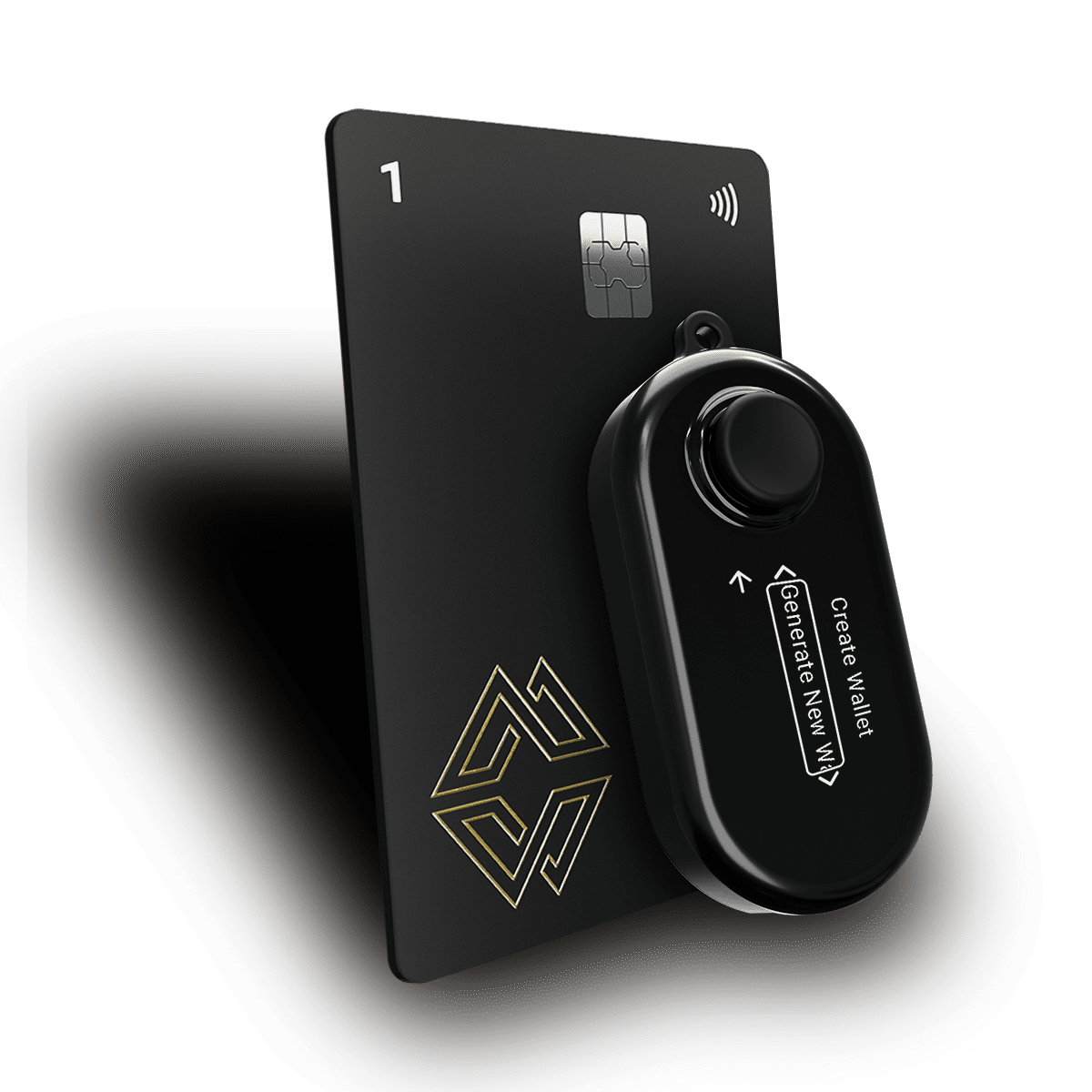
There is one hardware wallet that has done this integration work. Cypherock X1 Pro is the only hardware wallet listed on the Canton Network ecosystem page. It is not just compatible — it is the official custody solution for CC token holders.

Beyond Canton compatibility, Cypherock X1 Pro addresses a structural weakness that most hardware wallets share but rarely discuss: the seed phrase problem.
Standard hardware wallets protect your keys on the device — but your backup is a 24-word seed phrase written on paper. If that piece of paper is found, your funds are gone. If it is lost, your funds are unrecoverable. The seed phrase is a single point of failure that exists outside the device, in plaintext, in your home.
Cypherock uses Shamir's Secret Sharing to split your private key into five fragments — one stored on the device and one on each of four physical X1 cards. To authorise any transaction or to recover your wallet, you need any two of these five components.
This means there is no seed phrase. There is no single piece of paper that, if found, compromises your entire wallet. Losing one card does not compromise your security. Losing the device does not compromise your security. You need at least two components together, which means your funds are protected against the most common failure modes: theft, loss, and physical discovery.
For CC token holders building a long-term position in Canton Network, this architecture is meaningfully better than the standard hardware wallet model.
Order the Cypherock X1 Pro from cypherock.com. When your order arrives, check that the tamper-evident packaging on both the device and all four X1 cards is fully intact before opening anything. If any packaging shows signs of interference, contact Cypherock support before proceeding.
CySync is the official desktop application for managing your Cypherock wallet. Download it from cypherock.com/cysync. It is available for Windows, macOS, and Linux. Only use the download link from the official Cypherock website.
Connect the X1 Pro to your computer using the included USB-C cable and open CySync. The setup process will walk you through creating a device PIN and pairing each of the four X1 cards to the device in sequence. Follow the prompts on both the CySync interface and the device screen. Once all four cards are paired, your private key has been generated and split across the five components.
In CySync, select Add Account and navigate to Canton Network to generate your CC wallet address. This is the address you will use to receive CC tokens from an exchange or another wallet.
In your exchange account, navigate to your CC holdings and initiate a withdrawal. Paste your Cypherock Canton wallet address as the destination. Before sending your full balance, send a small test amount first — confirm it appears in CySync — then transfer the remainder. Always verify the first and last six characters of the address before confirming any transaction.
Your four X1 cards are your recovery mechanism. Store them in physically separate locations — different rooms at minimum, different sites if your holdings are significant. You only need two of the five components to recover your wallet, so distributing the cards reduces the risk that any single loss event compromises your security.
Pros: convenient, no setup required. Cons: you do not hold your keys, exchange insolvency or hacks put your CC at risk, withdrawal freezes have happened without warning across multiple major exchanges.
Pros: free, reasonably convenient for small amounts. Cons: private key is on a device connected to the internet, exposed to malware, phishing, and browser-based attacks. Not recommended for significant CC positions.
Pros: proven hardware wallet security model, widely supported. Cons: Canton Network is not natively supported. You cannot self-custody CC tokens on either device at the time of writing.
Pros: the only hardware wallet that supports Canton Network, no seed phrase vulnerability, Shamir's Secret Sharing distributes risk across five components, open source firmware. Cons: requires an upfront device purchase, setup takes approximately 20 to 30 minutes.
Your funds are not stored on the device itself. They are secured by your private key, which is distributed across the device and four cards. If you lose the device, you can recover your wallet using any two of your four X1 cards with a replacement device. This is one of the meaningful advantages of Cypherock's architecture over standard hardware wallets.
Losing one card does not compromise your security. You still have the device and three remaining cards. No single card provides meaningful access to your wallet — an attacker would need at least two components together. Replace the lost card promptly by following Cypherock's card replacement process.
Yes. Cypherock's firmware is open source and has been independently audited. The security model is verifiable rather than trust-based, which is particularly important for long-term holders who want to confirm the device behaves as described.
Yes. Cypherock X1 Pro supports Bitcoin, Ethereum, and a wide range of other assets. Your CC wallet sits alongside your broader portfolio on a single device.
Yes. CySync is designed to guide users through each step of setup and transaction signing. The interface is cleaner than most hardware wallet software, and the setup process is fully guided from start to finish.
The DTCC's work on Canton, Goldman Sachs's tokenised asset infrastructure, and BNP Paribas's fund tokenisation projects are all in early or active stages. The institutional adoption of Canton Network is not a future possibility — it is a current process.
As that process continues, network activity increases, CC utility increases, and the significance of what you hold in your wallet increases with it. The time to establish a serious custody arrangement is before that growth fully plays out, not after.
Cypherock X1 Pro is the only hardware wallet built for where Canton is going. For CC holders taking a long-term view on Canton Network, it is the logical custody solution.
Secure your CC tokens with Cypherock.