0
$0.00
0 items


Managing $50,000 in Bitcoin and managing $5 million in Bitcoin are not the same problem with different numbers. They are categorically different security challenges with different threat actors, different custody architectures, and different consequences for every mistake.
Someone with $50,000 in Bitcoin faces phishing emails and exchange hacks. Someone with $50 million faces targeted attacks, physical coercion risks, and sophisticated social engineering campaigns. The security infrastructure needs to match the threat level.
Most crypto security content is written for the first profile: the retail holder moving off an exchange for the first time, learning what a seed phrase is, setting up their first hardware wallet. That content is valuable. It is not what you need if you are managing significant concentrated wealth in digital assets across multiple chains, jurisdictions, and beneficiaries.
This guide is for high-net-worth individuals, family offices, and any holder whose crypto portfolio represents material wealth, typically $500,000 and above, where the security framework must match not just the current value but the lifetime stakes of managing self-sovereign digital assets correctly.
Approximately 18% of HNWIs globally hold cryptocurrency allocations as of 2026, with average exposure ranging from 3% to 12% of total investable assets according to wealth management industry reports. Most of them are underprotected relative to the size of their holdings. This guide closes that gap.
Retail crypto security advice converges on a simple stack: hardware wallet, seed phrase on metal, keep it somewhere safe. For portfolios under $100,000, this is broadly adequate. For portfolios above $500,000, it introduces specific failure modes that become increasingly catastrophic with scale.
The seed phrase becomes the single highest-value theft target in your physical environment.
A 24-word seed phrase stored on a metal plate at home is not a modest possession. At $1 million in crypto, it is the equivalent of a bearer bond for seven figures, stored in your house. Wealthy individuals who publicly discuss their Bitcoin holdings have been targeted for physical attacks, SIM-swapping schemes, and elaborate social engineering campaigns. Discretion is not merely advisable; it is a security measure.
The threat model for a $50K holder is opportunistic attackers exploiting mass phishing. The threat model for a $5M holder includes targeted physical attacks, home invasion planning, and months-long social engineering campaigns specifically designed against your personal profile. A metal plate in a home safe is not an appropriate single point of defence against a targeted physical attack.
Operational complexity creates compounding human error risk.
Unlike traditional investments, where these elements can be handled separately, crypto requires custody, governance, reporting, and estate planning to work together. A retail holder needs to manage one hardware wallet. An HNWI with significant holdings across Bitcoin, Ethereum, Solana, and multiple DeFi positions needs a custody architecture that handles different use cases (long-term holding, active trading, DeFi participation) without creating exploitable complexity at any layer.
Estate planning for crypto is a distinct professional discipline, not an extension of traditional wealth planning.
Estate planning templates don't handle multi-signature custody or geographic key distribution. Your cousin who "knows crypto" can't coordinate between your estate attorney, tax advisors in three countries, and institutional custodians. You need the same coordinated professional infrastructure for crypto that you have for traditional wealth.
The HNWI crypto holder who has not specifically addressed these three scaling problems, physical threat model, operational complexity, and estate planning, has a security posture that is worse, not better, than their net worth would suggest.
Before prescribing a specific approach, it is worth mapping the full custody spectrum available to an HNWI holder in 2026, with honest assessments of each.
Crypto-native platforms and boutique family offices have begun to fill the gap left by traditional private banks, providing services such as legal wrappers, segregated cold storage, audited reporting, and fiat on/off-ramp infrastructure.
Institutional custody provides several genuine advantages at scale:
The limitations are equally real: many private banks and PWM platforms offer only indirect access to crypto markets via structured products or thematic funds, often excluding direct custody, integration into portfolio-wide reporting, or comprehensive digital asset solutions.
More fundamentally: institutional custody is custodial. Your assets are held by a third party. Regulatory actions, custodian insolvency, and operational failures at the custodian level are risks you cannot eliminate by choosing a better custodian, only by choosing no custodian.
Who this suits: Holders who require insurance coverage, regulatory compliance infrastructure, or institutional reporting for legal or compliance reasons. Ultra-high-net-worth holders ($10M+) where the cost of institutional custody is negligible relative to the value protected, and where regulatory risk from not using a qualified custodian is meaningful.
Casa is a premium multi-signature solution (2-of-3 or 3-of-5 keys) designed for high-net-worth individuals and family offices. Excellent for Bitcoin-focused treasuries with dedicated support, but requires managing multiple hardware devices.
A multisignature arrangement requires multiple independent private keys to authorise a transaction. For example, a three-of-five configuration means that any three out of five designated keys must sign before funds can move. This approach eliminates the single point of failure. No single compromised key, no single act of coercion, and no single rogue insider can result in unauthorised movement of funds.
The collaborative multisig model typically distributes keys between the holder and the service provider: Casa holds one key, you hold two, for a 2-of-3 scheme. This means the service provider cannot move funds unilaterally (two keys needed), but you always have a recovery path if you lose one of your keys (the provider's key plus your remaining key).
This structure also enables governance structures that mirror the decision-making frameworks families and offices already use for traditional assets.
The limitations: collaborative multisig is still partially custodial, the service provider holds a key. It is primarily optimised for Bitcoin. Multi-chain portfolios require separate multisig setups per chain where supported. Operational complexity is higher than single-device custody.
Who this suits: Bitcoin-heavy holders who want the security of key distribution without full institutional custody. Holders who specifically need a key-holding counterparty for governance or inheritance purposes.
This is the option most HNWI-targeted content under-represents, because it is typically discussed in retail terms: one person, one device, one seed phrase. At the level of architecture that HNWI security requires, a properly configured distributed hardware wallet setup provides institutional-grade security without custodial dependency.
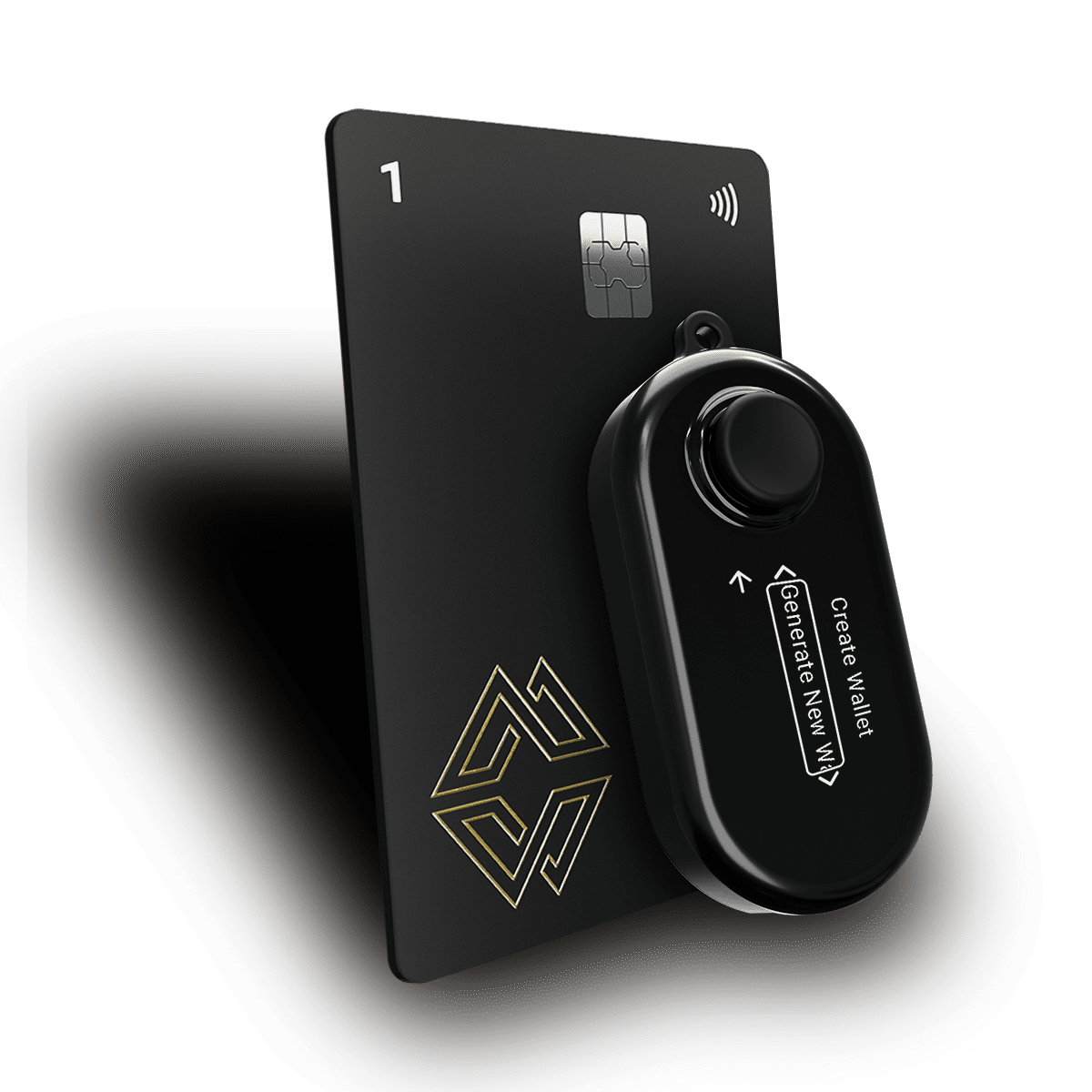
The architecture: Cypherock X1 distributes your private key across 5 hardware components, 1 X1 Vault and 4 X1 Cards, using Shamir's Secret Sharing. Any 2 of 5 components reconstruct access. No single component holds sufficient information to compromise your funds. Your seed phrase is split cryptographically into 5 shares using Shamir's Secret Sharing — you don't need to write it down, though you can view and record the full 24-word phrase on the X1 Vault at any time if you choose. No third-party custodian holds any key share.
A common configuration for HNWIs involves 2-of-3 or 3-of-5 signature schemes, distributing keys across personal control, trusted advisors, and institutional custodians. Geographic distribution of signing authorities further reduces jurisdictional risk and ensures access continuity across border restrictions. Cypherock X1's 2-of-5 SSS architecture achieves the same distributed-key property, without requiring a third-party custodian to hold any component, and without the chain-specific limitations of on-chain multisig.
Who this suits: Self-sovereign-minded holders who want institutional-grade key distribution without custodial dependency. Multi-chain portfolio holders for whom Bitcoin-centric multisig services are incomplete. Holders whose threat model specifically includes custodian failure or regulatory seizure of custodied assets.
No single custody method addresses every requirement simultaneously. A thoughtful strategy might allocate assets across several custody arrangements based on liquidity needs, asset type, holding period, and the governance preferences of the principals involved. For most HNWI holders, the right answer is a deliberate hybrid. The following is the framework we recommend for portfolios between $500K and $10M:
| Allocation | Custody Method | Purpose |
|---|---|---|
| 70-80% core holdings | Cypherock X1 distributed self-custody | Maximum security, no custodial risk, full sovereignty |
| 10-20% active positions | Second hardware wallet or multisig warm wallet | DeFi, active trading, liquidity management |
| 5-10% operational float | Regulated exchange (Coinbase, Kraken) | Immediate trading liquidity, fiat conversion |
| Inheritance/estate allocation | Cypherock X1 designated account + Cypherock Cover | Non-custodial inheritance planning |
Comprehensive security architectures should incorporate cold storage for the majority of holdings, typically 80-95%, multi-factor authentication, withdrawal whitelisting, time-delayed transfers for large amounts, and regular security audits.
The retail threat model is dominated by remote attacks: phishing, malware, exchange hacks. At significant wealth levels, the threat model expands materially.
Cold storage forms the foundation, keeping private keys offline and isolated from internet-connected systems. Many institutional-grade providers store client assets in air-gapped environments, often housed in former military facilities or purpose-built secure locations. The reason institutional custodians use physically secured facilities is not primarily to protect against remote hackers, it is to protect against the straightforward threat of physical coercion. If a sophisticated actor knows you hold significant Bitcoin and knows where your seed phrase is stored, the attack is physical, not digital.
Cypherock X1's distributed key architecture fundamentally changes this threat: even if an attacker physically coerces you into surrendering your X1 Vault, they have 1-of-5 shares, cryptographically useless. Physical coercion against a distributed key architecture requires simultaneously accessing multiple geographically separated components and their respective PINs. This raises the operational complexity of a targeted physical attack to a level that makes it impractical for all but the most sophisticated, well-resourced adversaries.
Crypto governance means more than deciding how much Bitcoin to buy. For family offices managing crypto on behalf of principals, the insider threat, a rogue employee or advisor with access to key material, is a genuine and underappreciated risk. The response is an architecture where no single individual, including any employee or advisor, has sufficient access to move funds unilaterally.
A 2-of-5 distributed key architecture means that any single insider, however trusted, however senior, cannot execute an unauthorised transfer. Two components from geographically separate locations, each with independent PINs, must be combined. This is governance built into the hardware, not dependent on policies or trust.
As covered in our social engineering guide, sophisticated attackers targeting high-value holders invest weeks or months in relationship building before attempting to manipulate their targets into signing malicious transactions.
The defence at the hardware level is an architecture where, because the X1's distributed setup means users can choose to keep their seed phrase split across 1 Vault and 4 Cards rather than written down anywhere, the actual 24-word phrase is never exposed during setup or transactions. There is no moment for an attacker to extract it through manipulation, since the phrase simply is not present anywhere a social engineer could get a target to reveal it. Every transaction also requires physical hardware authentication that interrupts the social engineering flow, and large transactions require multiple components from multiple locations, meaning no single social engineering session can compromise the entire holding.
HNWI holders with significant concentrated crypto wealth face a regulatory risk category that retail holders largely do not: the possibility that a government action targeting either their exchange custodians or the assets themselves creates an access restriction event. Geographic distribution of signing authorities further reduces jurisdictional risk and ensures access continuity across border restrictions. For self-custody holders with Cypherock X1 components distributed across jurisdictions, a regulatory action in one jurisdiction cannot freeze all components simultaneously.
For HNWI self-custody holders, the distribution of Cypherock X1's 4 Cards across locations should reflect both convenience requirements and the specific threat model.
Tier 1 distribution (minimum for any holding above $100K):
Tier 2 distribution (recommended for holdings above $500K):
X1 Vault: Kept at primary residence with a high-quality home safe. The Vault is the component used for regular transaction signing, it needs to be accessible. The Cards provide the redundancy.
The transaction signing workflow: To sign any transaction, you need the Vault plus any one Card. If your regular Card 1 is your home Card, day-to-day transaction signing requires only home access. Cards 2-4 are your insurance against losing the Vault or Card 1, they are recovered only when needed.
For HNWI holders specifically: consider requiring two Cards plus the Vault for any transaction above a defined threshold. This is not a native Cypherock X1 feature, it requires procedural discipline rather than technical enforcement, but it mirrors the dual-control principles that institutional custodians use for large transactions.
Cypherock X1 supports up to 4 separate wallet accounts on a single device, each with its own key hierarchy, entirely independent of the others. For HNWI holders, this multi-account architecture is the foundation of operational security.
Account 1: Long-Term Cold Vault Purpose: Primary storage for long-term holdings. Assets: Core BTC, ETH, SOL, AVAX positions, anything held for 12+ months. Interaction policy: Receives only. No DeFi, no direct exchange connections, no protocol interactions. Transaction frequency: Monthly or less.
Account 2: Active Management Account Purpose: DeFi, governance voting, staking operations, trading that requires hardware wallet signing. Assets: Working positions, amounts actively deployed in yield-generating activities. Interaction policy: Connects to vetted DeFi protocols only, via cySync's WalletConnect integration. Transaction frequency: Weekly.
Account 3: Estate/Inheritance Account Purpose: Assets specifically earmarked for beneficiary inheritance. Assets: Long-term positions designated in estate documents. Interaction policy: Receives only during lifetime; configured in Cypherock Cover for beneficiary access. Transaction frequency: Quarterly review, no active management.
Account 4: Business/Operations Account Purpose: Crypto allocated for business use, treasury management, payment of contractors, tax reserves. Assets: Stablecoins, operational float. Interaction policy: More frequent transactions; still hardware-protected, lower balance, higher velocity.
This four-account structure means that a security failure at any single account level, a compromised DeFi approval on Account 2, a business account phishing event on Account 4, has a strictly bounded blast radius. Your core cold vault (Account 1) and inheritance allocation (Account 3) are completely isolated from any event affecting operational accounts.
Standard crypto inheritance advice, write down your seed phrase, leave instructions for your heirs, is inadequate at any significant wealth level for reasons that compound with portfolio value. Estate planning templates don't handle multi-signature custody or geographic key distribution. A standard will or trust document is a public legal instrument that goes through probate, in many jurisdictions, a public process. A seed phrase in a will is a public seed phrase.
For HNWI crypto holders, inheritance planning requires a multi-layer architecture:
Layer 1: Legal structure. Work with an attorney who specifically understands digital asset estate planning. The legal structure, revocable trust, special power of attorney, digital asset designation, determines how your estate plan integrates with crypto recovery. A trust is generally preferable to a will for crypto specifically, as it avoids probate and the public disclosure it entails.
Layer 2: Access architecture. Cypherock Cover provides a non-custodial, non-KYC inheritance and PIN recovery pathway. For HNWI holders with Account 3 (Estate Account) specifically designated, Cover creates a structured access mechanism for beneficiaries that doesn't require a seed phrase to be disclosed to a lawyer, stored in a will, or handed to a family member during the holder's lifetime.
Layer 3: Beneficiary instruction package. Technical accessibility for a non-technical beneficiary. This includes a portfolio map (wallet addresses, public, safe to document, approximate values by account, chain breakdowns), a contact list (estate attorney, CPA familiar with crypto, any financial advisor involved), a hardware access guide (a plain-language document explaining what Cypherock X1 is and which Card locations to access), and a liquidation guide (for heirs who want to convert to fiat, which exchanges to use, what documentation is required, tax considerations by jurisdiction).
Layer 4: Tax planning integration. Crypto volatility creates liquidity problems that traditional portfolios don't face. HNWI crypto estates are particularly complex from a tax perspective: each inherited account may have a different cost basis, different chain-specific treatment in different jurisdictions, and staking rewards that create ongoing income events. The estate plan must integrate crypto tax planning from the outset, not as an afterthought at the time of death.
Transaction delay protocols for large movements. Institutional custodians use time-delayed withdrawal systems for large transactions, any transfer above a threshold is delayed 24-48 hours, during which it can be cancelled if the instruction was fraudulent. Individual self-custody holders can implement this behaviourally: any transaction above $50,000 (or whatever threshold is material for your portfolio) receives a mandatory 24-hour deliberation period before signing is approved. This single procedural practice defeats the urgency engineering that underlies the vast majority of sophisticated social engineering attacks at the HNWI level.
Dedicated transaction signing environment. For large transaction signing, use a dedicated computer that is not your daily-use machine, ideally a device used only for cySync and crypto-related activities, kept fully updated, and not used for email, browsing, or any other activity. The attack surface of a compromised daily-use computer, with browser extensions, email clients, and general web browsing history, is far larger than a dedicated signing machine.
Transaction simulation before signing. Before signing any significant transaction from your hardware wallet, use a transaction simulation tool (Tenderly, Rabby's simulation mode, or Cypherock's transaction detail display) to confirm the actual on-chain effect of the transaction. Never sign based on what a web interface tells you the transaction does, confirm what the transaction actually does at the contract level.
Quarterly security audits. Schedule a quarterly review that covers: firmware status on the X1 Vault, confirmation that all X1 Cards are present and authenticating correctly, audit of active DeFi approvals on warm wallet addresses (revoke.cash), review of portfolio map accuracy, and confirmation that Cypherock Cover beneficiary designations are current. For HNWI portfolios, consider engaging a crypto security consultant for an annual independent review.
Operational security around disclosure. Discretion is not merely advisable; it is a security measure. Do not publicly discuss the size of your crypto holdings in professional forums, social media, or personal conversations outside your immediate legal and advisory team. Do not attend crypto events with identifiable credentials that link your real name to specific holdings. The most effective security measure against a targeted physical attack is not being known to hold significant assets in the first place.
The distributed key architecture of Cypherock X1 maps directly to the specific security requirements of HNWI holders:
No single point of physical compromise. A targeted physical attack against any single location, home, office, safety deposit box, captures 1 of 5 key shares. Zero information is revealed about the private key. The attacker must coordinate access to multiple geographically separated locations simultaneously, the same operational challenge that institutional custodians solve with multiple vaults, here solved with distributed personal hardware.
No mandatory seed phrase exposure, the HNWI attack surface this eliminates. 35% of MetaMask users don't back up their recovery phrase. Among those who do back it up, the backup is the highest-value theft target in their physical environment. At $5M in crypto, removing the seed phrase as a mandatory single point of failure is not a convenience, it is the elimination of a catastrophic failure mode that traditional hardware wallets cannot avoid.
Supports 19,000+ tokens across 10+ chains. HNWI crypto portfolios are rarely Bitcoin-only. A sophisticated multi-chain portfolio, BTC, ETH, SOL, AVAX, DOT, and DeFi positions across multiple ecosystems, requires a single unified custody architecture, not a different hardware wallet for each chain. Cypherock X1's multi-chain support via cySync covers the full portfolio from one device.
Open-source firmware, auditable security. For HNWI holders who engage security consultants for periodic reviews, the open-source nature of Cypherock X1's Vault firmware means the software layer can be independently audited. Closed-source firmware requires trusting the manufacturer's word, an acceptable position for retail holders, a less satisfying one when the stakes are seven figures or above. Cypherock X1 has also been independently audited by Keylabs and Wallet Scrutiny.
Cypherock Cover for institutional-grade inheritance without institutional custody. Cypherock Cover provides the structured, documented, non-custodial inheritance pathway that HNWI estate plans require, without routing assets through a custodian that introduces regulatory and counterparty risk during the holder's lifetime.
This is a calculation most HNWI-targeted content avoids making explicitly. Let's do it.
Institutional custody (Coinbase Prime, Anchorage) typical fee structure:
Cypherock X1 self-custody:
Over a 10-year holding period, the difference between institutional custody fees and self-custody costs compounds materially. At $5M in assets, a 0.075% custody fee is $3,750 per year, $37,500 over a decade. The Cypherock X1 Standard kit costs $179. The difference is $37,321, not counting opportunity cost on fees paid.
This comparison is not to argue that institutional custody is never worth its cost. For holders who require its specific features, insurance coverage, regulatory compliance, institutional reporting, it may well be. But for holders who are choosing between institutional custody and self-custody primarily on security grounds, the security case for properly configured self-custody is strong, and the cost case is overwhelming.
There is no universal threshold. The relevant factors are: whether you have a legal or compliance requirement for a qualified custodian (some jurisdictions or fund structures require this), whether your insurance requirements exceed what personal security practices can address, and whether the operational complexity of institutional custody reporting is worth the cost for your situation. For self-sovereign individuals, as opposed to institutions or funds, self-custody remains appropriate at any portfolio size with the right architecture.
Both achieve distributed key security. Casa is specifically optimised for Bitcoin with dedicated support and a collaborative key-holding model. Cypherock X1 supports 19,000+ tokens across 10+ chains, eliminates seed phrase vulnerability, and does not require a third party to hold any key share. For Bitcoin-only holders who want a dedicated support relationship, Casa is a strong option. For multi-chain holders who want complete self-sovereignty with no third-party key involvement, Cypherock X1 is the stronger architecture.
Treat them differently by account tier. Long-term BTC and ETH core holdings in your cold vault account (Account 1 on Cypherock X1, no DeFi interactions). Active Ethereum DeFi positions in your warm account (Account 2, WalletConnect to vetted protocols, smaller balance). The key discipline: never expose your core ETH cold vault address to DeFi protocol interactions regardless of how reputable the protocol appears.
Cypherock X1's multi-account architecture supports separate wallet accounts per principal, all managed through the same device and cySync interface. For governance requirements where multiple principals must authorise transactions, a procedural dual-approval workflow (requiring two authorised persons to be physically present for any transaction above a threshold) can be implemented behaviourally. On-chain multisig remains the option for technically enforced multi-principal governance, though this is chain-specific and operationally complex.
Disclose asset existence and approximate value to your estate attorney for planning purposes, they are bound by attorney-client privilege. Disclose only what is necessary to tax advisors for compliance. Be significantly more careful about disclosure to wealth managers, financial planners, and any professional who is not bound by strict confidentiality rules and who interacts with large numbers of clients. The fewer people who know the specific size of your holdings, the smaller your targeted attack surface.
Managing significant crypto wealth in 2026 requires a security architecture that matches the scale of the assets and the sophistication of the threats they attract. The retail playbook, one hardware wallet, one seed phrase on metal, one safe, is not that architecture. An effective crypto operating system for UHNW families has five interconnected parts: custody strategy, governance, reporting, tax planning, and estate planning. Unlike traditional investments, where these elements can be handled separately, crypto requires them to work together.
The distributed key architecture of Cypherock X1, eliminated seed phrase vulnerability, 5-component SSS distribution, 19,000+ token multi-chain support, native inheritance via Cypherock Cover, provides the institutional-grade security properties that HNWI holders require without routing assets through a custodian that introduces its own counterparty risk.
Self-sovereignty at scale is not simple. But it is achievable, and for holders whose threat model includes targeted attacks, jurisdictional risk, and multi-generational wealth transfer, it is the architecture that most reliably delivers what crypto was built to provide: assets that belong to you, controlled by you, accessible to whom you choose and no one else.
Related Reading: