0
$0.00
0 items

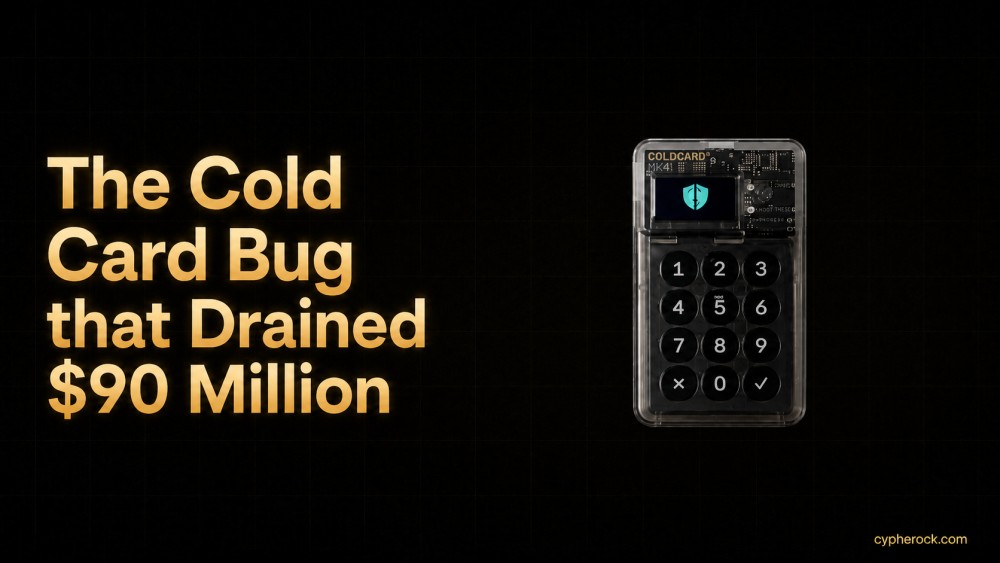
On-chain analysts estimate 1,000-1,300 Bitcoin addresses were compromised via a March 2021 firmware bug that weakened seed entropy on Coldcard devices, with $70-90 million at risk of forced sales.
The vulnerability, now being actively exploited this weekend, traces to a flaw in how affected Coldcard firmware versions generated the random seed during wallet setup. Entropy is the randomness used to generate a private key: the more unpredictable the randomness, the more secure the key. When entropy is weakened, the space of possible keys shrinks from an astronomically large number to a computationally feasible one. Attackers who know the flaw can systematically search the reduced key space and derive private keys for affected addresses.
Coins drained from compromised wallets and coins moved by frightened holders who triggered premature sales both represent overhead supply pressure on Bitcoin's price, adding to the pain points for the crypto market alongside anemic institutional demand and macroeconomic uncertainty.
The firmware version in question was distributed in March 2021, meaning devices set up during that window and never migrated to a fresh wallet may have been silently vulnerable for over five years.
Most hardware wallet attacks require physical access to the device, sophisticated side-channel equipment, or social engineering the user. A seed entropy vulnerability is categorically different: it means the private key itself was never truly random to begin with.
A key generated with weak entropy is not "a little less secure." It is fundamentally compromised. The attacker doesn't need to break the cryptography or touch your device. They simply need to know the flaw and scan the reduced key space. The wallet can be fully intact, PIN-protected, and never connected to a phishing site, and still be drained.
This is why firmware integrity and the randomness source for key generation are non-negotiable security requirements. It is also why the most important firmware update notice you will ever receive from a hardware wallet company is one that patches a randomness flaw, and why ignoring firmware updates carries real consequences.
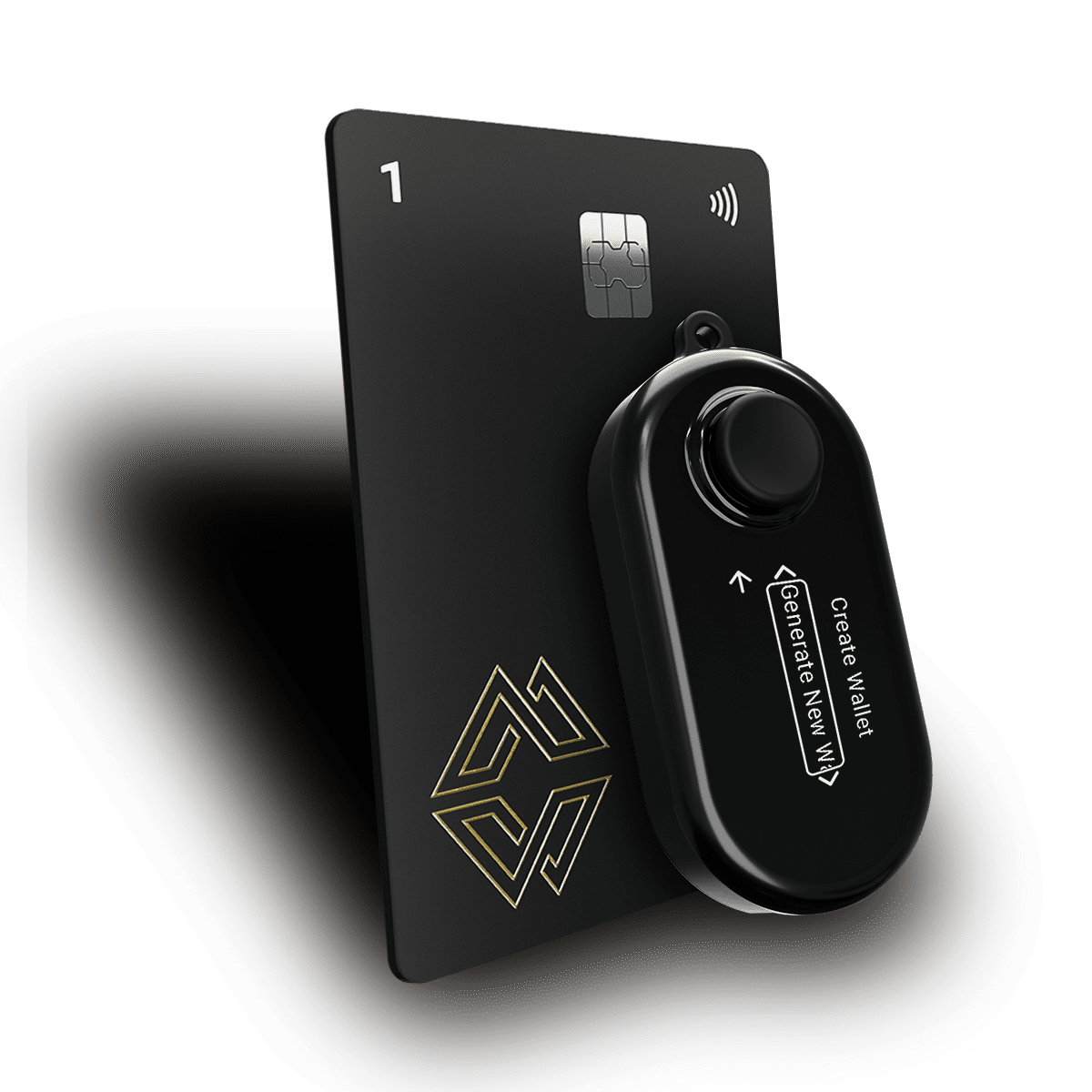
Cypherock X1 addresses the entropy and firmware risk through three structural differences.
This is the most direct architectural answer to what happened to Coldcard. The X1 Vault never relies on a single randomness source. During seed generation, it draws 256 bits of randomness from the secure element's true random number generator, then draws another independent 256 bits from the main processor's true random number generator, and combines the two outputs.
The result stays strong as long as either source is working correctly. A fault, defect, silent failure, or manufacturer backdoor in one chip alone cannot produce a guessable seed, because the other source's randomness is still feeding into the combined output. Coldcard's failure came down to a single path to randomness that was quietly rerouted to a predictable software substitute. The X1 has two independent hardware paths, deliberately, for exactly this reason. No single software commit, library swap, or chip defect can reproduce the Coldcard failure mode on the X1 Vault.
The X1 Cards, the components that store your private key shares, are EAL6+ certified secure elements that are never firmware-upgradable after manufacturing. This cuts both ways: they cannot receive security patches, but they also cannot receive malicious updates or have their key generation logic quietly altered through a firmware push. The entropy used to generate key shares is fixed at manufacturing inside a certified, tamper-resistant chip, not dependent on software a developer can accidentally break in a firmware release.
Because Cypherock X1 uses Shamir's Secret Sharing rather than a single private key on a single device, a compromised share, even if an entropy flaw theoretically existed in one component, provides an attacker with exactly zero usable information about the private key. The mathematics of SSS guarantee that any number of shares below the reconstruction threshold (2 of 5) reveals nothing. An attacker exploiting a weakness in a single component cannot reconstruct the key from that component alone.
This does not make Cypherock X1 invulnerable to every possible attack. But it means that a firmware-level entropy bug affecting one component does not automatically translate into wallet compromise, which is precisely the failure mode that destroyed $70-90 million worth of Bitcoin this weekend.
If you set up a Coldcard wallet between January and June 2021, treat your wallet as potentially affected. The immediate steps:
Move funds to a fresh wallet generated on a device confirmed unaffected: either an updated Coldcard with a newly generated wallet, or an alternative hardware wallet. Do not simply update the firmware on an existing affected device; the private key generated under the flawed entropy is permanently compromised regardless of firmware status.
Check Coldcard's official communications for the specific firmware versions affected and the exact setup date window. Do not rely on third-party social media posts, go directly to coinkite.com.
The multimillion-dollar Coldcard hack represents one of the pain points for the crypto market right now, but its lesson extends well beyond Coldcard users. Every hardware wallet user should ask two questions today: when was my wallet created and under which firmware version, and does my wallet's security depend entirely on the integrity of a single device's key generation?
The second question is the structural one. A single-device hardware wallet with a single private key is only as secure as every version of firmware that ever ran during that device's key generation event. An architecture that distributes key shares across independently certified hardware, and where no single component is sufficient for access, is structurally more resilient to exactly this category of firmware-level vulnerability.
Security is architecture, not just trust. Explore Cypherock X1 and its distributed key architecture.
Related Reading:-